Data Science vs Business Analytics – Which is Better?

So which one is the right choice for a successful career? A master’s degree in data science vs business analytics? Both programs draw insights from data using statistics and software tools. But both are very different in their end goal. But, which one has better job prospects? Which one is right for you?

Let’s evaluate this step by step in this guide to understand the key differences between master’s programs in data science vs business analytics.

Definition and Curriculum

Let us first define these degrees and understand their curriculums.

A Master’s in Data Science focuses on training students in the skills needed to analyze and interpret complex data sets. This typically includes courses in machine learning, statistical analysis, data visualization, and programming. MS in Data Science at Columbia University includes hardcore CS courses like ML and Algorithms, Stats courses like Probability and Statistical Modeling and ton of electives.

A Master’s in Business Analytics, on the other hand, focuses on using data to inform business decisions. They have no interest in data unless it can lead to an actionable insight for the business. Cornell’s MSBA curriculum includes fewer tech courses that cover basics of Data Management in SQL, Statistical Programming in Python and R and some level of ML. There is a larger variety of business courses such as Introduction to Finance Analytics, Management Writing for Business Analytics and Conversations in Business Analytics.

Career Outcomes

Let us now talk about the kind of career paths that emerge from these two programs.

Good news is that both programs can lead to rewarding careers, and there is a strong demand for professionals with skills in both data science and business analytics. So, you cannot go wrong with either of them but the kind of jobs you can aim for is different. So, it is important that you understand the difference.

It is clear that MSBA is geared entirely towards application of data science and analytics to solve business use cases. That is why it is called Business Analytics. The course is designed to help you turn data into actionable decisions. You will learn more about visualization and communicating the data in an easy to understand format. You will be trained on storytelling and generating reports which make it easier to decide how to proceed.

On the other hand, data science is a much broader field. While we have seen data science being regularly used in business, it has ton of applications in other areas. For e.g. healthcare – Data science can be used to analyze patient data to identify trends and patterns that can inform the development of new treatments or help healthcare providers make more informed decisions about patient care.

Career Pathway for Master’s in Data Science

A graduate from DS program will have more technical skillset and be spending more time programming, coding and scripting. Some of the career paths include:

  1. Data Scientist
  2. Data Engineer
  3. Machine Learning Engineer
  4. Business Intelligence Analyst
  5. Data Analyst
  6. Research Scientist
  7. Statistician

Career Pathway for Master’s in Business Analytics

A BA graduate will get training on quantitative and analytical tools for decision making as well as business communication. Following job opportunities are available:

  1. Business Intelligence Analyst
  2. Data Analyst
  3. Management Consultant
  4. Marketing Analytics Manager
  5. Operations Research Analyst
  6. Financial Analyst
  7. Risk Analyst

Check out these courses and universities to study in USA

What is better for you – Data Science vs Business Analytics?

A calculative decision between master’s in data science vs business analytics really depends on your career goals. If you’re interested in a career in data analysis or data-driven decision making in a business setting, a Master’s in Business Analytics may be the better choice. On the other hand, if you’re more interested in working with data in a research or technical capacity and are not really interested in business side of things, a Master’s in Data Science may be a better fit.

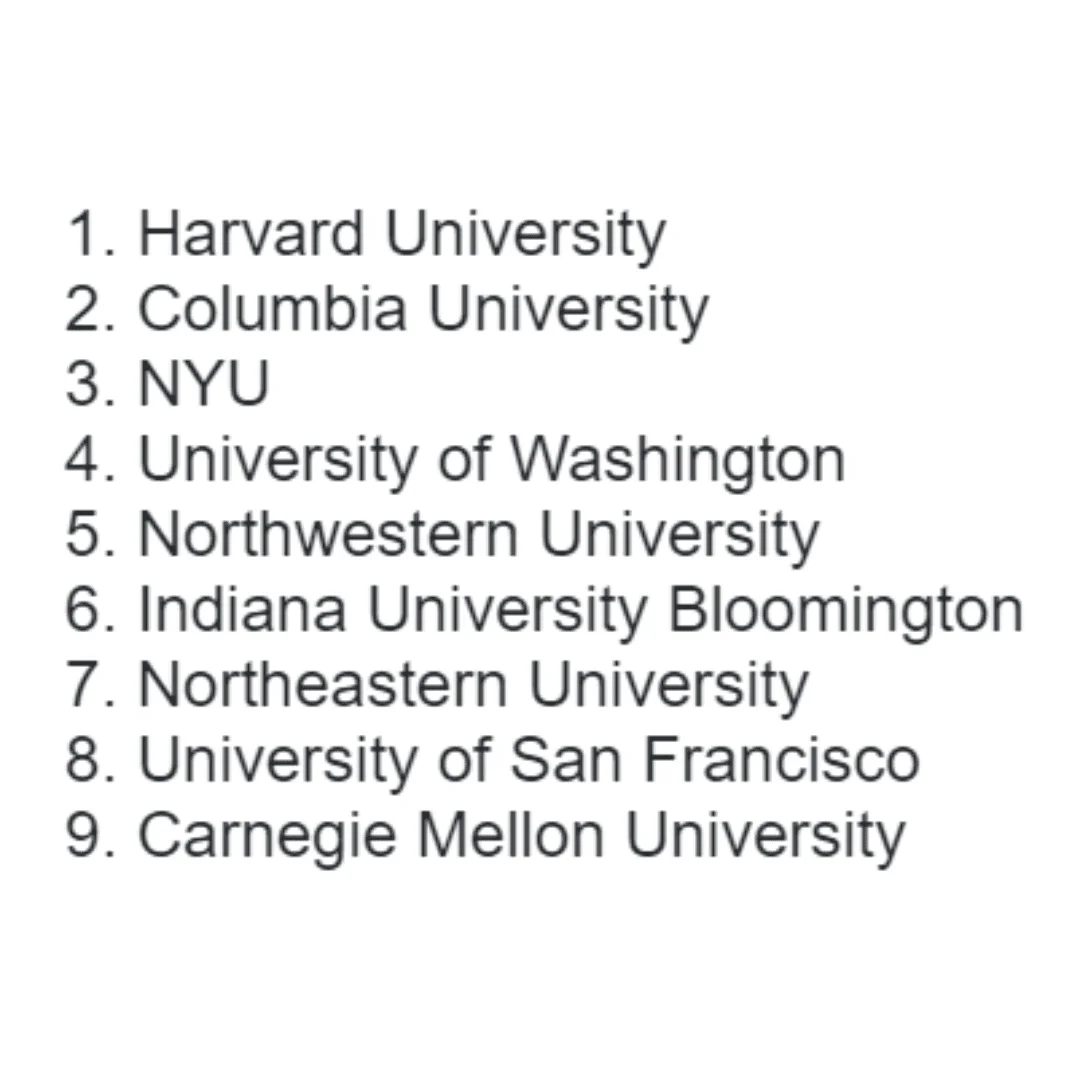
Good Universities for master’s in Data Science
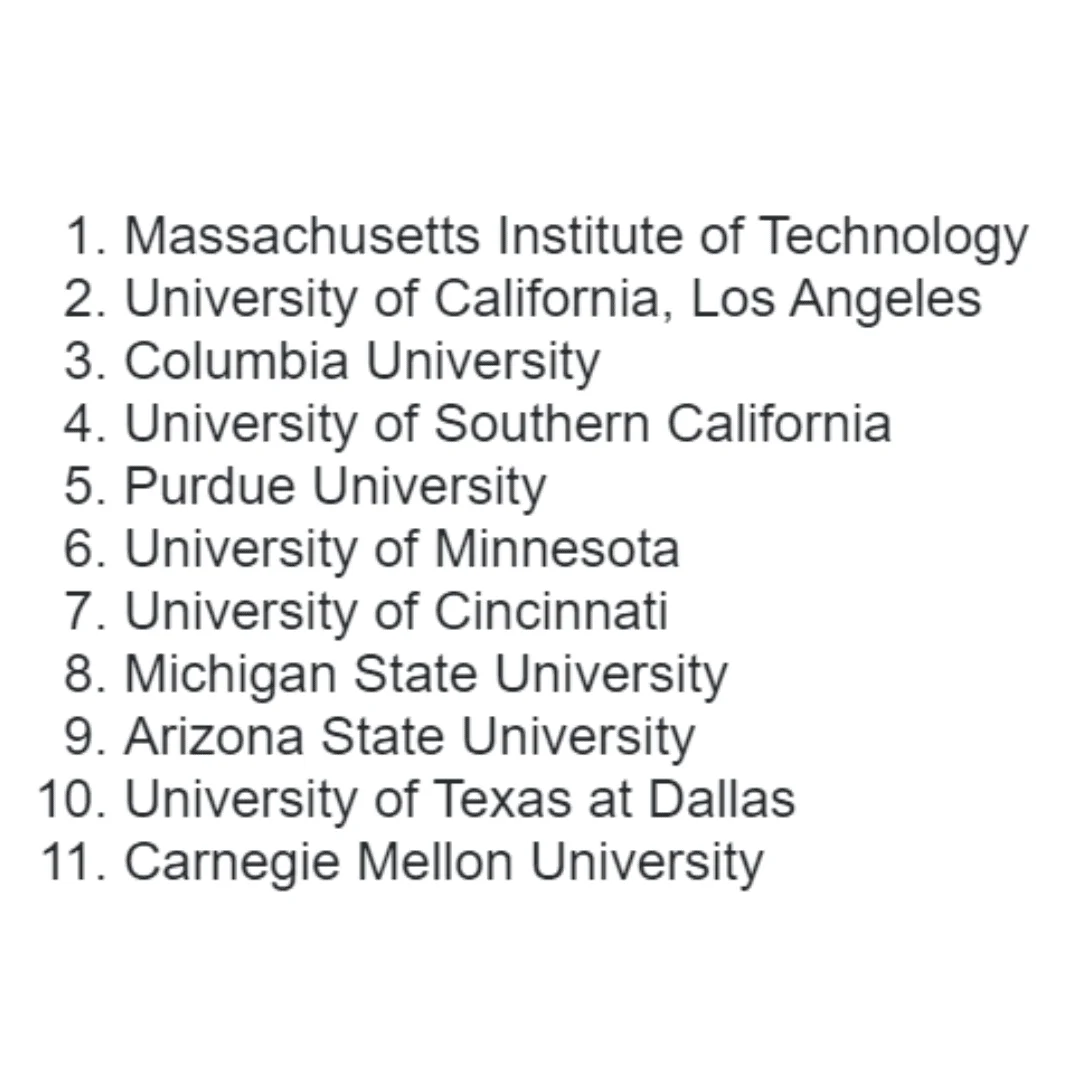
Good Universities for master’s in Business Analytics
Lastly, a word of caution – don’t go by the name alone. Some programs may call it business analytics and may be more technical in nature and vice versa. Study the curriculum carefully before you apply to make sure you get what you are looking for. You don’t want to end up in a soft and less technical program if your goal is to become a data scientist.

Resume Template for MS/MIS Applications

Announcement:

We have partnered with our friends at Resumonk to let you guys build awesome resume without the hassle of editing the Word documents endlessly. And, they have offered their PREMIUM membership to our successful applicants for FREE for 18 months. With their winning resume templates, your dream internships would be lot more closer for you when you are doing MS/MIS in USA. This is worth a value of $38 but you get it for FREE when you join our counseling (selected packages only).

Introducing our ready-to-edit winning resume template for fresher applicants at the bottom of this article! All your headaches solved in one template.

Purpose

Resumes are often taken for granted. While applicants are busy tinkering their SOPs to perfection, everyone thinks resume is a one night job. Well, may be not. After working with some students, I realized that what I thought was obvious about the resume was not so obvious to the students. And fair enough – since I myself had the benefits of years and diverse experiences before I learned the inside out of a resume writing process. So, I figured that it is time to dedicate a full post to resume building.

First, sit and reflect upon who your reader is and what your resume is trying to convey to her. As an applicant, you want your resume to be coherent with rest of your application. So, while your experiences, education and background are factual information, what to highlight is a matter of judgment. For e.g. if you are showing interest in research/applying for PhD etc, your highlight should be on your research projects and publications. Similarly, if you are applying for a MCS kind of program (geared towards landing corporate jobs upon graduation), your focus should be on professional skills, industry experience etc.
So, before you begin, gather your thoughts and decide the areas/skills in your profile that your resume should be highlighting. Continue reading

Winning answer to “Tell me about yourself”

You are qualified for the job and ready to ace an interview. You meet your interviewer, and the first question they ask is, “Tell me about yourself.” You knew this was coming, but you are unsure of what to say and end up ranting. 

That is perhaps one of the worst-case scenarios in terms of an interview. But it does not have to be. 

Interviews can be nerve-racking and can make you give unclear and long answers. All you need is a bit of guidance and some practice. In this article, we bring you a 3-step guide to answer the infamous question, “Tell me about yourself.” We have also added a few examples of how one can answer this question. 

Why does an interviewer ask, “Tell me about yourself”?

To craft your response, you need to understand why this question is relevant in an interview. 

The intent of asking, “Tell me about yourself,” is to know the perception you have about your career and yourself.

Context matters, and since you are applying for a job, your answers should be about your career and qualifications. A good thumb rule to follow is to not reveal too much about your personal life unless it matters to the role you have applied. 

Moreover, this question acts as an icebreaker. It is the first time the two of you might be talking, so it helps the interviewer ease into a conversation and the more complex and technical parts of the interview. Your response also makes the interviewer ask more questions relevant to the job and your experience. 

The interviewer is looking for a person who will be the right fit for the company. It is also a way for the interviewer to assess your communication skill and how well you can articulate your past experiences. 

If answered right, it projects a good impression on the interviewer, increasing your chances of getting that job.

3 tips to answer “Tell me about yourself” 

  1. Prepare beforehand

It is one of the most common questions asked in an interview. And it is a good thing. Since you would be better prepared, you should be ready with your answers beforehand. 

Writing it down on a piece of paper is helpful. Why? Because when we are talking, we are processing what to say in the present and the next few seconds. Writing allows you to process your thoughts. You can make any corrections in a much more tangible form. So write your answer down. We have shared a template below that you can follow to structure your answer.

  1. Research the company and the job

The power of the internet allows you to search for the company. 

What does it stand for, the competitors, and the people in a similar role as you.

You can search for the recent and relevant accomplishments of the organization. You can assess whether mentioning them will help you to leverage them better and stand out. When you shift the focus to why your joining would benefit the company, you set yourself apart from the competition. 

  1. Pick and choose from the resume

If they have called you for an interview, then it means that they went through your resume. 

Avoid saying everything in the resume, and only choose points that need mentioning. Did you help your last company increase their sales by 40%? Mention that, especially if the job description involves sales. When you are answering, humanize your resume instead of reciting it.

A template for answering “Tell me about yourself”

A basic structure can help you answer — Tell me about yourself — in a way that increases your chances of selection. 

You must know the rules to break them. It is not a strict guide but a framework you can use and mold according to your profile and experience.

Hello, my name is XYZ, and I am a [the role you are applying for]. I graduated from ABC colleges with a Bachelor’s in [degree name]. I did my Master’s from EFG college/university in [degree name]. I have experience of [total years/months of relevant experience]. Currently, I work at/ my last company was [current company name]. 

As a [job title], I helped the company in the following ways (mention 1-2 accomplishments). I have also worked at [company names] as a [job title] and helped them achieve [goals]. I want to work with you because I like [mention what you like about the company]. The company seems like an excellent fit for me because [what the company values/the vision of the company] aligns with my values.

Also read: How to create a masterful LinkedIn profile

3 answers to “Tell me about yourself” for different situations

If you are a fresh BBA graduate

Hello, my name is Jon, and I have recently graduated from XYZ college with my BBA degree. In college, I ran a small startup and helped to increase the revenue by 40%. My unique insight and ideas helped us generate [X amounts of money] and gave me a deep understanding of business development. Handling a team and the basics of Accounting is also a part of my skill set. I love that the company is keen on delivering the most seamless experience to the customer since I believe in putting the customer first. As a business development executive, I would fit into your organization.

If you are switching companies

Hello, my name is Pooja, and I am a Software Engineer. I have a bachelor’s degree in Computer Science Engineering from NSIT Delhi. 

Currently, I am working at ABC company as an Associate Software Engineer.

I am adept at developing web applications using Java, PHP. In my last project, I contributed by creating a web app for an American health insurance company. I’ve good communication skills and can collaborate well with onshore teams.

If you are switching job roles

Hello, my name is Rahul, and I have worked as a customer service executive but want to be a part of a dynamic sales team as a sales representative. My experience as a customer service executive has helped me discover the pain points faced by customers. And how to better sell our product. In my previous role, I helped many customers and guided them, which helped retain customers. I want to use my people and problem-solving skills to help your organization reach its short-term and long-term sales goals. 

Conclusion

Communicating your accomplishments and skills is a skill. If answered right, “Tell me about yourself ”can help you position as the most suitable candidate for the role. It is such a guaranteed question that even HBR has written a post on it.

With a little practice, we are sure you can ace it. 

CPT, OPT, H1B – All about student and work visa in USA

cpt opt h1b

Confused about CPT and OPT? How can you work on the student visa in USA? How can you work after graduating?

How does CPT and OPT work?

While many Indian students plan to go to US for advanced degrees, very few are aware of how the visa process works there and why it is important to know about students and work visa before you join any academic program.

F1 visa and Form I20

For students, there are two important visa categories that determine your career prospects. First is student visa (referred to as F1) without which you cannot study in US. When any university accepts you, it will send you a Form I20 which is required to apply for a student visa. Things to note:

  1. Having an I20 alone does not mean that you will get the student visa. You need to apply for it and pass through the interview process.
  2. An I20 from a good reputed university increases the chances of your getting the student visa. This is another reason why students should apply to good universities.
  3. You can study, do an internship and work for a limited time after graduation on student visa.

Good news is that you can work while studying in USA. Here is University of Washington describing employment options for students.

CPT and OPT

Curricular Practical Training (CPT) is a program that temporarily allows international students with an F1 visa to gain practical experience directly related to their major through employment, paid or unpaid internships, or cooperative (co-op) education. It must be part of an established curriculum. CPT must be completed before graduating. In addition, CPT can be part-time (20 hours or less a week) or full time (20 hours or more a week).

Optional Practical Training (OPT) is a program that temporarily allows international students with an F1 visa in the United States to work in relation to their major of study. F1 visa students are eligible for OPT after completing their first academic year. For a normal student, you are allowed 12 months of OPT.

International students with an F1 visa who have completed degrees in certain science, technology, engineering and mathematics (STEM) are eligible for a 24-month extension for post-graduation completion of OPT employment. 

H1B visa for fulltime work

But to work for longer term, you cannot keep using the CPT and OPT. You need the highly competitive work visa – referred to as H1B visa.

H1B visas are issued by employers and you cannot personally apply for them. This means you need to have a job offer from a company who is willing to sponsor your H1B visa (it has non trivial fee plus is subjected to regulations by US govt.).

Few complications are involved such as H1B visas are issued only for some job categories where govt feels enough local American work force is not sufficiently skilled or available. For eg. while H1B visas are easily issued for software programmers, they are not for marketing or HR roles – this is one reason why more foreign students go for Computer Engineering than lets say MS in Marketing. So, while a lot of Marketing jobs may be available in US, it is not necessary that companies will hire international students (who require H1B visas) for these positions.

I witnessed this first hand while doing MBA at NYU. Some of my classmates could not intern at bigger companies like Amex in Marketing roles because they were not sponsoring H1B visas for Marketing department. Usually, if a company cannot sponsor H1B visa in future, they also don’t offer internships to those candidates even though internships do not require H1B. In short, you need to understand that:

  1. To work long term in USA, you NEED H1B visa sponsored by a company.
  2. H1B visas are issued for specific roles and some fields are friendlier to getting these eg. IT, software engineering, finance etc.
  3. Indian students should consider whether they can get work visas after graduating in their desired field or not. If H1B visas are not easily issued in your field of study, one may have to come back to India for employment after graduation.
  4. Even when you get H1B visa, you can only work that employer. This means, you cannot work part time at any other place in parallel and you cannot start your own company while working on H1B visa.
  5. H1B visas are issued for 3 years after which they can be reissued for another 3 years – thus 6 years in total. By the end of your 6 years, if your employer has filed your green card application and it has reached a specific stage, you can keep extending your H1B visa on a yearly basis. However, if your green card has not been filed or did not reach that stage at the end of 6 years, you need to live outside USA for at least 1 year before you can get H1B for 3 years again.
  6. H1B visas are extremely competitive and subject to strict quotas. If the govt. receives more H1B applications than the quota, then they are picked by lottery and your getting the visa depends on your luck.

One more interesting thing about these visas – F1 visas are granted on your intention of coming back to your home country after studying and thus proving that you have no intention of working in USA. Thus, in your F1 visa interviews, you should be prepared to show that you want to come back to India after studying. On contrary, to keep working in USA, you need H1B visa.

A sensitive time comes when you start working on OPT (the limited time for which you can work directly on student visa until you get the H1B) and your company has applied for H1B visa. In this period if you are traveling to India and re-enter USA on F1 visa (till the H1B is issued), you may be declined an entry due to conflict of interests since your H1B application means that you want to work in US whereas F1 visa status expects you to go back to your home country upon completion of your program. This is why some people prefer not to travel after graduation until you have received your H1B visa.

So, you should be aware of some visa intricacies so that you can plan your studies, travel and career accordingly.

Lately, there have been a lot of attacks on H1B by Trump administration. You can read about latest updates on H1B right here on this blog.

Online Career Counseling for Engineers and MBAs

online career counseling

Use our online career counseling services to help you find your happy dream careers 🙂

75% of the engineers are not prepared for the tough job market. On top of that, there are so many courses available online and offline, adding to the confusion. We help you sift through the noise, understand what kind of person you are and what career would make you happy and fulfilled. Because that is what it is all about, isn’t it?

Scholar Strategy Online Career Counseling

We believe that a little introspection can help you save money, precious time and energy. So, we have a simple career QnA package where we can advise you whether you should invest in further education, and what kind of education. We are honest in telling you that a degree will not help you and what should you do instead.

This package is for you if you fall into any of the categories below:

  • I’m a college grad not sure whether to go for MS in USA, MBA or take a job
  • I work fulltime but am feeling stuck in my current job and considering MBA (or another course)
  • I’m a professional not enjoying my current work and wondering what my options are

We believe that higher study is only effective when done in right spirit. If you approach us during your decision-making process, we can help you make the right choice – sometimes, it means not applying for Master’s but switch careers.

Don’t worry, we will accept your query ONLY if we feel we can help you.

How does it work?

  1. We make you fill out a questionnaire about what you want to do, what kind of work you enjoy doing etc. 
  2. Then you will have a 45 min call (with Nistha) in which she will understand your profile and dilemma fully. We will then create a workplan for you and give you two things to work on in the following week. These will be introspective tasks or finding out about a relevant area (just like she told you to find out about MEM). 
  3. You will finish working on the activities suggested to you and then Nistha will do a final 30 min completion call with you to tie the loose ends and make sure you have a clarity going forward.

Email us with a subject line: ‘interested in career counseling’ and we will send you the questionnaire.

Other options online

Careerguide offers a free career test for people deciding their career choices in school. So does iDreamCareer. While these are paid, some websites also offer free career selection tests.

Defer your Fall 2020 admit because of Coronavirus?

defer admit Coronavirus

Are you wondering if you should defer your Fall 2020 admit because of Coronavirus? Read on. At the end of this post, we share a great decision making technique that you can use for yourself.

In our previous post, we discussed overall Covid impact on international students. We also saw 5 ways in which recruitment and job hunt will be affected.

Most of the schools including the mighty Harvard Business School has decided to allow its accepted applicants to defer their admits to next Fall. The other option is to accept the classes online. Some of the schools (eg UMass Amherst) have even offered the option to stretch the program to 4-5 semesters to ease the visa concerns.

Deferring to Fall/Spring 2021 – what does it mean?

Let’s look at the pros con of deferring your admission to next Spring or Fall

To SpringTo next Fall
No CPT for Summer 2021Delay in graduation
Situation may not change – 6 months not long enough to try somethingUncertainty continues for another year

Starting the classes online – what does it mean?

Many schools are giving the option to start the Fall classes online. Here are the pros and cons

ProsCons
Start on timeImpact on peer learning
No delay in graduationImpact on networking
Possible uncertainty on CPT for Summer 2021

Some people may not want to wait much longer since they already have enough work experience. In that case, considering to start the Fall sem online is a way out. Of course, they must reflect on what it means for their jobhunt.

How is the economy looking and what does it mean for your jobhunt?

How is US market looking?

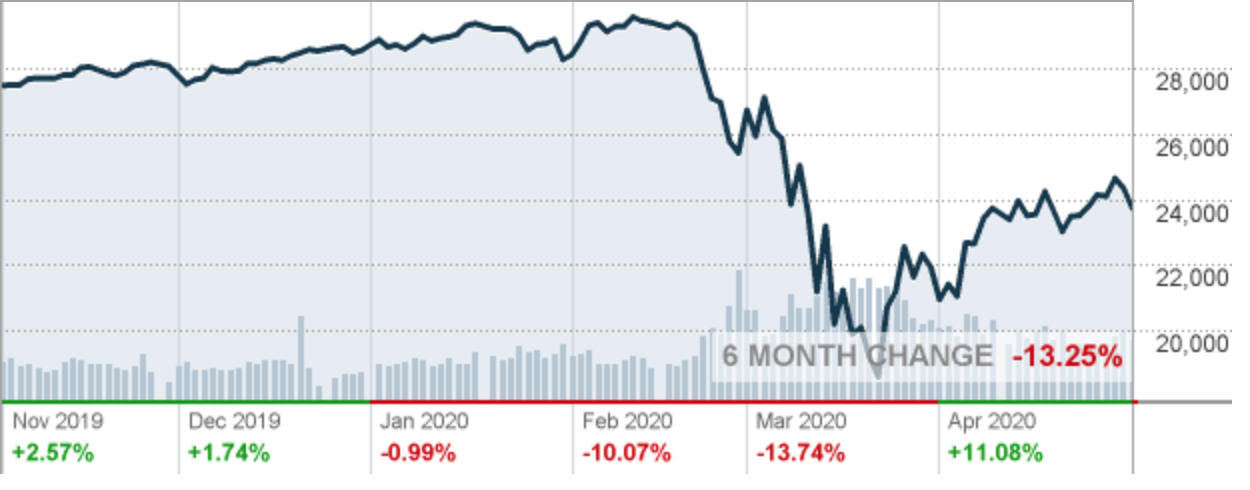
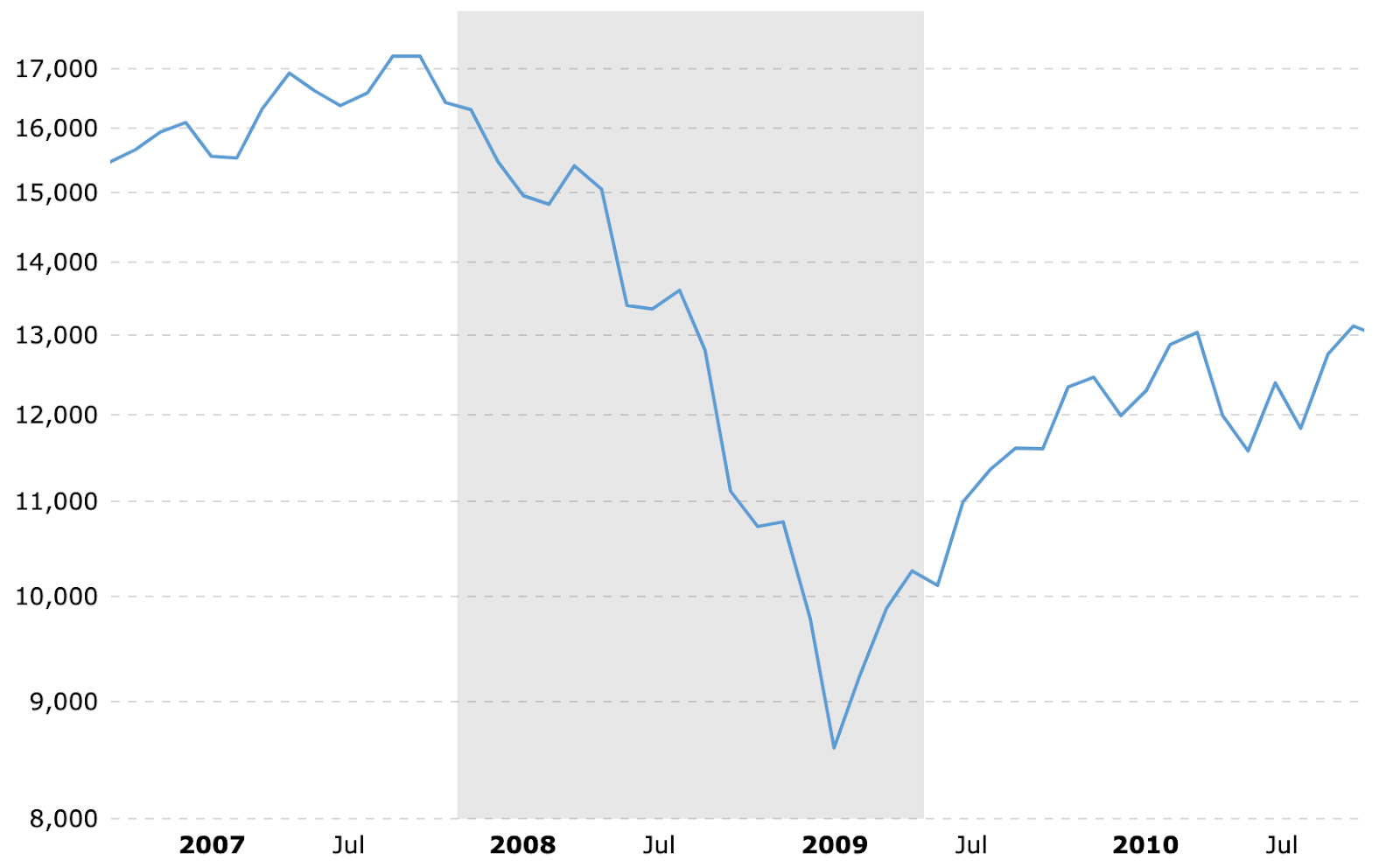
Performance of DJI

The recovery of US markets has been impressively fast and solid. While it took 1 year+ for DJI to bounce back during 2008 recession, it recovered 33% of its losses in 3 weeks. Even the magnitude of decline has been lower.

Why did US market recover so quickly?

Senate approved $2 Trillion Stimulus in record time. It is hailed as the largest-ever economic stimulus package in U.S. history, amounting to 10% of total U.S. gross domestic product. The bill was much larger than the $831 billion stimulus act passed in 2009 as part of the response to the Great Recession.

Bottomline is US government acted rapidly (enacted within ONE week) and decisively. The impact of the stimulus is that 150M people are getting money deposited in their bank accounts. There are further proposals to support the unemployed for at least 6 months.

How is Indian market looking?

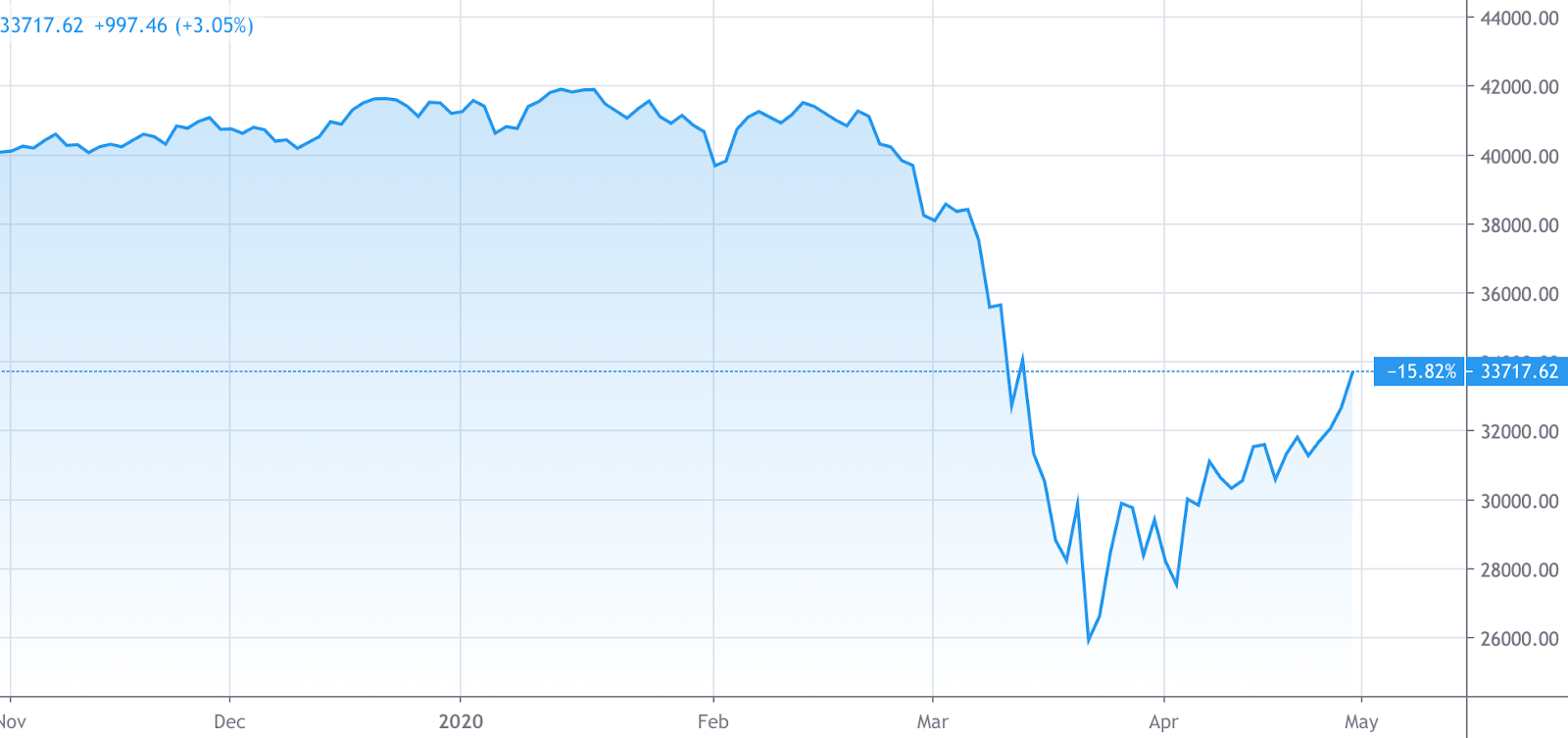
Sensex performance Nov 2019-May 2020

While Indian markets are mirroring the US markets so far, there are many question marks on the fundamental strength and wellbeing of Indian industries.

Moody’s had earlier cut the forecast for India’s GDP growth this year to 0.2%. And very recently, Goldman Sachs slashed it down further to -5%. This foreshadows trouble in Indian economy.

What are the markets telling us worldwide?

The US govt is prepared to do whatever it takes and is looking decisive about keeping the economy afloat.

India and rest of the world is simply mirroring what’s going on in USA. So, if there’s recession in USA, expect a worse recession in India.

What is happening at H1B front and will you get work visas easily?

Trump can resort to stricter immigration steps to improve his re-election campaign. As pointed out in my previous article, Trump is against the IT outsourcing companies sending their folks on H1B and NOT against students like you.

In May, we had a team of Democrat and Republican Senators proposing a H1B Reform Act which is a great news for people studying in USA. Read our detailed commentary on the same and what it can mean for you.

How might US Presidential election complicate things?

  • Trump means solid economy but tricky H1B visas
  • Democrats victory means softer economy but better H1B visa

Should you defer your admit because of Coronavirus?

At the end, you have to decide for yourself keeping all the above information in mind.

On one hand, US economy has strong foundation. Even if there is a slowdown in second half of 2020, the markets are expected to recover well and healthily in <1 year. Same cannot be said for India. The GDP is declining more than expected and job losses are mounting. Indian government doesn’t have the wherewithal to support everyone whereas US just did. They are putting money in bank accounts directly, they are prepared to act tough if required.

On other hand, there may be short term challenges if companies go shy in sponsoring H1Bs which directly impacts internships and jobs. Also, cutting back on funding may lead to fewer assistantships and scholarships – making it overall more expensive. Dollar however remains strong.

But keeping all these facts aside, it boils down to what matters the most to you. We share a great technique below that you can use to make this decision more wisely for yourself.

5 ways Coronavirus (Covid-19) will impact the job market for Master’s students

coronavirus job impact

Here are 5 ways that Coronavirus will impact the job market for current and aspiring graduate students. The better you understand this, better it will be for your jobhunt strategy.

Covid 19 toll is increasing day by day on the whole world. As we adjust to this new normal, here are few things to keep in mind for MS and MBA candidates.

Coronavirus job search impact

Apart from the learning impact which is happening as classes are being conducted virtually, there is a fear how badly coronavirus will affect the job hunt. As we all know, Coronavirus will leave behind a massive global recession. This means that whatever you are used to in your job hunt strategy is going to be questioned.

1. Remote jobs will increase

This one is a no-brainer.

Between 2005 to 2017, there was a 159% increase in remote work. In 2015, 3.9 million U.S. workers were working remotely. At the start of 2020, that number stood at 4.7 million, or 3.4% of the population. Here is the kicker – March roadrolled it all. Today, nearly 90% of white collar jobs are happening remotely!

Tailor your resume and mention any successful projects you have completed remotely. Highlight that you are comfortable and conversant in working remotely to get empathetic brownie points from the hiring manager.

2. Referrals will become critical in recruiting

The immediate effect of the lockdown is cancellation of campus events, job fairs and so on. If you are to survive in the coronatimes, you will have to get comfortable finding the jobs from your home. While on-campus career portals will continue, a major part of your job hunt would be on your own.

Secondly, due to the budget constraints and recession slump, employers will be more cautious in recruiting. At such times, one usually falls back on the most reliable source of hiring – referrals. That’s right, finding referrals can make or break your job hunt. Your best bet is to get existing people to refer you in their companies. This is also where networking skills make a huge difference in your success.

Read: Masterclass on ‘How to find internships and jobs in coronavirus times and recessions

3. Visa sponsorship will become more scarce

Bad news – companies will get more selective in sponsoring H1Bs (and work visas in other countries). Nothing much can be done about it. It will help to talk to your International Students Office and get tips on how to get the max of your OPT period.

4. Revenue contributing roles will survive

When the economies are booming, even the supportive and non-revenue generating jobs are on the rise. But when the purse strings are tightened, these roles are the first to get shed. And it does not mean that only administrative roles are affected.

Think it like this – are you contributing directly to your company’s top line? For eg. Google search or adwords team are critical to it at all times whereas those experimental projects may get shelved when times are tough. While data science role may be critical to Netflix, a funded content startup could have hired a data scientist just to show it off to its investors.

Try to find roles which are crucial to the company’s revenue generation as they are safer and more promising in long run.

5. Few industries will dry up

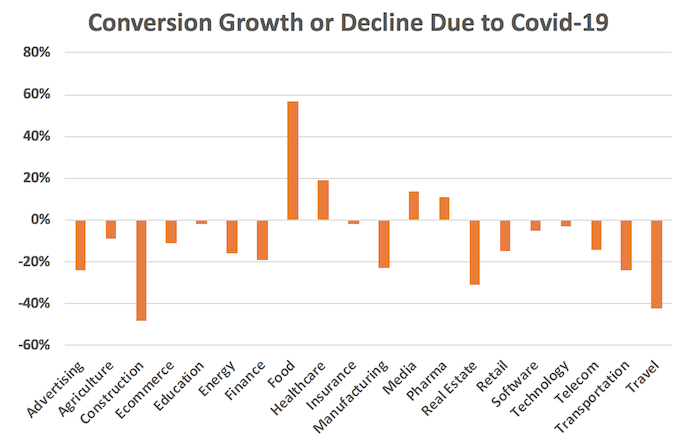
It breaks my heart to see how brutally the travel sector has been hammered in the covid-19 crisis. It is probably a good time to join an edtech, healthcare or foodtech company as opposed to retail, construction, or transportation. The idea is to focus on industries that are hiring and not, firing.

Industries impacted y coronavirus

Who is hiring or firing?

These companies have frozen their hiring due to Coronavirus
Top Bay Area Startups That Are Hiring Right Now

How do you cope up with something like this?

Yes, the future is looking bleak. As per BBC, nearly 200 million people could end up out of work by mid 2020. But it is at times like these, we need to look at this pandemic for what it is – a jolt to our world. Remember, while you are only feeling the brunt on your job prospects, there are millions dying.

This is truly a testing time for humanity and the ultimate strength we all can find in is in knowing that our world has changed. Covid-19 is bigger than a job loss, you or me. People have lost lives, dear ones, homes, life savings and hope. As you try to build your own life, try helping those around you too. The only thing that can help pull us out of this gloom is grace, kindness and generosity. Let us be grateful for where we are and what we have NOT lost – our health, our families and food.

I am sure you will conquer this. Hang in, there. Stay safe, stay sane.

How can we help you?

We are doing our best to collect resources on helping you combat the covid-19 crisis. Keep up to date on Coronavirus impact on international students here. Comment what else do you want to hear from us.

How to create resume for internships in Grad School?

There is plenty of advice out there about resumes. And, some of it contradicts. Some people recommend creating a visual resume that stands out. Some say that your resume should be primarily text.

It all matters in different situations.

Let us focus on grad school internships for now. If you are applying for grad school, then look at my earlier post (includes a free template to download). Ok, so internships are about relevant projects and primarily your work experience. That is what you need to highlight.

Instead of generic gyaan, I am critiquing three real resumes to better understand what kind of mistakes to avoid. You will have to watch the video for that, don’t worry its pretty short.

Key things to remember

  1. Most of the space should be used on relevant professional experience.
  2. Don’t forget to mention the projects and coursework you are currently taking in school.
  3. Don’t forget to mention your LinkedIn profile (and make sure its up to date).
  4. Use the keywords mentioned in the job description.
  5. Keep the formatting (font sizes and spacing) readable.

There you go, I will do few more videos on resume soon. Stay tuned and don’t forget to subscribe to the YouTube channel.

We have received our latest admit to Harvard Data Science and we are celebrating! Join us to land at your dream school.