Winning answer to “Tell me about yourself”

You are qualified for the job and ready to ace an interview. You meet your interviewer, and the first question they ask is, “Tell me about yourself.” You knew this was coming, but you are unsure of what to say and end up ranting. 

That is perhaps one of the worst-case scenarios in terms of an interview. But it does not have to be. 

Interviews can be nerve-racking and can make you give unclear and long answers. All you need is a bit of guidance and some practice. In this article, we bring you a 3-step guide to answer the infamous question, “Tell me about yourself.” We have also added a few examples of how one can answer this question. 

Why does an interviewer ask, “Tell me about yourself”?

To craft your response, you need to understand why this question is relevant in an interview. 

The intent of asking, “Tell me about yourself,” is to know the perception you have about your career and yourself.

Context matters, and since you are applying for a job, your answers should be about your career and qualifications. A good thumb rule to follow is to not reveal too much about your personal life unless it matters to the role you have applied. 

Moreover, this question acts as an icebreaker. It is the first time the two of you might be talking, so it helps the interviewer ease into a conversation and the more complex and technical parts of the interview. Your response also makes the interviewer ask more questions relevant to the job and your experience. 

The interviewer is looking for a person who will be the right fit for the company. It is also a way for the interviewer to assess your communication skill and how well you can articulate your past experiences. 

If answered right, it projects a good impression on the interviewer, increasing your chances of getting that job.

3 tips to answer “Tell me about yourself” 

  1. Prepare beforehand

It is one of the most common questions asked in an interview. And it is a good thing. Since you would be better prepared, you should be ready with your answers beforehand. 

Writing it down on a piece of paper is helpful. Why? Because when we are talking, we are processing what to say in the present and the next few seconds. Writing allows you to process your thoughts. You can make any corrections in a much more tangible form. So write your answer down. We have shared a template below that you can follow to structure your answer.

  1. Research the company and the job

The power of the internet allows you to search for the company. 

What does it stand for, the competitors, and the people in a similar role as you.

You can search for the recent and relevant accomplishments of the organization. You can assess whether mentioning them will help you to leverage them better and stand out. When you shift the focus to why your joining would benefit the company, you set yourself apart from the competition. 

  1. Pick and choose from the resume

If they have called you for an interview, then it means that they went through your resume. 

Avoid saying everything in the resume, and only choose points that need mentioning. Did you help your last company increase their sales by 40%? Mention that, especially if the job description involves sales. When you are answering, humanize your resume instead of reciting it.

A template for answering “Tell me about yourself”

A basic structure can help you answer — Tell me about yourself — in a way that increases your chances of selection. 

You must know the rules to break them. It is not a strict guide but a framework you can use and mold according to your profile and experience.

Hello, my name is XYZ, and I am a [the role you are applying for]. I graduated from ABC colleges with a Bachelor’s in [degree name]. I did my Master’s from EFG college/university in [degree name]. I have experience of [total years/months of relevant experience]. Currently, I work at/ my last company was [current company name]. 

As a [job title], I helped the company in the following ways (mention 1-2 accomplishments). I have also worked at [company names] as a [job title] and helped them achieve [goals]. I want to work with you because I like [mention what you like about the company]. The company seems like an excellent fit for me because [what the company values/the vision of the company] aligns with my values.

Also read: How to create a masterful LinkedIn profile

3 answers to “Tell me about yourself” for different situations

If you are a fresh BBA graduate

Hello, my name is Jon, and I have recently graduated from XYZ college with my BBA degree. In college, I ran a small startup and helped to increase the revenue by 40%. My unique insight and ideas helped us generate [X amounts of money] and gave me a deep understanding of business development. Handling a team and the basics of Accounting is also a part of my skill set. I love that the company is keen on delivering the most seamless experience to the customer since I believe in putting the customer first. As a business development executive, I would fit into your organization.

If you are switching companies

Hello, my name is Pooja, and I am a Software Engineer. I have a bachelor’s degree in Computer Science Engineering from NSIT Delhi. 

Currently, I am working at ABC company as an Associate Software Engineer.

I am adept at developing web applications using Java, PHP. In my last project, I contributed by creating a web app for an American health insurance company. I’ve good communication skills and can collaborate well with onshore teams.

If you are switching job roles

Hello, my name is Rahul, and I have worked as a customer service executive but want to be a part of a dynamic sales team as a sales representative. My experience as a customer service executive has helped me discover the pain points faced by customers. And how to better sell our product. In my previous role, I helped many customers and guided them, which helped retain customers. I want to use my people and problem-solving skills to help your organization reach its short-term and long-term sales goals. 

Conclusion

Communicating your accomplishments and skills is a skill. If answered right, “Tell me about yourself ”can help you position as the most suitable candidate for the role. It is such a guaranteed question that even HBR has written a post on it.

With a little practice, we are sure you can ace it. 

MBA in Canada for Indian applicants

MBA in Canada

Canada has quite a few B Schools in Top 100 list. Check out this thorough analysis of MBA in Canada – best programs, cost, scholarships etc.

Why consider an MBA in Canada?

Canada has one of the best educational colleges and universities in the world. It has excellent MBA programs, and the applicants often prefer Canadian universities as their dream institutes. Multicultural society, affordable education, and high quality of living standards are few of the many factors due to which students should consider applying for an MBA in Canada.

Cost of living in Canada

An MBA degree from Canada is quite expensive, and on average, regular MBA cost about $30,000. To maintain good living standards in metropolitan cities of Canada, you can expect around $2500 – $3000 of expenses per month, which includes living costs, accommodation rent, and food. It may seem very expensive, but once the students have completed their MBA, they are offered high-paying jobs with good initial packages.

Quality of life in Canada

Canada has very high living standards, which are a huge attraction for pupils all over the globe. In addition to a multicultural society, Canada has one of the best healthcare and education systems. The tuition fees of Canadian universities are much lower than in the USA, but it should be kept in mind that MBA programs are still a very costly degree in Canada.

Also read: MS in Canada compared to MS in USA

Top Business Schools in Canada

According to the Global Financial Times ranking of educational institutes, the top 8 business schools in Canada are:

  1. Rotman School of Management – University of Toronto
  2. Ivey Business School of University of Western
  3. Queen’s University- Stephen J.R. Smith School of Business
  4. Schulich School of Business, York University
  5. HEC Montréal
  6. McGill University
  7. The University of British Columbia – Sauder School of Business
  8. University of Alberta

Top Executive MBA programs in Canada

The purpose of the executive MBA programs improves the managerial capabilities of experienced business professionals belonging to different sectors. It provides the opportunity of expanding career potential, enhancing leadership qualities, and obtaining experience in multicultural international management. The majority of the Executive MBA programs in Canada are highly flexible in terms of scheduling and adapting to the working hours of the professionals.

The top Executive MBA programs in Canada are offered by:

  1. Rotman School of Management
  2. Queen’s Smith School of Business – The National Program
  3. Queen’s Smith School of Business, Cornell-Queen’s
  4. Kellogg – Schulich    
  5. HEC Montréal/McGill           
  6. University of Alberta
  7. Concordia University
  8. McMaster University
  9. University of Montréal
  10. University of Waterloo
  11. University of Western Ontario

Also read: Courses with high ROI in Canada

Cost and Duration of MBA at Top Business Schools in Canada

Institute Duration Average Fee
Rotman School of Management 2 years $84,028
York University – Schulich 2 years $99,400
Queen’s Smith School of Business 1 year $71,445
University of Alberta 20 months $53,392
McGill Desautel 20 months $89,000
UBC Saucier 16 months $60,440
HEC Montreal 1 year $33,200
Ivey Business School 1 year $101,500

Eligibility to pursue MBA in Canada

The following things are necessary to get enrolled in an MBA program in Canada:

Bachelor’s Degree

The candidates wishing to pursue an MBA from Canada must have a Bachelor’s degree or an equal qualification of 14 years from a recognized educational institute.

Work Experience

The majority of the universities in Canada give preference to candidates who have work experience of at least 12 months in any field related to the business. Having work experience is not an obligation for the candidates, but it increases their chances of getting admission in the desired MBA program in a Canadian university.

Command over the English Language

Candidates whose first language is not English, as the students from India, are under the obligation to prove their proficiency in the English language by passing standardized language tests like IELTS or TOEFL.

GMAT

GMAT is the standardized admission test for admission in postgraduate programs in most of the foreign universities. A good GMAT score is necessary to get admission to a top MBA program in Canada.

University GMAT Score
University of Toronto 672
McGill University 655
University of Western   655
Queen’s University 650
University of British Columbia 646
HEC Montreal 630
University of Alberta 623

Also read: Best MBA programs in Europe for Indians

Application Process

The application process of seeking admission to an MBA degree in a Canadian university is extensive and quite exhaustive for many candidates. However, if you start planning early and acquire all the information necessary to get admission into your dream university, the whole procedure can become easy for you. You should start the application process at least 14 to 19 months before the start of your decided session. Admission forms are available on the official websites of the universities. If you face any problem in getting the form or other required documents, you should contact the admission office of the university immediately.

Documents Required

In addition to any documents that may be asked by the respective universities you are applying to, the documents that are generally required by all institutes are:

  1. Academic Records: All of the necessary documents and certifications required to verify your record, especially related to the most recent graduation degree.
  2. English Proficiency tests: IELTS or TOEFL scores are required to determine your command over the English language.
  3. Standardized Admission Tests: For postgraduate programs, like MBA, GMAT scores are the basis of application.
  4. Work Experience: If you have work experience in any field, you must produce a certification or some kind of document to prove it.
  5. Financial Records: Bank statements and other financial records are required as proof of your financial health.
  6. Recommendation Letters: These letters work as the testimonial of your behavior and work ethics. They can be produced from your previous supervisor or your former university faculty who have observed and worked with you.
  7. Essay: Personal essay or statement of purpose play a significant role in the admission of a candidate. The admission committee assesses the candidates on the basis of their personal essays and finalizes their admission on its basis as well.
  8. Visa and legal documents: Legal documents related to visa and citizenship.

If you have managed to get admission to the university, a ‘Letter of Offer’ will be sent to you, and a response will be expected from you as well.

Financial Aid & Scholarships in Canada

There are very few and limited scholarships available for MBA programs in Canada because the MBA is a professional degree. However, candidates with exceptional academic records and achievements like extraordinary extracurricular activities can get scholarships.

Candidates with impressive achievements and an excellent score in GMAT are usually given a 50% scholarship off the total fee.

Similarly, numerous financial aid programs are available to help the students who have financial hurdles in getting an MBA degree from Canada. Some of the most popular financial aid schemes in Canada are:

Ontario Graduate Scholarships (OGS)

OGS is funded by the Canadian government. It covers the master and doctoral programs and helps many students in getting a good financial aid plan.

University of Waterloo Graduate Scholarship

The University of Waterloo offers scholarships at the graduate level to the deserving and exceptional candidates. It is a highly-competitive scholarship as a large number of candidates apply for the scholarship.

Central Sector Scheme of National Overseas Scholarship

Central Sector Scheme is an initiative by the Government of India. It gives scholarships to the meritorious students who wish to pursue a master’s or Ph.D. in a foreign university. All of the major countries are covered under this scholarship expect the United Kingdom.

Also read: Study abroad scholarships for students

10 reasons why you should pursue MBA after engineering

why MBA after Engineering

Pursuing an MBA after engineering has become a popular career choice for engineers in the recent past. No wonder people scoring the most in CAT or Indians making it to Harvard and Stanford Business Schools are often engineers from IITs. As per few reports, the acceptance rate of IITs is only 1% as compared to MIT which stands at 8%.

I was once giving a talk at a college and someone asked me how did I get into career coaching and writing books after an engineering degree. To that, I replied, “Because every Indian is allowed to have a passion but she first needs to complete engineering.” Jokes apart, there are multiple good reasons why you should consider an MBA after engineering.

Why MBA after Engineering?

Every engineer, one in her lifetime, faces this dilemma – to MBA or not to MBA.

I myself pursued an MS in Computer Science first, worked on Wall Street and felt the need for an MBA eventually. This is when I knew what I wanted to get out of MBA – I wanted to get into startups. So, I headed to NYU Stern and hustled like crazy. In the end, I got what I was looking for – 2 fulltime job offers in my first summer itself. So, I decided to drop out from Stern – my purpose was solved.

So yes, I am a big proponent of an MBA in life but I put only one condition – do it ONLY when you know what you will use it for.

Now, here are some great reasons why you may consider MBA after engineering.

1. Career growth / promotions

At MNCs, it is difficult to get promoted beyond a point on your merit alone. A bling on your resume i.e. a reputed MBA degree can take you far in your professional ambitions. This is true especially for certain industries such as Management Consulting and Investment Banking that rely heavily on MBA grads.

2. Expanding your knowledge beyond technical domain

One you get out into real world after your college, you realize how little you know about interest rates, balance sheets, GDP, stock markets and so on. To follow the micro and macro economic developments and to be able to talk intelligently about it, you need to broaden your exposure. While MBA is not the only way to do it, it is a very good way of doing it.

3. Holistic understanding of business

After a bachelors and masters in engineering, I was comfortable solving equations and writing code. But I had no clue what drove stock market. The mention of balance sheet made me stare blankly. I would see the CEOs talk confidently about the business and I felt I was missing out on the fun.

The crux was that I felt my whole learning was one dimensional and while engineering gave me a great analytical foundation, I wanted to understand the practical aspects of finance and management. I did harbor ambitions of starting up someday and felt that studying business as a major could fill certain voids in my knowledge.

This is why I chose to go for MBA and got into NYU Stern.


Don’t miss the MBA Workshop

Nistha is offering her paid advice for FREE in this one-time-only workshop.

Sunday, May 8 at 3pm IST

Click to register


4. Switching careers

MBA makes sense if it can help in career switch you are looking for. For example, if you are a software engineer looking to get into Finance, yes MBA will give you what you need and may be the only option you have.

5. Feeling stuck in your professional life

Many people feel stuck in their career growth in an industry that values MBA a lot. Therefore they need an MBA to move beyond a certain level. For e.g. some companies such as Big 4 Consulting or Wall Street may not consider you for executive roles unless you have an MBA.

Secondly, one may start feeling uninspired in their 30s and not fulfilled in their corporate jobs. Switching industries or roles at this stage is typically possible only through an MBA or specialized Master’s degree.

6. Getting higher salaries

Yes, want more dough and prestige? Getting that coveted MBA degree may be a perfect way of elevating yourself in the job market and competing for salaries that otherwise look out of reach. For example, average salary post MBA in USA was $116,000 in 2017.

7. Seeking leadership positions

Leadership is more than domain and subject matter expertise. Leaders need people skills, decision making prowess and ability to negotiate, strategize and maneuver their teams in tough times – these are the core skills that an MBA program teaches you. No wonder, >90% CEOs come from MBA backgrounds.

8. Personal development

Having done both MS and MBA from American Universities, I can clearly see the difference between Professors in Business Schools vs those in Engineering Schools.

B School Professors are charismatic. Their lectures are more like art performances. They reel you in, keep you engaged, intrigued and in awe. Engineering school faculty is no doubt, genius, but they lack the inter personal skills that makes the audience go ‘wow’.

If you want to improve your ‘presence’, MBA is a great transformer. I pushed myself outside every comfort zone back in my MBA days. I started speaking more, taking more chances, and became uber confident – all thanks to the MBA ecosystem.

9. Lack of other options

Some people became engineers but have no interest in pursuing a technical or administrative career. MBA is usually a good way out for such people.

10. Meeting interesting and ambitious peers

MBA eventually is about its brand and networking opportunities. How much is that worth to you is something you need to figure out. At NYU Stern, I had a working group of an Italian banker, an American lawyer, an American banker and a Chinese consultant. Such diversity and peer learning is a big selling point to top ranked MBA programs.

Let’s look at some FAQs

Should I do an MS/MTech or an MBA after engineering?

If you have interest in technical fields and want to be an engineer in a core technology company, MS or MTech is better. Also, you can do MBA after MS/MTech.

Does it make sense to consider MBA after engineering?

Absolutely, some of the most successful MBA grads are engineers by background.

When should I decide whether to do an MBA after engineering?

Many people go for MBA right after engineering college. This is okay only if you know what stream you want to choose in your MBA. Business Schools prefer candidates with some work experience. So if you are not sure, wait and get some work experience before going for MBA.

Do I need to have work experience before MBA?

Not necessarily but it helps.

How can I decide whether to do an MBA or not?

If you are not sure, talk to a career counselor such as Scholar Strategy. Make sure you take guidance from someone who has done MBA themselves.

How do I prepare for an MBA after engineering?

You need to clear the CAT test if you wish to pursue MBA in India and GRE/GMAT if you wish to pursue an MBA abroad. 

How can Scholar Strategy help in my MBA applications?
Check our MBA Application Service and contact us.

CPT, OPT, H1B – All about student and work visa in USA

cpt opt h1b

Confused about CPT and OPT? How can you work on the student visa in USA? How can you work after graduating?

How does CPT and OPT work?

While many Indian students plan to go to US for advanced degrees, very few are aware of how the visa process works there and why it is important to know about students and work visa before you join any academic program.

F1 visa and Form I20

For students, there are two important visa categories that determine your career prospects. First is student visa (referred to as F1) without which you cannot study in US. When any university accepts you, it will send you a Form I20 which is required to apply for a student visa. Things to note:

  1. Having an I20 alone does not mean that you will get the student visa. You need to apply for it and pass through the interview process.
  2. An I20 from a good reputed university increases the chances of your getting the student visa. This is another reason why students should apply to good universities.
  3. You can study, do an internship and work for a limited time after graduation on student visa.

Good news is that you can work while studying in USA. Here is University of Washington describing employment options for students.

CPT and OPT

Curricular Practical Training (CPT) is a program that temporarily allows international students with an F1 visa to gain practical experience directly related to their major through employment, paid or unpaid internships, or cooperative (co-op) education. It must be part of an established curriculum. CPT must be completed before graduating. In addition, CPT can be part-time (20 hours or less a week) or full time (20 hours or more a week).

Optional Practical Training (OPT) is a program that temporarily allows international students with an F1 visa in the United States to work in relation to their major of study. F1 visa students are eligible for OPT after completing their first academic year. For a normal student, you are allowed 12 months of OPT.

International students with an F1 visa who have completed degrees in certain science, technology, engineering and mathematics (STEM) are eligible for a 24-month extension for post-graduation completion of OPT employment. 

H1B visa for fulltime work

But to work for longer term, you cannot keep using the CPT and OPT. You need the highly competitive work visa – referred to as H1B visa.

H1B visas are issued by employers and you cannot personally apply for them. This means you need to have a job offer from a company who is willing to sponsor your H1B visa (it has non trivial fee plus is subjected to regulations by US govt.).

Few complications are involved such as H1B visas are issued only for some job categories where govt feels enough local American work force is not sufficiently skilled or available. For eg. while H1B visas are easily issued for software programmers, they are not for marketing or HR roles – this is one reason why more foreign students go for Computer Engineering than lets say MS in Marketing. So, while a lot of Marketing jobs may be available in US, it is not necessary that companies will hire international students (who require H1B visas) for these positions.

I witnessed this first hand while doing MBA at NYU. Some of my classmates could not intern at bigger companies like Amex in Marketing roles because they were not sponsoring H1B visas for Marketing department. Usually, if a company cannot sponsor H1B visa in future, they also don’t offer internships to those candidates even though internships do not require H1B. In short, you need to understand that:

  1. To work long term in USA, you NEED H1B visa sponsored by a company.
  2. H1B visas are issued for specific roles and some fields are friendlier to getting these eg. IT, software engineering, finance etc.
  3. Indian students should consider whether they can get work visas after graduating in their desired field or not. If H1B visas are not easily issued in your field of study, one may have to come back to India for employment after graduation.
  4. Even when you get H1B visa, you can only work that employer. This means, you cannot work part time at any other place in parallel and you cannot start your own company while working on H1B visa.
  5. H1B visas are issued for 3 years after which they can be reissued for another 3 years – thus 6 years in total. By the end of your 6 years, if your employer has filed your green card application and it has reached a specific stage, you can keep extending your H1B visa on a yearly basis. However, if your green card has not been filed or did not reach that stage at the end of 6 years, you need to live outside USA for at least 1 year before you can get H1B for 3 years again.
  6. H1B visas are extremely competitive and subject to strict quotas. If the govt. receives more H1B applications than the quota, then they are picked by lottery and your getting the visa depends on your luck.

One more interesting thing about these visas – F1 visas are granted on your intention of coming back to your home country after studying and thus proving that you have no intention of working in USA. Thus, in your F1 visa interviews, you should be prepared to show that you want to come back to India after studying. On contrary, to keep working in USA, you need H1B visa.

A sensitive time comes when you start working on OPT (the limited time for which you can work directly on student visa until you get the H1B) and your company has applied for H1B visa. In this period if you are traveling to India and re-enter USA on F1 visa (till the H1B is issued), you may be declined an entry due to conflict of interests since your H1B application means that you want to work in US whereas F1 visa status expects you to go back to your home country upon completion of your program. This is why some people prefer not to travel after graduation until you have received your H1B visa.

So, you should be aware of some visa intricacies so that you can plan your studies, travel and career accordingly.

Lately, there have been a lot of attacks on H1B by Trump administration. You can read about latest updates on H1B right here on this blog.

Online Career Counseling for Engineers and MBAs

online career counseling

Use our online career counseling services to help you find your happy dream careers 🙂

75% of the engineers are not prepared for the tough job market. On top of that, there are so many courses available online and offline, adding to the confusion. We help you sift through the noise, understand what kind of person you are and what career would make you happy and fulfilled. Because that is what it is all about, isn’t it?

Scholar Strategy Online Career Counseling

We believe that a little introspection can help you save money, precious time and energy. So, we have a simple career QnA package where we can advise you whether you should invest in further education, and what kind of education. We are honest in telling you that a degree will not help you and what should you do instead.

This package is for you if you fall into any of the categories below:

  • I’m a college grad not sure whether to go for MS in USA, MBA or take a job
  • I work fulltime but am feeling stuck in my current job and considering MBA (or another course)
  • I’m a professional not enjoying my current work and wondering what my options are

We believe that higher study is only effective when done in right spirit. If you approach us during your decision-making process, we can help you make the right choice – sometimes, it means not applying for Master’s but switch careers.

Don’t worry, we will accept your query ONLY if we feel we can help you.

How does it work?

  1. We make you fill out a questionnaire about what you want to do, what kind of work you enjoy doing etc. 
  2. Then you will have a 45 min call (with Nistha) in which she will understand your profile and dilemma fully. We will then create a workplan for you and give you two things to work on in the following week. These will be introspective tasks or finding out about a relevant area (just like she told you to find out about MEM). 
  3. You will finish working on the activities suggested to you and then Nistha will do a final 30 min completion call with you to tie the loose ends and make sure you have a clarity going forward.

Email us with a subject line: ‘interested in career counseling’ and we will send you the questionnaire.

Other options online

Careerguide offers a free career test for people deciding their career choices in school. So does iDreamCareer. While these are paid, some websites also offer free career selection tests.

Defer your Fall 2020 admit because of Coronavirus?

defer admit Coronavirus

Are you wondering if you should defer your Fall 2020 admit because of Coronavirus? Read on. At the end of this post, we share a great decision making technique that you can use for yourself.

In our previous post, we discussed overall Covid impact on international students. We also saw 5 ways in which recruitment and job hunt will be affected.

Most of the schools including the mighty Harvard Business School has decided to allow its accepted applicants to defer their admits to next Fall. The other option is to accept the classes online. Some of the schools (eg UMass Amherst) have even offered the option to stretch the program to 4-5 semesters to ease the visa concerns.

Deferring to Fall/Spring 2021 – what does it mean?

Let’s look at the pros con of deferring your admission to next Spring or Fall

To SpringTo next Fall
No CPT for Summer 2021Delay in graduation
Situation may not change – 6 months not long enough to try somethingUncertainty continues for another year

Starting the classes online – what does it mean?

Many schools are giving the option to start the Fall classes online. Here are the pros and cons

ProsCons
Start on timeImpact on peer learning
No delay in graduationImpact on networking
Possible uncertainty on CPT for Summer 2021

Some people may not want to wait much longer since they already have enough work experience. In that case, considering to start the Fall sem online is a way out. Of course, they must reflect on what it means for their jobhunt.

How is the economy looking and what does it mean for your jobhunt?

How is US market looking?

Performance of DJI

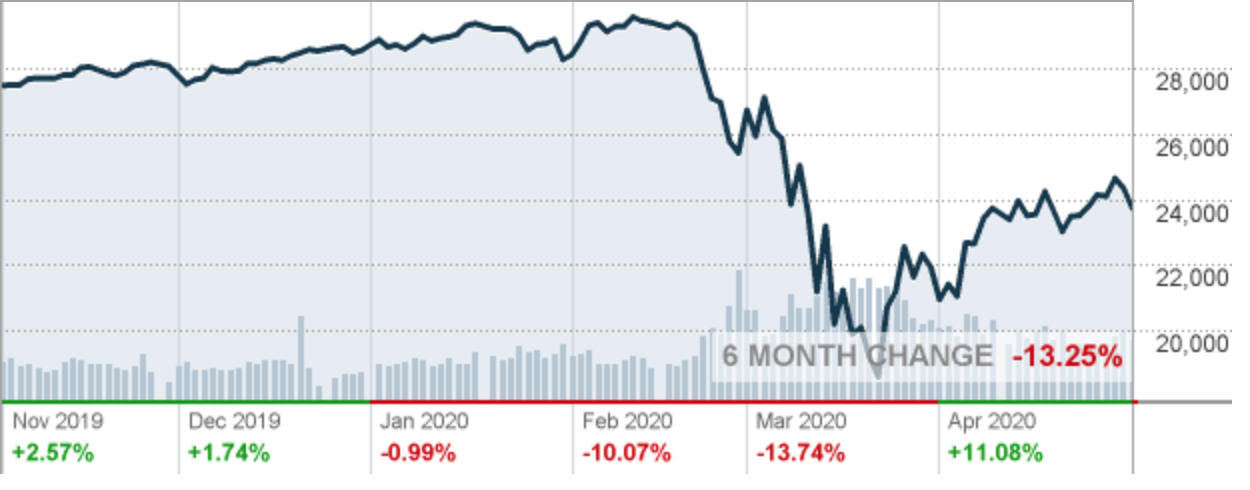
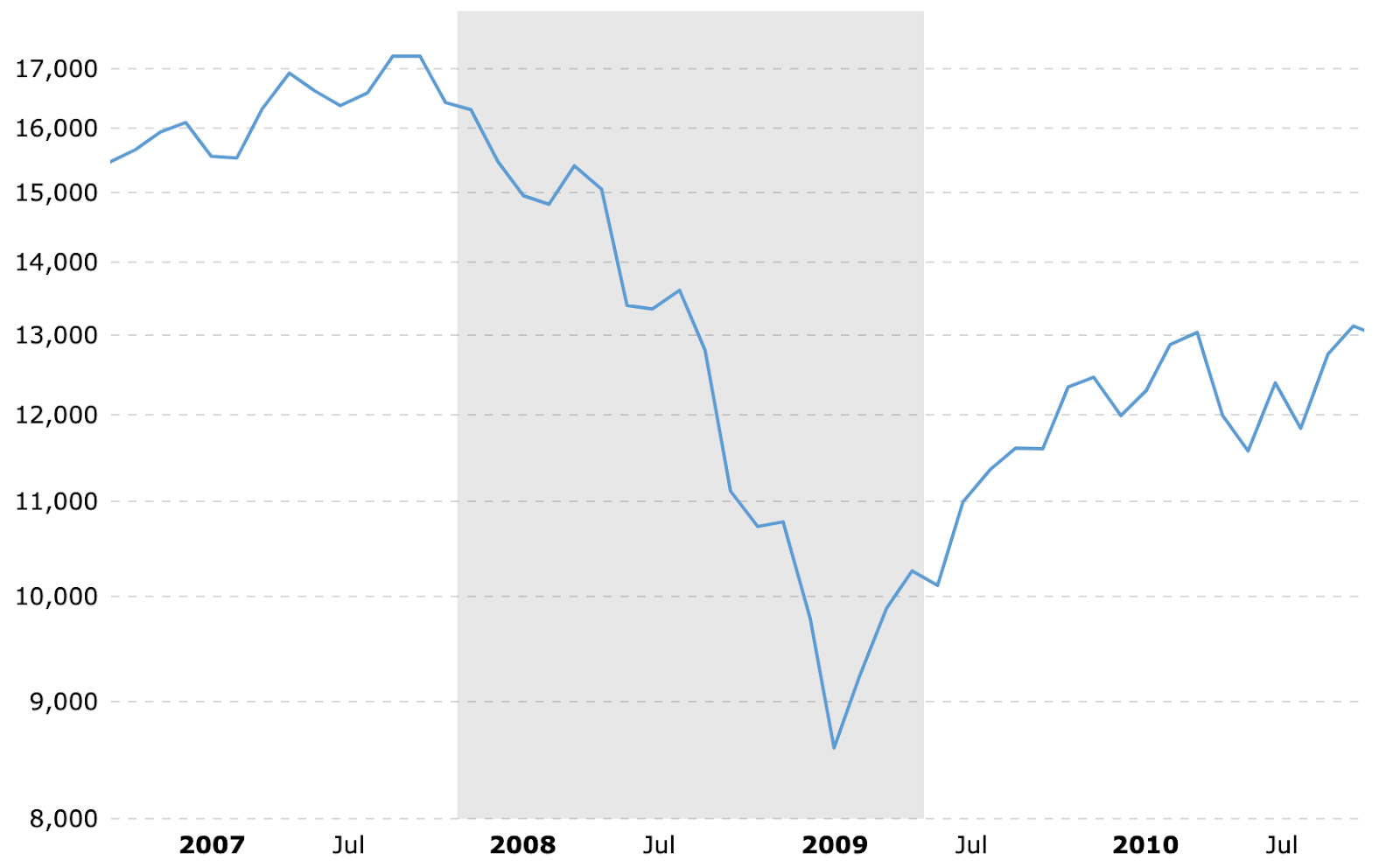
The recovery of US markets has been impressively fast and solid. While it took 1 year+ for DJI to bounce back during 2008 recession, it recovered 33% of its losses in 3 weeks. Even the magnitude of decline has been lower.

Why did US market recover so quickly?

Senate approved $2 Trillion Stimulus in record time. It is hailed as the largest-ever economic stimulus package in U.S. history, amounting to 10% of total U.S. gross domestic product. The bill was much larger than the $831 billion stimulus act passed in 2009 as part of the response to the Great Recession.

Bottomline is US government acted rapidly (enacted within ONE week) and decisively. The impact of the stimulus is that 150M people are getting money deposited in their bank accounts. There are further proposals to support the unemployed for at least 6 months.

How is Indian market looking?

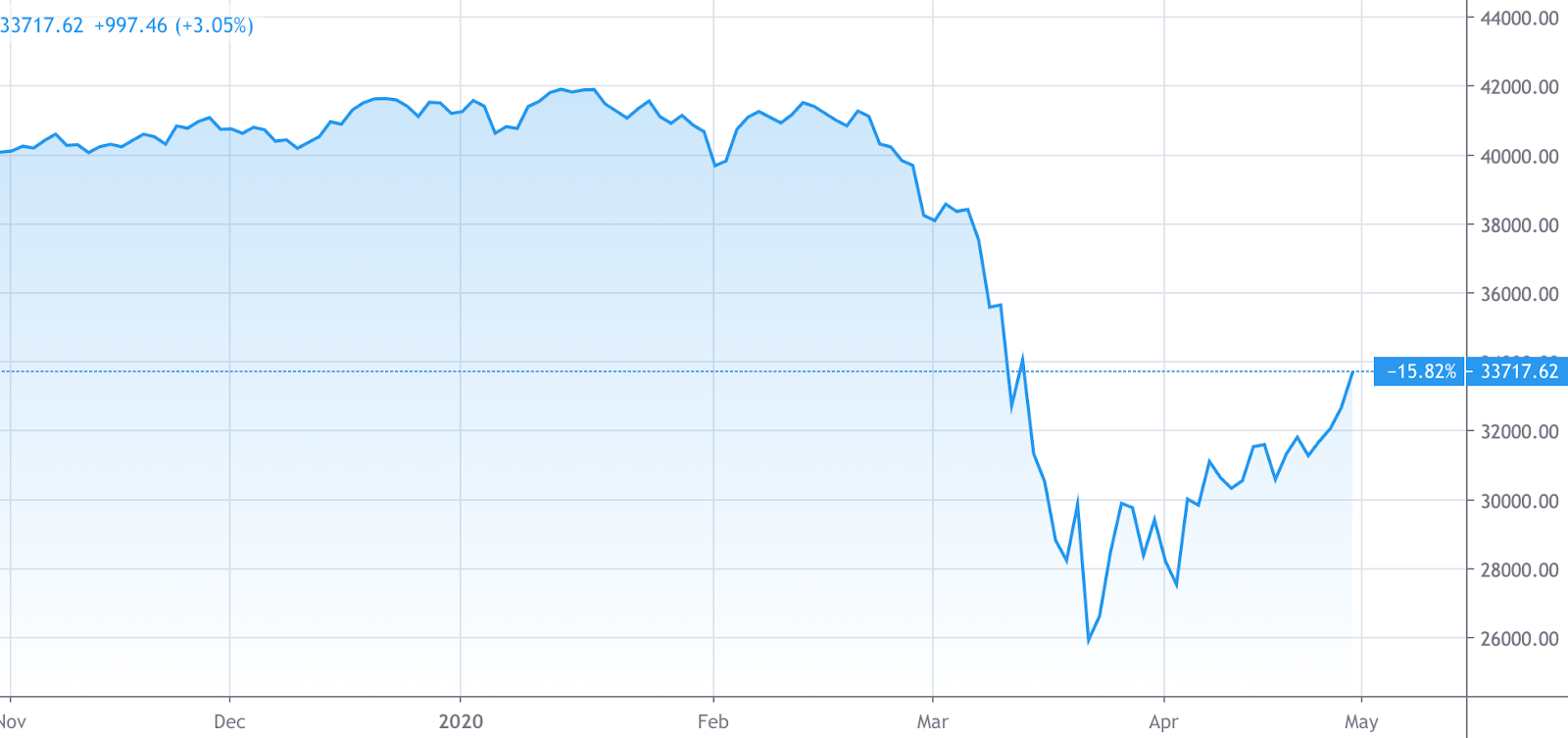
Sensex performance Nov 2019-May 2020

While Indian markets are mirroring the US markets so far, there are many question marks on the fundamental strength and wellbeing of Indian industries.

Moody’s had earlier cut the forecast for India’s GDP growth this year to 0.2%. And very recently, Goldman Sachs slashed it down further to -5%. This foreshadows trouble in Indian economy.

What are the markets telling us worldwide?

The US govt is prepared to do whatever it takes and is looking decisive about keeping the economy afloat.

India and rest of the world is simply mirroring what’s going on in USA. So, if there’s recession in USA, expect a worse recession in India.

What is happening at H1B front and will you get work visas easily?

Trump can resort to stricter immigration steps to improve his re-election campaign. As pointed out in my previous article, Trump is against the IT outsourcing companies sending their folks on H1B and NOT against students like you.

In May, we had a team of Democrat and Republican Senators proposing a H1B Reform Act which is a great news for people studying in USA. Read our detailed commentary on the same and what it can mean for you.

How might US Presidential election complicate things?

  • Trump means solid economy but tricky H1B visas
  • Democrats victory means softer economy but better H1B visa

Should you defer your admit because of Coronavirus?

At the end, you have to decide for yourself keeping all the above information in mind.

On one hand, US economy has strong foundation. Even if there is a slowdown in second half of 2020, the markets are expected to recover well and healthily in <1 year. Same cannot be said for India. The GDP is declining more than expected and job losses are mounting. Indian government doesn’t have the wherewithal to support everyone whereas US just did. They are putting money in bank accounts directly, they are prepared to act tough if required.

On other hand, there may be short term challenges if companies go shy in sponsoring H1Bs which directly impacts internships and jobs. Also, cutting back on funding may lead to fewer assistantships and scholarships – making it overall more expensive. Dollar however remains strong.

But keeping all these facts aside, it boils down to what matters the most to you. We share a great technique below that you can use to make this decision more wisely for yourself.

5 ways Coronavirus (Covid-19) will impact the job market for Master’s students

coronavirus job impact

Here are 5 ways that Coronavirus will impact the job market for current and aspiring graduate students. The better you understand this, better it will be for your jobhunt strategy.

Covid 19 toll is increasing day by day on the whole world. As we adjust to this new normal, here are few things to keep in mind for MS and MBA candidates.

Coronavirus job search impact

Apart from the learning impact which is happening as classes are being conducted virtually, there is a fear how badly coronavirus will affect the job hunt. As we all know, Coronavirus will leave behind a massive global recession. This means that whatever you are used to in your job hunt strategy is going to be questioned.

1. Remote jobs will increase

This one is a no-brainer.

Between 2005 to 2017, there was a 159% increase in remote work. In 2015, 3.9 million U.S. workers were working remotely. At the start of 2020, that number stood at 4.7 million, or 3.4% of the population. Here is the kicker – March roadrolled it all. Today, nearly 90% of white collar jobs are happening remotely!

Tailor your resume and mention any successful projects you have completed remotely. Highlight that you are comfortable and conversant in working remotely to get empathetic brownie points from the hiring manager.

2. Referrals will become critical in recruiting

The immediate effect of the lockdown is cancellation of campus events, job fairs and so on. If you are to survive in the coronatimes, you will have to get comfortable finding the jobs from your home. While on-campus career portals will continue, a major part of your job hunt would be on your own.

Secondly, due to the budget constraints and recession slump, employers will be more cautious in recruiting. At such times, one usually falls back on the most reliable source of hiring – referrals. That’s right, finding referrals can make or break your job hunt. Your best bet is to get existing people to refer you in their companies. This is also where networking skills make a huge difference in your success.

Read: Masterclass on ‘How to find internships and jobs in coronavirus times and recessions

3. Visa sponsorship will become more scarce

Bad news – companies will get more selective in sponsoring H1Bs (and work visas in other countries). Nothing much can be done about it. It will help to talk to your International Students Office and get tips on how to get the max of your OPT period.

4. Revenue contributing roles will survive

When the economies are booming, even the supportive and non-revenue generating jobs are on the rise. But when the purse strings are tightened, these roles are the first to get shed. And it does not mean that only administrative roles are affected.

Think it like this – are you contributing directly to your company’s top line? For eg. Google search or adwords team are critical to it at all times whereas those experimental projects may get shelved when times are tough. While data science role may be critical to Netflix, a funded content startup could have hired a data scientist just to show it off to its investors.

Try to find roles which are crucial to the company’s revenue generation as they are safer and more promising in long run.

5. Few industries will dry up

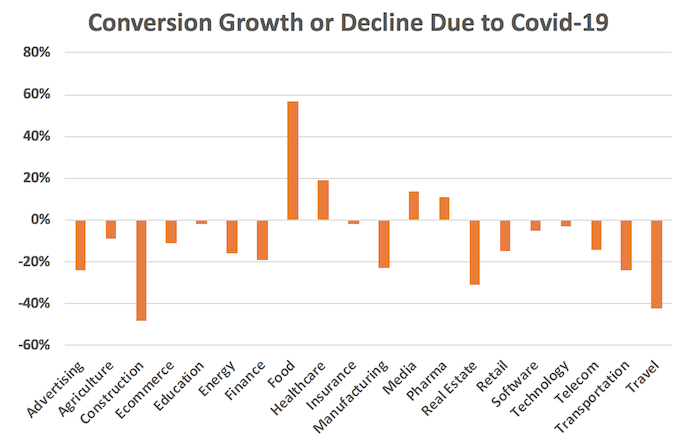
It breaks my heart to see how brutally the travel sector has been hammered in the covid-19 crisis. It is probably a good time to join an edtech, healthcare or foodtech company as opposed to retail, construction, or transportation. The idea is to focus on industries that are hiring and not, firing.

Industries impacted y coronavirus

Who is hiring or firing?

These companies have frozen their hiring due to Coronavirus
Top Bay Area Startups That Are Hiring Right Now

How do you cope up with something like this?

Yes, the future is looking bleak. As per BBC, nearly 200 million people could end up out of work by mid 2020. But it is at times like these, we need to look at this pandemic for what it is – a jolt to our world. Remember, while you are only feeling the brunt on your job prospects, there are millions dying.

This is truly a testing time for humanity and the ultimate strength we all can find in is in knowing that our world has changed. Covid-19 is bigger than a job loss, you or me. People have lost lives, dear ones, homes, life savings and hope. As you try to build your own life, try helping those around you too. The only thing that can help pull us out of this gloom is grace, kindness and generosity. Let us be grateful for where we are and what we have NOT lost – our health, our families and food.

I am sure you will conquer this. Hang in, there. Stay safe, stay sane.

How can we help you?

We are doing our best to collect resources on helping you combat the covid-19 crisis. Keep up to date on Coronavirus impact on international students here. Comment what else do you want to hear from us.

Why MBA? Here’s how to decide

Why MBA is a big question mark to tackle not only in business school application but in introspection. Here are few things for you to ponder upon before you make the big decision.

Does it make financial sense to do an MBA?

Assumptions

Let’s talk about full time MBA in USA/Europe where most of the Top B Schools are. Assuming you are currently working in a non-fancy job in industry earning $70K. No interest rate on your student loans for simplified calculations.

Financials

  1. On an average, a FT MBA in USA will cost at least $150K and 2 years. Assuming you were earning $70K right now, that is a cost of $150K+$140K of opportunity cost = roughly $300K. Go for part-time to save your opportunity cost.
  2. For banking or consulting or high growth tech sector, average salaries post MBA can range between $90-$100K (total compensation however can add another 40–80K depending on bonuses). Taking a modest average salary of $130K for our average candidate, 30% tax and $40K living costs, it means 5-6 years of break even period. As bonuses pile up and you ride higher the career ladder with your MBA brand, this is not a problem. You will eventually recover the cost and grow.
  3. For other non-traditional roles esp in non profits or startups, salaries may average out around $80-$90K in an optimistic scenario with no bonuses. You might break even in 8–9 years.
  4. If you end up performing below average or move back to a country where avg salaries are low, ROI may not even make sense extending to >10 years.

What are the biggest benefits of an MBA?

Even if it makes financial sense to do an MBA, you need to have better reasons to spend 2 years of time, energy and money into B School. Plus, it’s not easy. Stanford has 6% acceptance rate and if you are an Indian IT Grad, all odds are against you.

Career Growth

  1. If you are performing decently in your job and keep getting promoted, MBA add on does not help as much. Especially in tech, non profit and startup sectors, MBA may not be as big a must-have as in banking and consulting lines.
  2. If you are already at a senior position, it is better to convince your company to sponsor your Executive MBA.
  3. MBA makes sense if it can help in career switch you are looking for. For example, if you are a software engineer looking to get into Finance, yes MBA will give you what you need and may be the only option you have.

Network/Brand

MBA eventually is about its brand and networking opportunities. How much is that worth to you is something you need to figure out.


I know of 2 good situations which genuinely warrant an MBA-

  1. You are stuck in your career growth in an industry that values MBA a lot. Therefore you need an MBA to move beyond a certain level. For e.g. some companies such as Big 4 Consulting or Wall Street may not consider you for executive roles unless you have an MBA.
  2. You want to switch careers to an industry that worships MBA.

Beyond these, I think you should carefully evaluate your ROI and decide if it makes sense.

Also read: 10 reasons why you should pursue MBA after engineering

I must put a caveat out there. If you want to start your venture, please skip MBA and go for it. You will learn things practically and that is for the best.


Lastly, I must add that MBA is more than knowledge or brand. It is exposure and a way of thinking. Some people know exactly what they are going to get out of it and how they will use it to get multi fold returns. If you are that person, then, by all means, go for it. Because when it comes to education, exposure, opportunities, swag/partying, attitude, and confidence, very few experiences can match MBA.

You will get what you put into it.

I am writing down my half-MBA story from NYU Stern on Pre MBA Book – Scholar Strategy for the same reason.

Average MBA salary in USA, Europe and India?

study abroad salary and expense

As per the 2018 QS TopMBA report, 2017 reported a 13% increase in MBA hiring with USA paying average MBA salary of $102,100 (a dip from last year) and Europe offering $85,500 (up from last year). In other continents, Australia remains a lucrative employer almost matching USA with a package of $98,400. India remains behind with packages of $66,500.

How much does an average MBA earn in USA, Europe and India?

Let us see the compensation trends by functions and industry (src: QS TopMBA.com).

Average MBA Salary Levels by Region for 2016-17 period

Region Avg Salary Avg Total Compensation
Africa & Middle East $78,200 $90,700
Asia-Pacific $71,300 $85,900
Eastern Europe & Central Asia $57,000 $69,100
Latin America $62,500 $75,900
US & Canada $98,900 $116,300
Western Europe $85,500 $101,300

Average MBA Salary Levels by Countries of interest for 2016-17 period

Country MBA Salary Total Compensation
United States $102,100 $120,900
UK $92,400 $122,900
India $66,500 $76,300
Australia $98,400 $116,200
Canada $99,800 $111,100
Switzerland $123,500 $140,900

Next, let us look at MBA Hiring by Industries

Industry %MBAs Hired Avg MBA Salary
Technology 13% $89,633
Finance 5% $97,100
Consulting 11% $90,900
Other 15% $89,675

What does it mean?

The growth in ‘Other’ sector points to Millenials opting for diverse roles after MBA including Entrepreneurship in non traditional industries.

Studying the older reports of MBA salaries, I see overall a flat or even dip in average salaries in last 3-4 years. The higher salaries in North America and Western Europe and Australia hover just around the six-figure mark (variation pointing out to the volatile bonuses). Bonuses form almost 20% of the compensations and come in form of signing and performance-related bonuses.

MBA hiring in traditional sectors such as Finance and Consulting, unsurprisingly, sees slower growth but packages remain high. While USA and Western Europe saw the highest (35%) hiring in Technology sector, Asia Pacific saw 25% hiring in Others and 16% in Consulting. Finance has been big in Latin America (20%).

Among other worth-noting trends:

  • Employers want more from MBA hires in terms of leadership and interpersonal skills.
  • Greatest proportion of employers look for 3-5 or 1-3 years’ experience level.

Summary

To summarize, MBAs continue to command six figure average salaries for traditional roles in Finance, and Consulting. Technology hiring is on a rise in mature markets but the overall employment and salary growth that was expected 3-4 years ago has not delivered. While MBA will remain a solid career option, don’t expect the frenzy seen in early part of this century.

What do you think? Has this encouraged you or discouraged from your MBA plans?


Our most-affordable MBA counseling is open for Fall 2019. Join us now to make the most of your time.