H1B good news for Indian students in US: special quota

h1b indian students

The H1B and L1 Visa Reform Act has brought relief for International and Indian students studying in USA. As introduced in House of Representatives and Senate, the act will require US Citizenship and Immigration Services to prioritize people educated in USA for the first time in the annual allocation of H-1B visas. This news came out on 23rd May 2020.

What’s good about this H1B reform act for Indian students?

The new system would ensure that the best and brightest students being educated in the United States receive preference for an H-1B visa, including advanced degree holders, those being paid a high wage, and those with valuable skills.

As of May 2020, H1-B lottery doesn’t differentiate between Indian applicants – whether they are students studying in USA or people employed in Indian companies. Trump often launched offensive on H1-B seekers. But as I pointed out before, his discontentment and attacks are truly meant to be not against people studying in USA but those who come from outsourcing companies and act as a cheap labor replacing American workers. Indian (International) students compete for highly paid jobs at companies like Apple and Facebook and are coveted in the tech industry.

Finally, few Senior Senators are looking into ways to differentiate between desirable H1-B seekers such as MS/PhD students and undesirable H1-B seekers from IT outsourcing companies.

In the Senate, it was introduced by Senators Chuck Grassley and Dick Durbin. In the House of Representatives, it was introduced by Congressmen Bill Pascrell, Paul Gosar, Ro Khanna, Frank Pallone and Lance Gooden.
The legislation reinstates Congress’s original intent in the H-1B and L-1 visa programmes by increasing enforcement, modifying wage requirements and securing protections for both American workers and visa holders, the lawmakers said.

IndianExpress reporting from PTI

What is interesting – these Senators come from both Republican and Democratic party. This strengthens the probability of it getting enacted.

What does it mean?

In long term, graduate students in US will get preferential treatment over Indian employees coming directly and trying to file for H-1B. This reduces the competition and bodes for better chances of procuring H-1Bs by the students.

More than anything, this is a strong message that USA doesn’t want to push away the very students who are studying in its hallowed universities, and whose education it is subsidizing through assistantships. It never made sense for US to invest in students and then tell them to leave the country before they could add to its GDP, contribute to its industries and status.

Many of the Silicon Valleys companies are run by Indians who went to study in USA. The govt is realizing that the whole anti-immigration narrative is hurting its desirability in the eyes of these talented students. While it wants to appease its homegrown workers, it also wants to retain these skilled students and let them create next unicorns on US soil.

Of course, this is still a proposal and you should keep an eye on the updates. However, this bodes well for applicants, graduate students and dreamers. If you dreamed of MS in USA, this bill is a gift.

Defer your Fall 2020 admit because of Coronavirus?

defer admit Coronavirus

Are you wondering if you should defer your Fall 2020 admit because of Coronavirus? Read on. At the end of this post, we share a great decision making technique that you can use for yourself.

In our previous post, we discussed overall Covid impact on international students. We also saw 5 ways in which recruitment and job hunt will be affected.

Most of the schools including the mighty Harvard Business School has decided to allow its accepted applicants to defer their admits to next Fall. The other option is to accept the classes online. Some of the schools (eg UMass Amherst) have even offered the option to stretch the program to 4-5 semesters to ease the visa concerns.

Deferring to Fall/Spring 2021 – what does it mean?

Let’s look at the pros con of deferring your admission to next Spring or Fall

To SpringTo next Fall
No CPT for Summer 2021Delay in graduation
Situation may not change – 6 months not long enough to try somethingUncertainty continues for another year

Starting the classes online – what does it mean?

Many schools are giving the option to start the Fall classes online. Here are the pros and cons

ProsCons
Start on timeImpact on peer learning
No delay in graduationImpact on networking
Possible uncertainty on CPT for Summer 2021

Some people may not want to wait much longer since they already have enough work experience. In that case, considering to start the Fall sem online is a way out. Of course, they must reflect on what it means for their jobhunt.

How is the economy looking and what does it mean for your jobhunt?

How is US market looking?

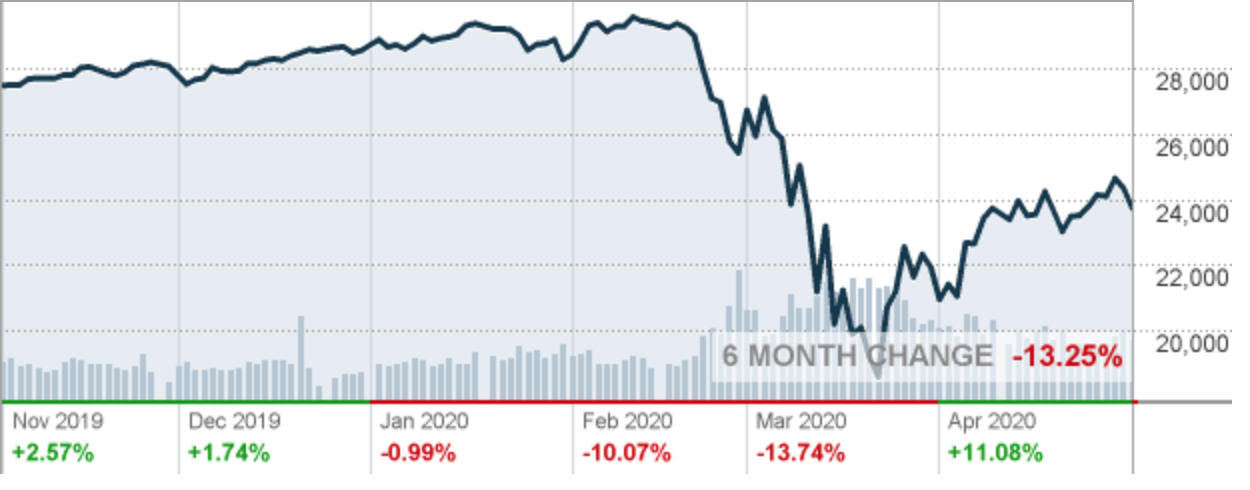
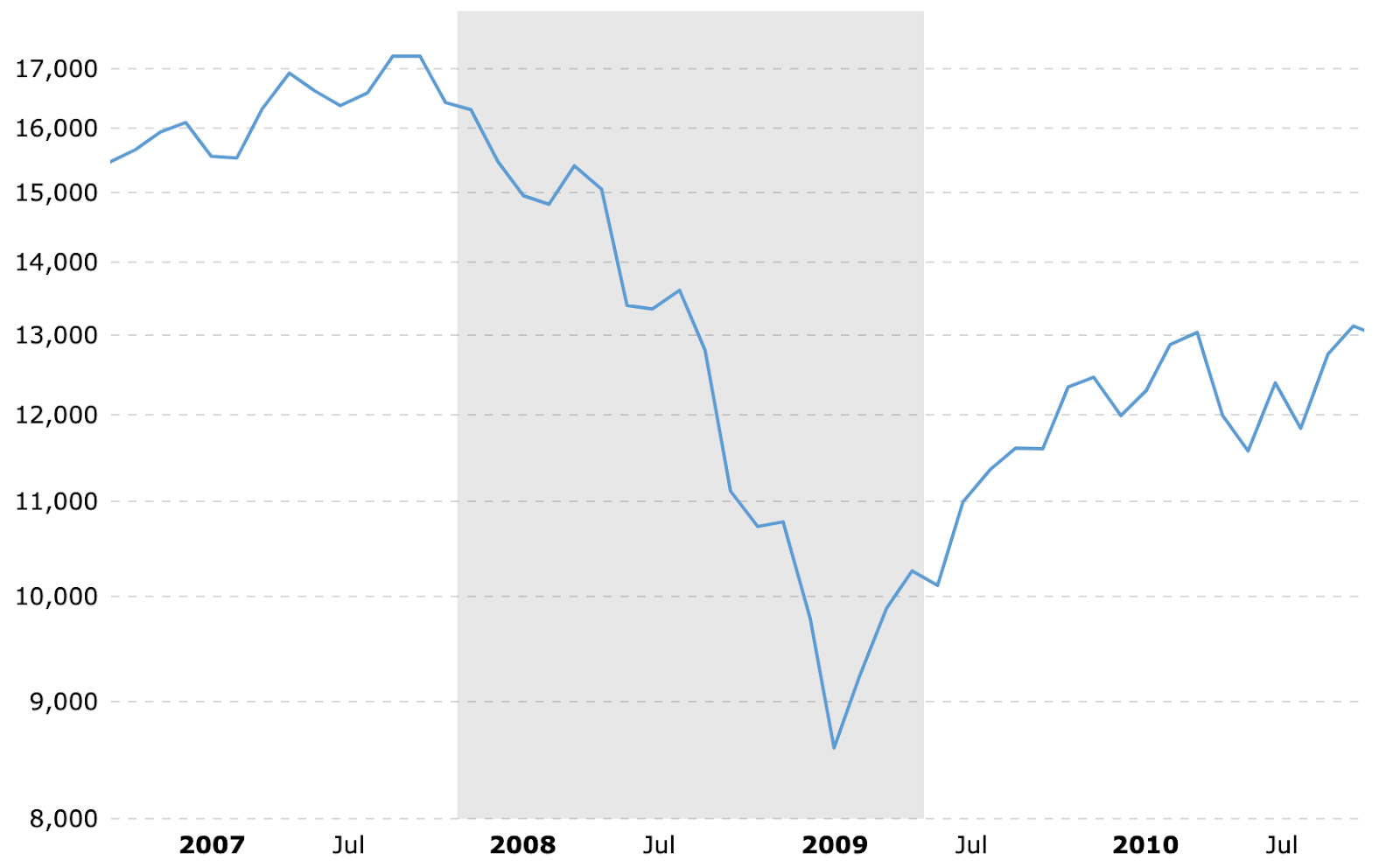
Performance of DJI

The recovery of US markets has been impressively fast and solid. While it took 1 year+ for DJI to bounce back during 2008 recession, it recovered 33% of its losses in 3 weeks. Even the magnitude of decline has been lower.

Why did US market recover so quickly?

Senate approved $2 Trillion Stimulus in record time. It is hailed as the largest-ever economic stimulus package in U.S. history, amounting to 10% of total U.S. gross domestic product. The bill was much larger than the $831 billion stimulus act passed in 2009 as part of the response to the Great Recession.

Bottomline is US government acted rapidly (enacted within ONE week) and decisively. The impact of the stimulus is that 150M people are getting money deposited in their bank accounts. There are further proposals to support the unemployed for at least 6 months.

How is Indian market looking?

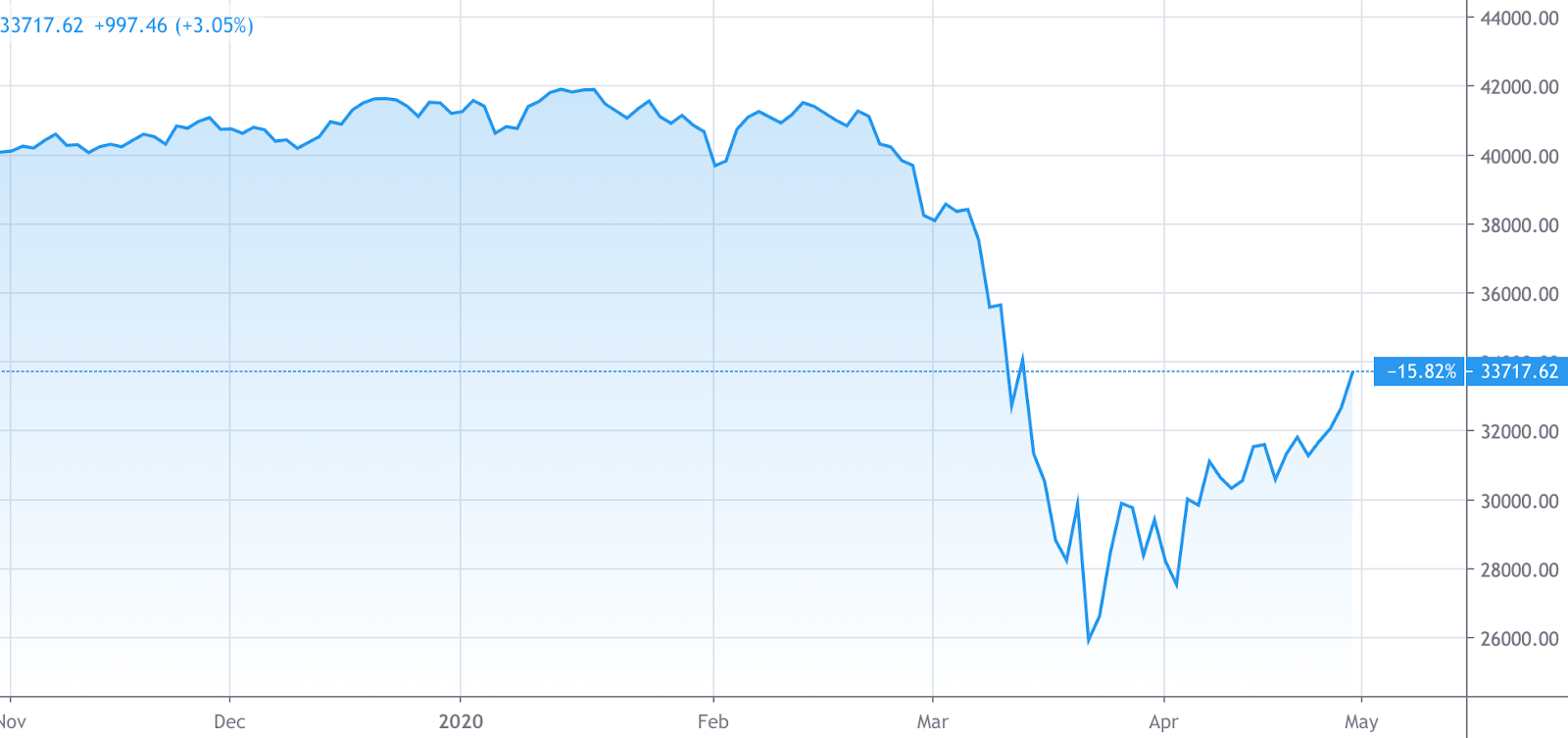
Sensex performance Nov 2019-May 2020

While Indian markets are mirroring the US markets so far, there are many question marks on the fundamental strength and wellbeing of Indian industries.

Moody’s had earlier cut the forecast for India’s GDP growth this year to 0.2%. And very recently, Goldman Sachs slashed it down further to -5%. This foreshadows trouble in Indian economy.

What are the markets telling us worldwide?

The US govt is prepared to do whatever it takes and is looking decisive about keeping the economy afloat.

India and rest of the world is simply mirroring what’s going on in USA. So, if there’s recession in USA, expect a worse recession in India.

What is happening at H1B front and will you get work visas easily?

Trump can resort to stricter immigration steps to improve his re-election campaign. As pointed out in my previous article, Trump is against the IT outsourcing companies sending their folks on H1B and NOT against students like you.

In May, we had a team of Democrat and Republican Senators proposing a H1B Reform Act which is a great news for people studying in USA. Read our detailed commentary on the same and what it can mean for you.

How might US Presidential election complicate things?

  • Trump means solid economy but tricky H1B visas
  • Democrats victory means softer economy but better H1B visa

Should you defer your admit because of Coronavirus?

At the end, you have to decide for yourself keeping all the above information in mind.

On one hand, US economy has strong foundation. Even if there is a slowdown in second half of 2020, the markets are expected to recover well and healthily in <1 year. Same cannot be said for India. The GDP is declining more than expected and job losses are mounting. Indian government doesn’t have the wherewithal to support everyone whereas US just did. They are putting money in bank accounts directly, they are prepared to act tough if required.

On other hand, there may be short term challenges if companies go shy in sponsoring H1Bs which directly impacts internships and jobs. Also, cutting back on funding may lead to fewer assistantships and scholarships – making it overall more expensive. Dollar however remains strong.

But keeping all these facts aside, it boils down to what matters the most to you. We share a great technique below that you can use to make this decision more wisely for yourself.

How to finance your MS or MBA education abroad

Discover multiple ways to finance your education abroad whether you are going for MBA or MS in USA. While the education in USA seems prohibitively costly at first glance, there is good news – there is high possibility of funding if you can get into a reputed grad school. You can finance your MS or MBA education abroad by understanding how it works.

In this post, we will discuss:

  1. How can Grad Schools help in financing your education abroad

  2. How can you avail external sources to finance your education abroad


Using Grad School funds to finance your education abroad

Universities and Professors in USA are funded by government and other agencies that invest in research; these funds are, in turn, used to support research students. Except when recession hits the funding grants, schools do try their best to support as many PhD students as possible. This is the reason why getting funding in PhD is easier than getting for Master’s because it is understood that PhD students are contributing more towards research.

Similarly Master’s in Engineering schools has more grants and research funding than Management oriented programs such as MIS/MEM and MBA. MBA is practically not funded because the goal of a MBA grad is to join corporate world and not research. Schools are more likely to fund students working closely in research.

1. Scholarships

These are the monetary awards given to students based on some qualifications, which could be academic excellence or extra curricular talent (sports related scholarships). There might be additional qualifications for these awards such as nationality, ethnic background, gender etc. These can be given in the form of a one-time cash award or be yearly covering your length of study. A school may have few such scholarships and they might ask for a separate application for these scholarships. Given the competition and scarcity of such awards, it is better to not bank on one. However, do find out about these especially if your academic record is excellent.

2. Tuition waivers

Sometimes, a school may offer full or partial tuition waiver to few students. It is usually awarded in conjunction with teaching or research assistantships (see below). A student still needs to pay other kind of fee (health insurance, administrative, library etc.) as tuition waivers only cover the tuition fee. These are most likely announced along with the news of your admission. For example, Case Western Reserve University typically offers 40- 50% tuition waiver at the time of sending the admission letter to its MEM students. In this case, the I-20 will only show remaining tuition fee to be paid by the student.

3. Assistantship

This is the most common form of funding offered by the graduate school to its admitted students especially PhD students. Getting an assistantship involves getting a cash stipend in return for some work that you do officially in the school itself. Normally, a student is allowed to work up to 20 hours per week. These are frequently combined with a full/partial tuition waivers in research oriented programs such as MS. However, assistantships offered in MIS/MEM programs may be only paid hourly and not include a tuition waiver (exceptions apply). There are three main kind of assistantships:

Teaching Assistantship

As per Virginia Tech, “graduate teaching assistants (GTAs) provide academic program support under the supervision of a faculty member. GTAs may assist faculty in the department in teaching undergraduate courses, including laboratory teaching assignments, or in providing other appropriate professional assistance, including grading examinations, problem sets, and/or lab assignments, setting up displays for lectures and laboratory sections, and preparing or maintaining equipment used in laboratory sections.”

Research Assistantship

As per Virginia Tech, “graduate research assistants (GRAs) are graduate students conducting academically significant research under the direction of a faculty member, who is generally a principal investigator on an external grant or contract. Graduate research assistantships are awarded by departments and professors who are engaged in research projects. Since GRAs are often funded by sponsored research grants, they may be paid at a higher stipend level than GAs or GTAs.” When I was studying at University of Illinois, Urbana Champaign, I received an RA by a Professor in Wireless Networking that paid me a cash stipend (for 20 hours per week work) along with a full tuition waiver. It meant that I did not have to pay any tuition fee and got a stipend that easily covered my living expenses and helped me save some money as well.

Graduate Assistantship

Again, as per Virginia Tech, “graduate assistants (GAs) are graduate students who provide academic and program support. GA responsibilities may be administrative in nature and consist of duties unrelated directly to teaching or research (such as academic advising, program planning, advising student groups, and assisting with the administration of student services offices). GA responsibilities may also be academic in nature and include grading examinations, problem sets, and/or lab assignments, setting up displays for lectures or laboratory sections, and preparing or maintaining equipment used in laboratory sections.”

4. Grants

These are similar to scholarships but awarded solely based on the financial need of a student. American universities may offer several forms of government-supported grants but these are usually available only to American citizens.

How to finance your education abroad using external funding

There are other types of funding that you can look for outside what is offered by the school. These include:

  1. External Scholarships/Fellowships – You can look for scholarships offered by private organizations external to your school as well. We have covered a detail of all study abroad scholarships available to Indian students in our blog. These are given to students with exceptional records and pass some qualifying criteria. To compete for these, you have to fill out a separate application which usually includes writing few essays explaining why you deserve the scholarship and how will you use it.
    All reputed universities often have a database of merit-based scholarship and fellowship opportunities available to its students.
    For example, University of Washington lists it at Student Financial Aid. Other than that, you can search on Internet for opportunities available to you. Scholarships In India 2016, Fellowships In India 2016, Internships In India 2016, Financial Aid For Education 2016, Students Grants For Schools And Colleges, Scholarships 2016 lists a lot of active scholarships in India.
    Fulbright Program is one of the most reputed scholarships available worldwide on a merit basis. As expected, there is a lot of competition for these awards.
  2. On-campus jobs – These include helper positions on campus such as the school library, dining hall, housing office, bookstore etc. and allow international students to work up to 20 hours per week. Students working in these jobs are paid hourly (usually sufficient to cover living expenses) and do not get tuition waivers. These are the least preferred form of funding since they do not usually involve building any valuable skills.
  3. Bank loans – Lastly, if nothing else works out, a student has to look for loans to finance her education. There are a lot of loan schemes now available but most of them are processed only once you receive an admit. Since loan processing takes a long time, it is advisable to start early.

What if I do not receive any funding from the university at the time of admission?

Do not write off your funding chances just yet. These days, schools have stopped giving funding except to PhD students but it does not mean that you cannot find one after being admitted. In most cases, Master’s (especially MIS/MEM) students will not receive funding at the time of admission.

First, you should have done some research on funding possibility at a school before deciding to apply for it. This includes contacting current students and recent graduates and asking them how did they fund their education. If you hear favorable funding news (let’s say multiple students tell you that they received some form of funding after reaching the campus), then you can still consider attending this school and hunting for funding after arriving on campus. The downside to this is that you still need to manage and show higher finances for your visa interview since you have no funding to show to the visa officer.

Many students take a loan if they cannot show sufficient personal funds and go to the school. There, they start looking for funding and return the loan as soon as they find it. This is what I did because I had not received any financial assistance when I was admitted to UIUC. However, it is a risk and you must do some background research on how likely it is to find funding before making such a decision. Again, if you have shortlisted schools after proper research, you would have applied only to the schools where you can manage the finances.


These are some ways how you can finance your education abroad. With a little proactive preparation, you can manage some sort of funding sooner or later.

We have covered funding, finances, employment opportunities, application strategies more comprehensively in MS BOOK: Smart Engineer’s complete guide to MS in USA

5 ways Coronavirus (Covid-19) will impact the job market for Master’s students

coronavirus job impact

Here are 5 ways that Coronavirus will impact the job market for current and aspiring graduate students. The better you understand this, better it will be for your jobhunt strategy.

Covid 19 toll is increasing day by day on the whole world. As we adjust to this new normal, here are few things to keep in mind for MS and MBA candidates.

Coronavirus job search impact

Apart from the learning impact which is happening as classes are being conducted virtually, there is a fear how badly coronavirus will affect the job hunt. As we all know, Coronavirus will leave behind a massive global recession. This means that whatever you are used to in your job hunt strategy is going to be questioned.

1. Remote jobs will increase

This one is a no-brainer.

Between 2005 to 2017, there was a 159% increase in remote work. In 2015, 3.9 million U.S. workers were working remotely. At the start of 2020, that number stood at 4.7 million, or 3.4% of the population. Here is the kicker – March roadrolled it all. Today, nearly 90% of white collar jobs are happening remotely!

Tailor your resume and mention any successful projects you have completed remotely. Highlight that you are comfortable and conversant in working remotely to get empathetic brownie points from the hiring manager.

2. Referrals will become critical in recruiting

The immediate effect of the lockdown is cancellation of campus events, job fairs and so on. If you are to survive in the coronatimes, you will have to get comfortable finding the jobs from your home. While on-campus career portals will continue, a major part of your job hunt would be on your own.

Secondly, due to the budget constraints and recession slump, employers will be more cautious in recruiting. At such times, one usually falls back on the most reliable source of hiring – referrals. That’s right, finding referrals can make or break your job hunt. Your best bet is to get existing people to refer you in their companies. This is also where networking skills make a huge difference in your success.

Read: Masterclass on ‘How to find internships and jobs in coronavirus times and recessions

3. Visa sponsorship will become more scarce

Bad news – companies will get more selective in sponsoring H1Bs (and work visas in other countries). Nothing much can be done about it. It will help to talk to your International Students Office and get tips on how to get the max of your OPT period.

4. Revenue contributing roles will survive

When the economies are booming, even the supportive and non-revenue generating jobs are on the rise. But when the purse strings are tightened, these roles are the first to get shed. And it does not mean that only administrative roles are affected.

Think it like this – are you contributing directly to your company’s top line? For eg. Google search or adwords team are critical to it at all times whereas those experimental projects may get shelved when times are tough. While data science role may be critical to Netflix, a funded content startup could have hired a data scientist just to show it off to its investors.

Try to find roles which are crucial to the company’s revenue generation as they are safer and more promising in long run.

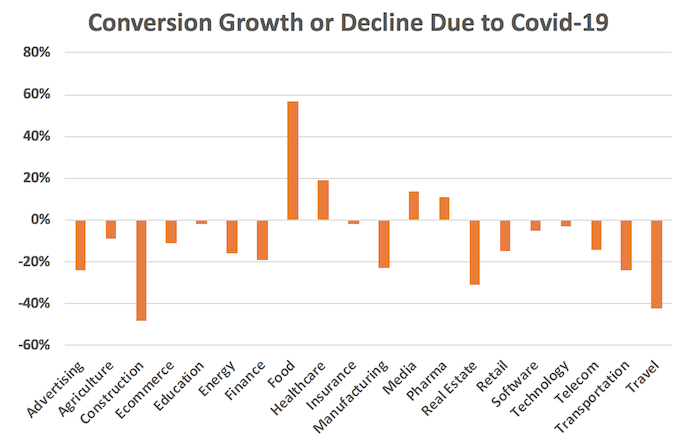
5. Few industries will dry up

It breaks my heart to see how brutally the travel sector has been hammered in the covid-19 crisis. It is probably a good time to join an edtech, healthcare or foodtech company as opposed to retail, construction, or transportation. The idea is to focus on industries that are hiring and not, firing.

Industries impacted y coronavirus

Who is hiring or firing?

These companies have frozen their hiring due to Coronavirus
Top Bay Area Startups That Are Hiring Right Now

How do you cope up with something like this?

Yes, the future is looking bleak. As per BBC, nearly 200 million people could end up out of work by mid 2020. But it is at times like these, we need to look at this pandemic for what it is – a jolt to our world. Remember, while you are only feeling the brunt on your job prospects, there are millions dying.

This is truly a testing time for humanity and the ultimate strength we all can find in is in knowing that our world has changed. Covid-19 is bigger than a job loss, you or me. People have lost lives, dear ones, homes, life savings and hope. As you try to build your own life, try helping those around you too. The only thing that can help pull us out of this gloom is grace, kindness and generosity. Let us be grateful for where we are and what we have NOT lost – our health, our families and food.

I am sure you will conquer this. Hang in, there. Stay safe, stay sane.

How can we help you?

We are doing our best to collect resources on helping you combat the covid-19 crisis. Keep up to date on Coronavirus impact on international students here. Comment what else do you want to hear from us.

Most popular universities for Indians in last decade

Popular Grad Schools for Indians

Ever wondered what are the most popular US universities amongst Indian MS applicants?

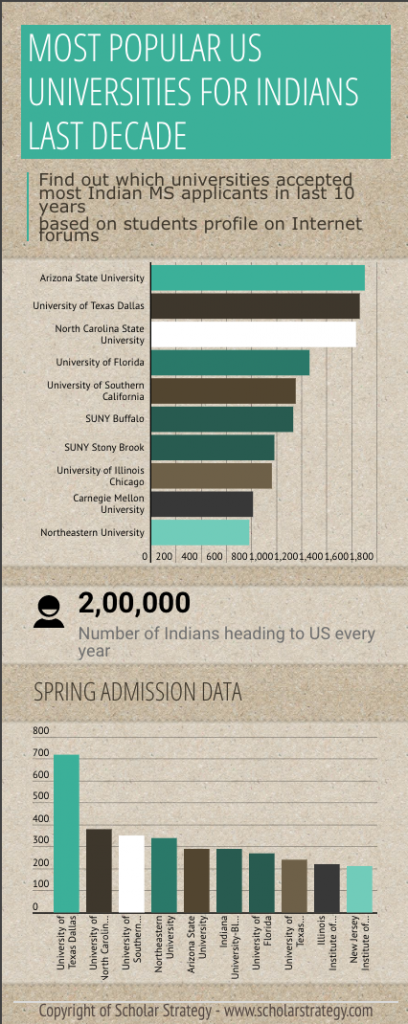
In 2019, 90,000+ Indian students headed to United States to enroll in graduate programs. Overall, 2 lac + students go to USA every year from India. Needless to say, USA is one of the most popular study abroad destination for Indians.

We dug up some numbers to find which schools are most Indian-friendly! So, here are the Top 10 schools by the intake of Indian students for last 10 years. Unsurprisingly, ASU and UT Dallas lead the pack. We were surprised by CMU’s high intake nonetheless. What do you think?

popular US universities for Indians

Top 10 popular destinations for Indian applicants

Where do most Indians head to in Spring?

So, here are the top 10 universities that gave admits to Indians over last decade.

Are you considering applying in Spring? Do read our post about pros and cons of applying in Spring semester.

Disclaimer: This is based on only the data that we gathered from students who reported their results on Internet. However, it should still give a pretty good insight into the bigger picture. 

Should you apply only to popular universities for Indians?

Of course, not. The above information is to help you select some safe schools. You should pick schools that you really wish to attend. See our guide to school selection for MS applications.

Why MBA? Here’s how to decide

Why MBA is a big question mark to tackle not only in business school application but in introspection. Here are few things for you to ponder upon before you make the big decision.

Does it make financial sense to do an MBA?

Assumptions

Let’s talk about full time MBA in USA/Europe where most of the Top B Schools are. Assuming you are currently working in a non-fancy job in industry earning $70K. No interest rate on your student loans for simplified calculations.

Financials

  1. On an average, a FT MBA in USA will cost at least $150K and 2 years. Assuming you were earning $70K right now, that is a cost of $150K+$140K of opportunity cost = roughly $300K. Go for part-time to save your opportunity cost.
  2. For banking or consulting or high growth tech sector, average salaries post MBA can range between $90-$100K (total compensation however can add another 40–80K depending on bonuses). Taking a modest average salary of $130K for our average candidate, 30% tax and $40K living costs, it means 5-6 years of break even period. As bonuses pile up and you ride higher the career ladder with your MBA brand, this is not a problem. You will eventually recover the cost and grow.
  3. For other non-traditional roles esp in non profits or startups, salaries may average out around $80-$90K in an optimistic scenario with no bonuses. You might break even in 8–9 years.
  4. If you end up performing below average or move back to a country where avg salaries are low, ROI may not even make sense extending to >10 years.

What are the biggest benefits of an MBA?

Even if it makes financial sense to do an MBA, you need to have better reasons to spend 2 years of time, energy and money into B School. Plus, it’s not easy. Stanford has 6% acceptance rate and if you are an Indian IT Grad, all odds are against you.

Career Growth

  1. If you are performing decently in your job and keep getting promoted, MBA add on does not help as much. Especially in tech, non profit and startup sectors, MBA may not be as big a must-have as in banking and consulting lines.
  2. If you are already at a senior position, it is better to convince your company to sponsor your Executive MBA.
  3. MBA makes sense if it can help in career switch you are looking for. For example, if you are a software engineer looking to get into Finance, yes MBA will give you what you need and may be the only option you have.

Network/Brand

MBA eventually is about its brand and networking opportunities. How much is that worth to you is something you need to figure out.


I know of 2 good situations which genuinely warrant an MBA-

  1. You are stuck in your career growth in an industry that values MBA a lot. Therefore you need an MBA to move beyond a certain level. For e.g. some companies such as Big 4 Consulting or Wall Street may not consider you for executive roles unless you have an MBA.
  2. You want to switch careers to an industry that worships MBA.

Beyond these, I think you should carefully evaluate your ROI and decide if it makes sense.

Also read: 10 reasons why you should pursue MBA after engineering

I must put a caveat out there. If you want to start your venture, please skip MBA and go for it. You will learn things practically and that is for the best.


Lastly, I must add that MBA is more than knowledge or brand. It is exposure and a way of thinking. Some people know exactly what they are going to get out of it and how they will use it to get multi fold returns. If you are that person, then, by all means, go for it. Because when it comes to education, exposure, opportunities, swag/partying, attitude, and confidence, very few experiences can match MBA.

You will get what you put into it.

I am writing down my half-MBA story from NYU Stern on Pre MBA Book – Scholar Strategy for the same reason.

University Shortlisting for MS in USA

University Shortlisting for MS/MBA

University shortlisting is one of the trickiest components of applying to any Master’s program. US has more than 1500 universities – obviously you need good research and guidance to pick what’s right for you.

Applying to right graduate school can determine your job & scholarship prospects, so spend good time researching which schools suit your financial & career needs.

Let’s take a look at steps involved in shortlisting right universities

  1. Create a list of criteria that matters to you

    Criteria can include cost of attendance, ranks, job placements, weather etc

  2. Use a university search engine (or a proven study abroad counselor) to narrow your search to 10-20 universities meeting your criteria

  3. Visit the website of each of the school to further confirm your interest

  4. Check the deadlines and apply

University Shortlisting in USA

We are going to discuss the most important topic of your applications today i.e. which schools should you apply to. We recommend applying to at least 10 schools for MS and 5 schools for MBA programs.

University shortlisting is a very strategic decision that can determine:

  • Whether you get admitted or not
  • Even if you get admitted, whether you get scholarship or not
  • What will be your job prospects upon graduating

As you can see, all of these are critical factors for your future. Let us explore them further now.

Create a list of criteria that matters to you

Every applicant has different risk profile and financial constraints – hence, it is very important that you decide what matters most to you.

Mostly, people shortlist schools based on costs and availability of funding, job prospects, program ranking, class size, location, competition and living conditions such as weather, population of international students etc.

In our experience, job prospects and cost of attendance are the most important considerations. Let’s explore them further.

Job prospects at a school

Job hunt is a bigger topic but the bottomline is that there are two ways you are going to land a job interview when studying in US – on campus recruitment or applying on your own (off-campus). There are some companies that will come on campus and you can apply through your school’s career office. Obviously, this is easier than hunting companies and applying on their websites because an employer is going to devote more attention to students in person. So, higher the number of employers that come on campus in a school, better the job prospects will be for you.

Therefore, one of your criteria for university shortlisting should be to find schools that have more employers coming for placements on-campus. This is often correlated to the ranking of the program. Top 20 schools in your area of interest would be more attractive to the employers. If not, it would be help if the university is located in a job friendly city (such as NYC) rather than a suburban town (Dartmouth).

Cost of attendance

And you also don’t want to end up in huge debt while studying. So you want schools that are affordable or more likely to offer at least some kind of scholarship.

Of course, if you are looking to start your own company instead of joining a job, you should take that into account instead of maximizing job prospects. If you want to learn more about how we do it, check out our counseling packages and contact us.

Additionally, you might have some other personal factors while university shortlisting (for e.g. I have to study in Tristate area (NY, NJ, CT) because my aunt lives there). We advise not to restrict yourself and try to get into the best school you can because studying abroad is big investment both of money and time. So, you should try to get the maximum return and not restrain yourself. It’s fine if your brother lives in Iowa, studying from San Francisco is still going to be better for you.

Narrow your search to 10-20 universities meeting your criteria

Using a trusted counselor such as Scholar Strategy or by your own research, create an initial list of universities that meet your preferences. Look at our results page to get an idea of real applicant profiles and what programs did they get into.

Often local counselors make you apply to 2-3 safe schools where you are most likely to get admitted. It is fine as long as the schools are legit and will not compromise on your career prospects but sometimes, they have tie ups with not so legit schools. Most of the times, your visa will be rejected for such schools.

What is worse is when some unfortunate students end up going to these schools only to discover later that there are zero job prospects or that the degree itself is not recognized. This is terrible and the only option left at that point is to come back to India with a hefty education loan and a not so worthy degree. A student should be smart enough to not fall into these traps and make sure that you are taking counseling with someone who knows about this domain and is providing genuine guidance. A good counselor will tell you where NOT to go.

Secondly, most counselors have set universities that they make all students apply to irrespective of their profiles. This is because they have tie-ups with these universities. Unfortunately, if a counselor is earning from these schools, then its interest is aligned with them and not YOU. Have a say in school selection process and try to use your own due diligence to determine if it is worth applying to a school or not.

Sometimes, its better to take a job in India and wait another year before applying instead of going to a worthless school.

Visit the website of each of the school to further confirm your interest

The best place to get up-to-date information about a university is on its official website. Research university websites carefully to find out:

  • University’s selection criteria, application process and deadlines
  • Financial aid page for information on costs and university-funded scholarship, fellowships, or assistantships.
  • Curriculum, courses, capstone projects etc.
  • How is the campus life and activities? Does it fit your personality?

Key Takeaways

Remember that university shortlisting is the MOST critical part of your application and if done carelessly, can ruin all other efforts you put in GRE and application documents. Schools can largely determine your job and scholarship prospects, so it makes sense to spend enough time researching on which schools suit your financial and career needs. In our online counseling program, we use a proprietary triangulation technique for this which takes multiple criteria that have direct bearing upon your career prospect into account.

This post is the part of MS in USA application process series.

Top 10 Essential Books every student must read before graduating

Top 10 Books every Student must read

All students don’t have the money to travel or take every course they are interested in. That is why reading books is such a great idea. Every student can afford to read books and that can teach you so much more than you can ever imagine.

So without further ado, here is our list of Top 10 Essential Books that every student must read before they graduate.

1. How will you measure your life? by Clayton M. Christensen

If the decisions you make about where you invest your blood, sweat, and tears are not consistent with the person you aspire to be, you’ll never become that person.

Especially if you are ambitious by nature, your vision can be clouded by the biased definition of success prevalent in our society. So much so that you might completely lose track of what is important and what is not for being happy. A good book, simply written with good case studies. The fact that it is written by HBS Professor shows how badly MBAs need a reality check.

2. How to Win Friends and Influence People by Dale Carnegie

You can make more friends in two months by becoming interested in other people than you can in two years by trying to get other people interested in you

I wish I read this earlier. We think we can change the world by ourselves, in our isolated identities. But later you realize, life is about people and relationships. Even professional success is determined more by your ability to connect than pre talent. Everybody must know how to make friends and how to be agreeable. Period.

3. Rich Dad, Poor Dad by Robert Kiyosaki

Winners are not afraid of losing. But losers are. Failure is part of the process of success. People who avoid failure also avoid success.

Either you understand money because your Dad was good at it and taught you or you will struggle rest of your life trying to find it. Our education trains us to be good employees, not successful. Money comes from a different mindset and Kiyosaki does a good job at setting the stage. What this book does well is piquing your curiosity in personal finance.

4. Economics in One Lesson: The Shortest & Surest Way to Understand Basic Economics by Henry Hazlitt

Everything we get, outside of the free gifts of nature, must in some way be paid for. The world is full of so- called economists who in turn are full of schemes for getting something for nothing. They tell us that the government can spend and spend without taxing at all; that it can continue to pile up debt without ever paying it off, because “we owe it to ourselves.”

It debunks some of the most widespread economics beliefs. Whether you intend to work in a related field or not, I feel you must possess a working understanding of money, finance and economy.

5. Exponential Organizations by Salim Ismail

Today, if you’re not disrupting yourself, someone else is; your fate is to be either the disrupter or the disrupted. There is no middle ground.

Highly relevant in the world of fast moving tech startups that you cannot ignore.

6. The Alchemist by Paulo Coelho

No matter what he does, every person on earth plays a central role in the history of the world. And normally he doesn’t know it.

Because everything cannot be rationalized. Do not lose touch with magic as you move into the world of adults.

7. The Unbearable Lightness of Being by Milan Kundera

The heaviest of burdens crushes us, we sink beneath it, it pins us to the ground. But in love poetry of every age, the woman longs to be weighed down by the man’s body. The heaviest of burdens is therefore simultaneously an image of life’s most intense fulfillment. The heavier the burden, the closer our lives come to the earth, the more real and truthful they become. Conversely, the absolute absence of burden causes man to be lighter than air, to soar into heights, take leave of the earth and his earthly being, and become only half real, his movements as free as they are insignificant. What then shall we choose? Weight or lightness?

Because everyone craves for love and struggles with keeping it. It is a sublime novel on humans and love and how things are anything but simple. And language is decadent. My writing improved after reading this, I swear.

8. Fountainhead by Ayn Rand

To sell your soul is the easiest thing in the world. That’s what everybody does every hour of his life. If I asked you to keep your soul — would you understand why that’s much harder?

Because there is a time to think irrationally and be driven by your inner fire. As you grow and mature up, you will realize how impractical this book is. Nonetheless, when you are touching your twenties, you want to change the world. And you should read what Howard Roark did.

9. A book from your geography

Then I would recommend reading a good book that talks about the economy and current state of your the society wherever you hail from. Know what is happening and why. It is good to know your roots well.

10. HBR articles and booklets

HBR gives you wisdom in nuggets, easily digestible format. Pick your topic and dig in. I loved their series on Communication.

A good starting point could be — https://www.quora.com/What-are-some-must-read-Harvard-Business-Review-posts-articles


High School, College, Grad School — these are the best times of your student life. Reading these 10 books can make it all the more rich and rewarding.

We showed you 10 hacks to help you thrive in school and college last time. Life is more than a degree or a job. Books are timeless and someone said it rightly – those who do not read are not better than those who can not read 🙂

How to create resume for internships in Grad School?

There is plenty of advice out there about resumes. And, some of it contradicts. Some people recommend creating a visual resume that stands out. Some say that your resume should be primarily text.

It all matters in different situations.

Let us focus on grad school internships for now. If you are applying for grad school, then look at my earlier post (includes a free template to download). Ok, so internships are about relevant projects and primarily your work experience. That is what you need to highlight.

Instead of generic gyaan, I am critiquing three real resumes to better understand what kind of mistakes to avoid. You will have to watch the video for that, don’t worry its pretty short.

Key things to remember

  1. Most of the space should be used on relevant professional experience.
  2. Don’t forget to mention the projects and coursework you are currently taking in school.
  3. Don’t forget to mention your LinkedIn profile (and make sure its up to date).
  4. Use the keywords mentioned in the job description.
  5. Keep the formatting (font sizes and spacing) readable.

There you go, I will do few more videos on resume soon. Stay tuned and don’t forget to subscribe to the YouTube channel.

We have received our latest admit to Harvard Data Science and we are celebrating! Join us to land at your dream school.