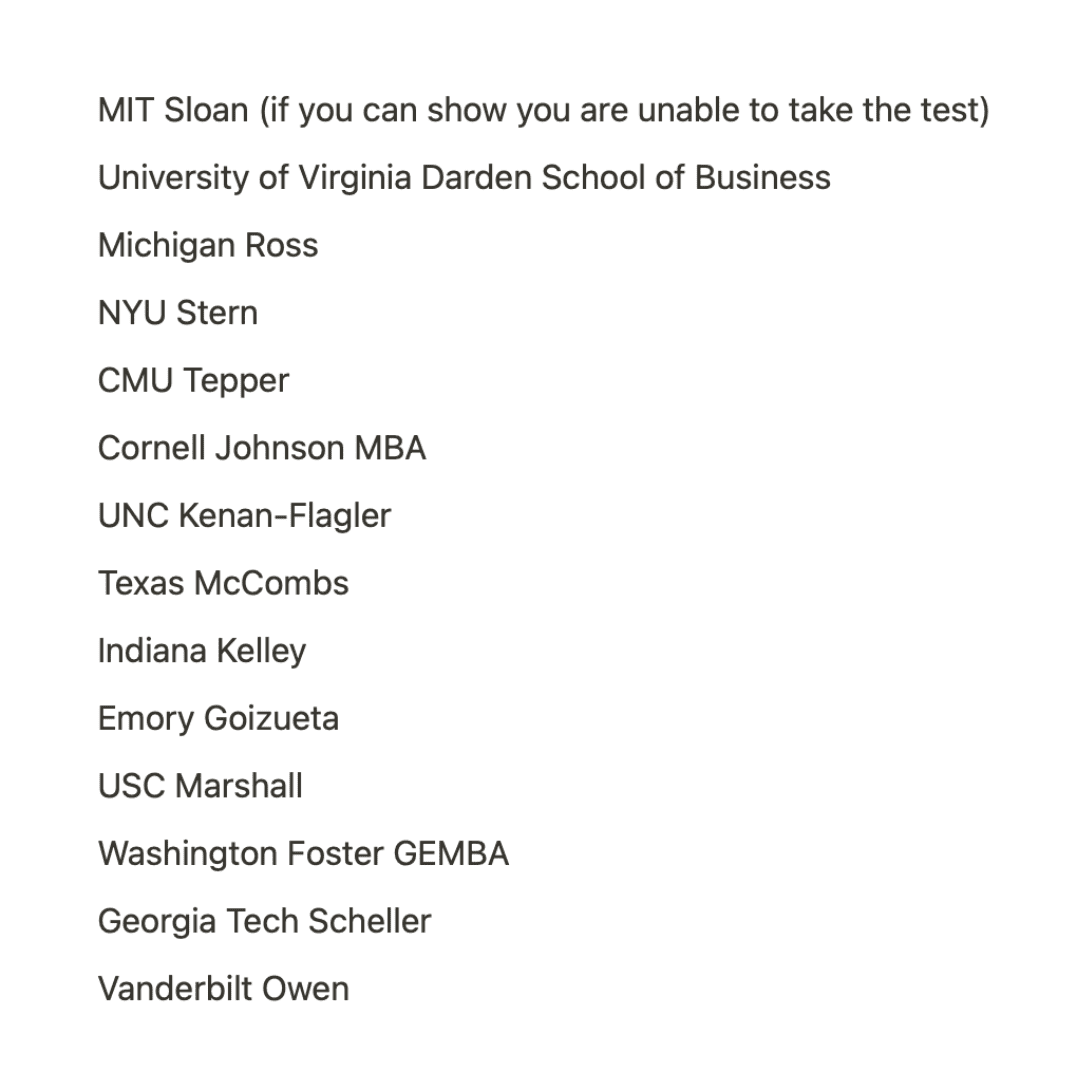
Gone are those days when you can’t apply to any business school without having your GMAT scores. In today’s times, top universities have programs that promote diversity, and let applicants boost their profile over their GMAT scores by offering GMAT waiver through multiple ways.
If you are looking to apply to your dream university without actually submitting your GMAT scores. this article is for you. Find a complete list of MBA colleges that do not require GMAT scores for fall 2023.
B Schools offering alternative tests instead of GMAT
Non-US MBA programs that allow GMAT waivers
1. B Schools where you can request GMAT waiver
MBA programs do not give flat GMAT waiver (except very few). But they allow you to request a waiver. If you can demonstrate your analytical and aptitude skills via any other thing such as another relevant MS degree, CPA, CFA kind of exams, relevant job role, expired GMAT/GRE score etc, then some universities waive off GMAT.
When GMAT waiver is based on GPA, they typically ask you for proof such as your transcripts and CV. On the other hand, some institutes ask you to submit an essay describing the conditions under which you are asking for a GMAT waiver.
Let’s take a look at some such programs that give you an option to get waiver:
2. B Schools offering alternative tests instead of GMAT
Some other programs require you to take an alternative test such as Executive Assessment (EA) or their internal business school test to submit instead of a GMAT/GRE score. It means that you still have to give some test even if its not GMAT.
The Executive Assessment is an entrance exam that was designed specifically for applicants to executive MBA programs for professionals with about 10 years of business experience. It was created by the Graduate Management Admission Council (GMAC) and designed for “experienced leaders” who are interested in applying to graduate school but who don’t necessarily have the time to prepare for the GMAT.
Lets look at which schools accept EA or another test in place of GMAT:
Columbia Business School
Duke University Fuqua School of Business
Baruch College Zicklin School of Business
Case Western University, Weatherhead School of Management
Fordham University Gabelli School of Business
Georgetown University McDonough School of Business
University of Nevada, Reno
University of Toledo College of Business and Innovation
Vanderbilt University Owen Graduate School of Management
Stanford Graduate School of Business (MSx)
3. Non-US MBA programs that allow GMAT waivers
Please note that US is more particular about GMAT. If you are open to B schools in Europe, Canada and other countries, you will have more options.
Let’s look at some of these:
Imperial College London
ANU (Australian National University)
Ivey Business School and Rotman Canada (gmat waived for applicants who have passed all 3 Levels of the CFA designation)
IE Business School, Spain
Amsterdam Business School
EGADE Business School, Mexico (#1 in Latin America)
SDA Bocconi (can take their SDA Test instead of GMAT/GRE)
So this was the list of all popular and well-known universities around the world that are waiving off GMAT for fall 2023. Most of these schools will only have Round 3 deadlines pending now, so hurry up and apply to your dream schools!
You might have heard from people applying for admissions to universities abroad that the GRE got waived. But what does this actually mean? Is the GRE waiver something exciting or is it something that you really need to work hard for? Well, we have the answer for it!
GRE got waived for the first time when COVID pandemic made it impossible for candidates to take GRE tests. But even before this, some schools like UIUC Engineering School did not consider GRE scores for their admission. But in those days, such universities were rare. Now if you see, many universities are embracing GRE free admissions. However, it is confusing which ones are waiving it and which ones are not. In this blog, you’ll find the kind of GRE waivers we are seeing and a list of universities that fall into each category.
There are 3 kind of GRE requirements that you will see:
GRE Mandatory – This means that there is no exception, you need to submit your GRE score. For eg UC Irvine, SUNY Buffalo
GRE not Considered – This means that they won’t even look at your GRE even if you submit it. For eg MIT and Harvard are taking this stance
GRE Optional – This could be for all departments (such as Northeastern University) or for only some departments or programs
Before we look into the full list, here’s a PRO TIP:
Don’t look at GRE waiver list from last year because the GRE waiver criteria changes every year, For eg. Georgia Teach had waived GRE for all courses last year but it requires it for MS CS course for 2023 admissions.
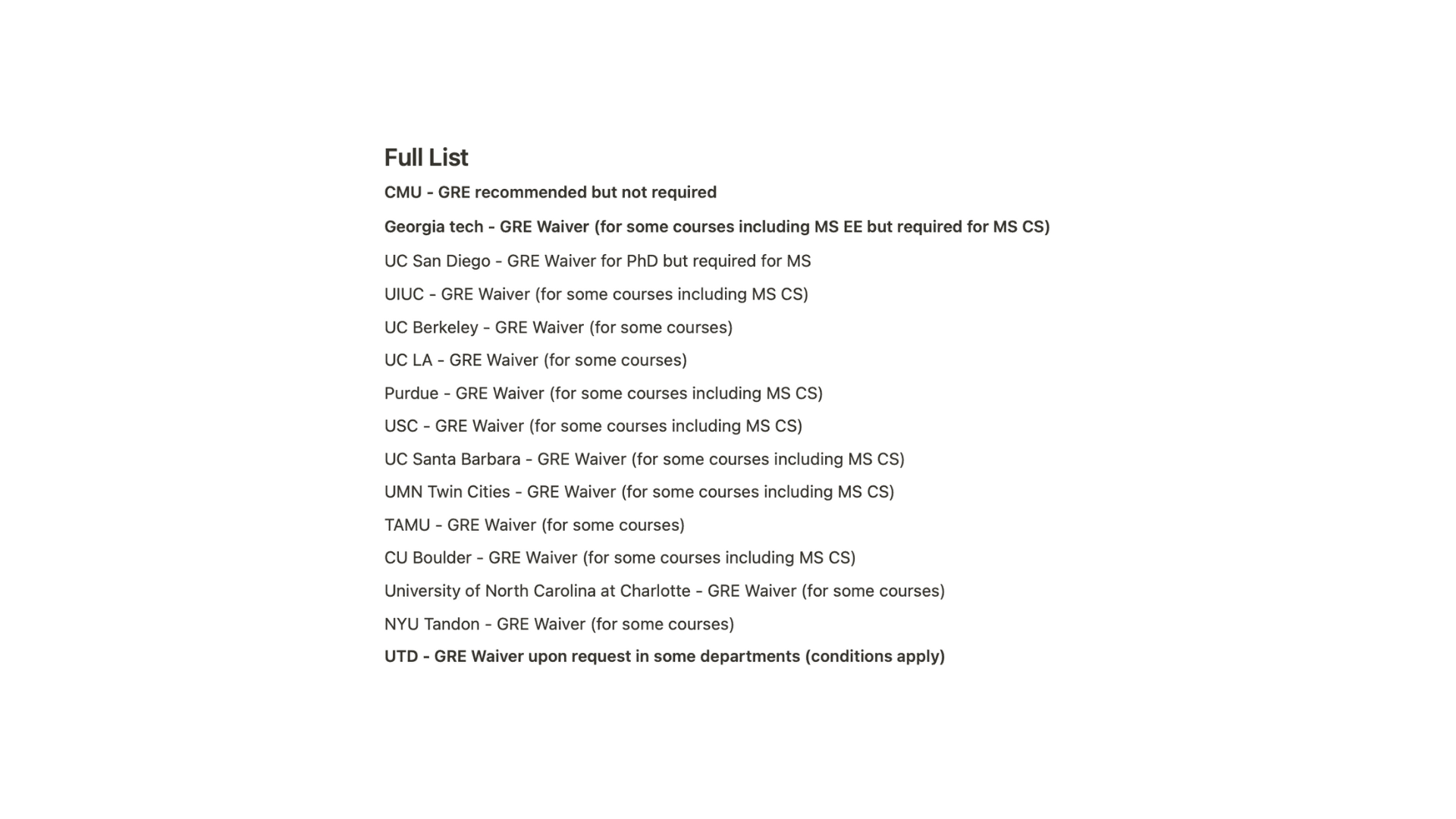
Now, let’s look at the list of universities which have waived GRE or kept it optional. This list is not comprehensive but covers many popular schools.
FULL LIST
Email to request GRE Waivers
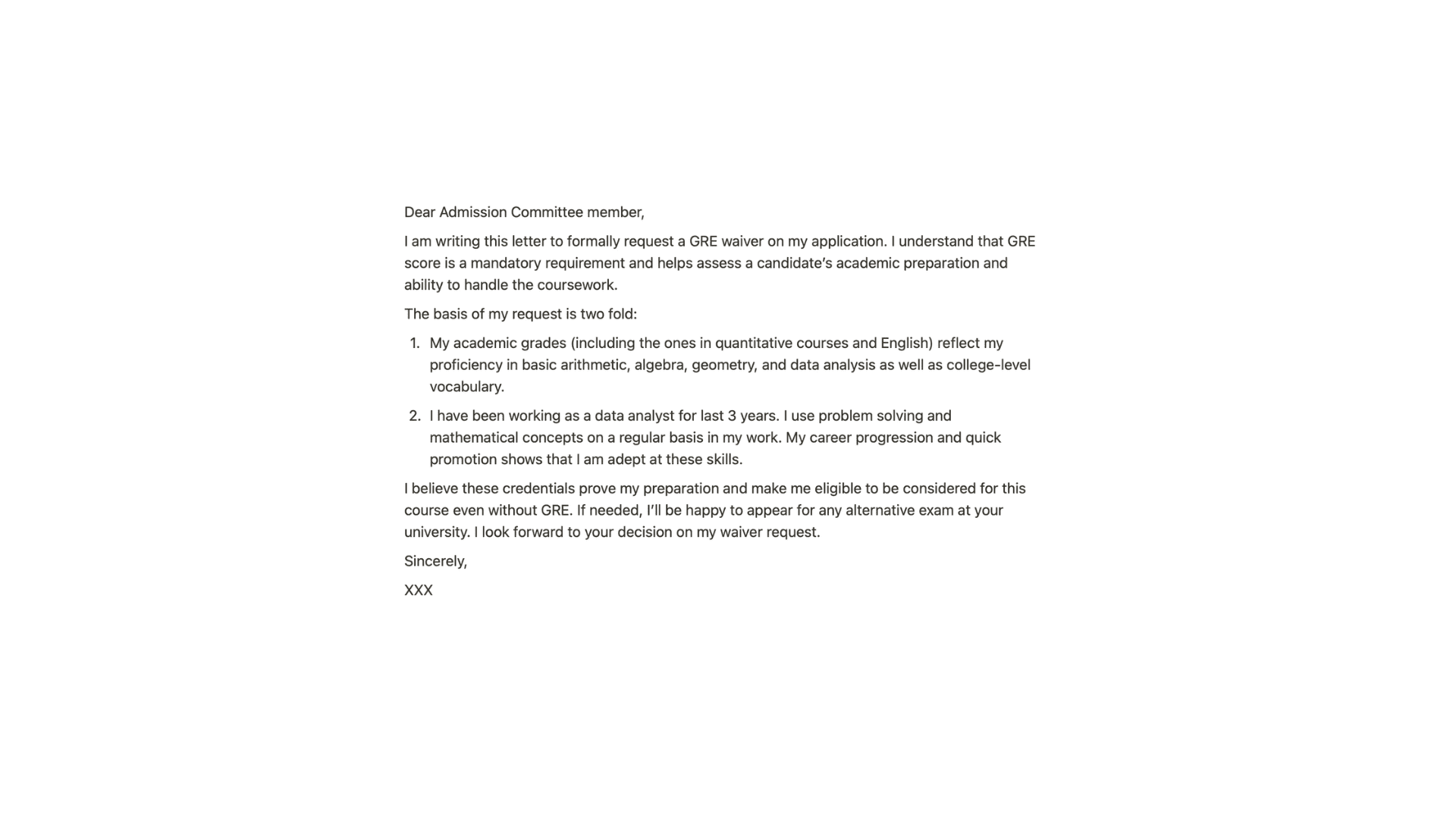
Here, we are sharing a structure for sample GRE waiver request email:
1st para – Greetings and formal request of waiver
2nd and 3rd paras – Cite reasons or justification for waiver
4th para – Conclude and thank them for consideration
(see the full sample below)
That’s it. Keep it polite, formal and convincing. They will not give a waiver simply because you didn’t have time. So, frame your request with some thought and keep your fingers crossed.
As long as you show that you tried your best to fulfill all criteria and have other aspects of your profile which showcase the things that GRE is supposed to test, you can make a good case.
EMAIL SAMPLE
So, that was a detailed list and a sample from our end. If your intention is to step ahead and reach some of the high ranking colleges then do take advantage of this extensive information.
Whenever you are applying to a business school or a management oriented program, you might have to evaluate the merits of taking GRE vs GMAT.
Before you make up your mind about the most suitable aptitude test to enhance your chances of getting into an MBA program, you should get familiar with the differences between GRE vs GMAT.
The most fundamental difference between GMAT and GRE is that GRE is used in the admission process of many different graduate school programs while GMAT is limited to business oriented programs. However, there are several other factors that you must make yourself familiar about.
In this detailed guide, you will get to know about all the major differences so that you are able to make the best choice.
GRE vs GMAT: Popularity
More than 1200 business schools accept the Graduate Record Examination (GRE) all over the world. GRE is typically considered the test that is suitable for creative individuals. Similarly, the Graduate Management Admission Test (GMAT) is accepted by all business schools because it has been considered one of the most reliable ways to assess the applicants by the business schools for a long time now.
GRE Structure
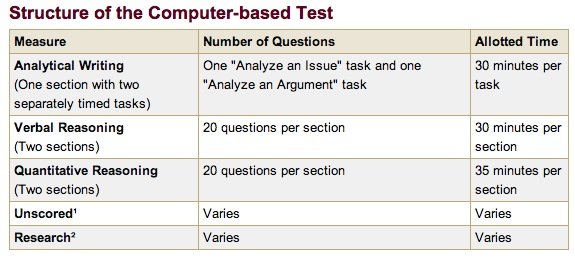
GRE consist of three major sections:
Analytical Writing
Quantitative Reasoning
Verbal Reasoning
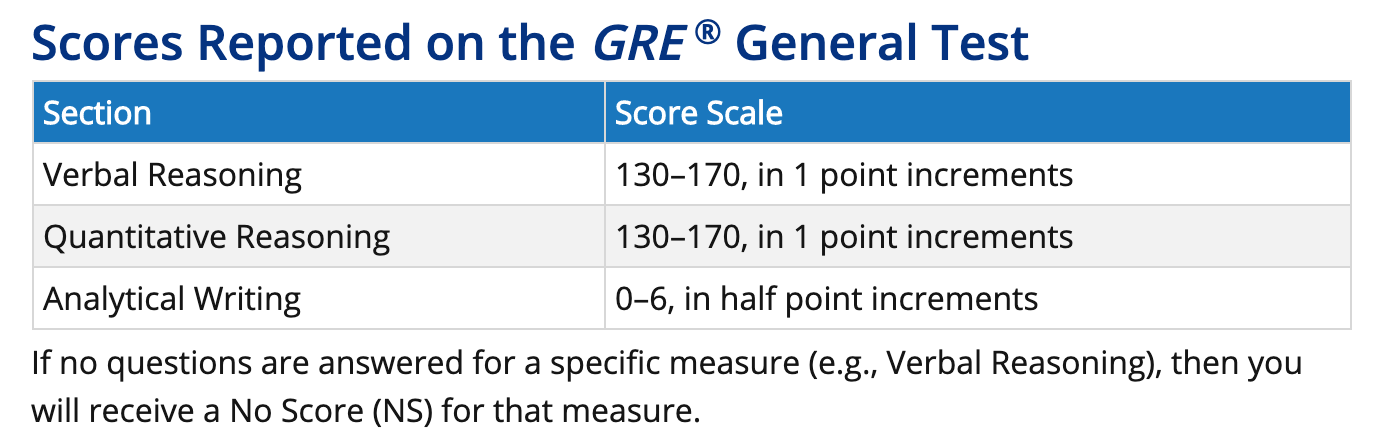
The score range for the analytical writing section of the GRE is 0 to 6, while both the verbal and quantitative reason sections have the range of 130 to 170. These three sections are scored separately and not combined into a single score.
Candidates take the GRE on a computer. It is a section-level adaptive test which means the applicants’ scores on the first section will affect the difficulty of the questions on the next sections.
The GMAT aims to assess the applicants when they are applying to a business school like an MBA program. Unlike GRE, GMAT is used only by business schools. There are four main sections of the GMAT:
Analytical Writing Assessment
Integrated Reasoning contains
Quantitative section
Verbal section
The candidate will get a composite score in the range of 200 to 800. The scores from the analytical writing and integrated reasoning are not included in the composite score.
There are several differences between GRE and GMAT in terms of the duration, pattern, sections, registration fee, and other such factors. These differences between GRE and GMAT are tabulated as follows:
Differences
GRE
GMAT
What is the duration of the test?
3 hours and 45 minutes
3 hours and 30 minutes
What is the total number of essays?
2
1
What is the total number of sections?
6
4
What are the marking criteria?
Verbal and quantitative reasoning sections have score ranges of 130 to 170, and the total score is between 260 to 340.
Composite scores are given in the range of 200 to 800
What are the registration charges for these tests?
$205
$250
When should you take GRE or GMAT?
When you want to get admission in a business school graduate program like MBA
When you are not sure about the kind of graduate program, you want to get admitted to.
How long are the scores of GRE and GMAT valid?
Five years
Five years
How do the candidates take the test?
Computer-based test. Paper-based tests are also available in selected regions.
Computer-based test
GRE vs GMAT
GRE vs GMAT Quantitative Section
Quantitative Section of the GMAT
The quantitative section of the GMAT mainly focuses on problem-solving and data sufficiency questions. Candidates typically have to solve equations, graphs, evaluate different types of data, and apply data in different situations.
Quantitative Section of the GRE
On the other hand, the quantitative reason section of the GRE typically deals with the candidates’ skills in algebra, geometry, data analysis, and arithmetic. Following are the major differences between GRE and GMAT in terms of their quantitative sections.
Differences
The differences between the quantitative sections of the GRE and GMAT are as follows:
Differences in Quantitative Sections
GRE
GMAT
Number of questions
20
49
Duration
60 minutes
105 minutes
Score
130-170
Quantitative: 0-6 Integrated Reasoning: 1-8
GRE vs GMAT quant
Generally, the quantitative section of the GMAT is considered to be more challenging than the GRE. The reason behind this conclusion is the fact that GMAT focuses on data sufficiency questions that are typically difficult for many students.
GRE vs GMAT Verbal Section
Verbal Section of the GMAT
The verbal section of the GMAT consist of the following three types of questions:
Reading comprehension
Sentence correction
Critical reading
Verbal Section of the GRE
The verbal section of the GRE consists of the following three types of questions:
Reading comprehension
Text Completion
Sentence Equivalence
Differences
Differences in Verbal Sections
GRE
GMAT
Number of questions
40
41
Duration
60 minutes
75 minutes
Score
130-170
0-60
GRE vs GMAT verbal
There are no significant differences between the kind of questions asked in the verbal sections of the GRE and GMAT. Yet, the difficulty level of the verbal section of GRE is little more than the GMAT because, typically, challenging vocabulary and reading passages are included in the GRE.
Differences between GRE and GMAT: Analytical Writing
Analytical Writing Section of GMAT
This section includes one essay that the candidates have to complete within 30 minutes. The task is given in the form of an argument, and the candidates have to evaluate its strengths and weaknesses.
Analytical Writing Section of GRE
In this section, the candidates are required to write two essays. One task is related to analyzing an argument, while the other one is associated with analyzing a task.
Differences
Differences in Analytical Writing
GRE
GMAT
Number of questions
2
1
Duration
60 minutes
30 minutes
Score
0-6
0-6
GRE vs GMAT writing
Even though there are two tasks in the analytical section of the GRE, the difficulty of this section on both GRE and GMAT can be considered the same.
GRE or GMAT: Which exam should you take?
The purpose of discussing these differences is to help you out in choosing the best test that you think you can ace and get admission to your dream university. You can easily narrow down your options by checking which business programs accept GMAT scores and which ones accept the GRE.
Generally, if you have a very specific goal of getting admission to a business school, you should consider taking the GMAT. Many business schools prefer the GMAT over GRE because it has questions directly associated with the skills you need to succeed in a business school graduate program.
Whatever your final decision can be, you can rely on our extensive guides to get high marks on the GMAT or GRE.
Taking the GMAT is a critical point in the academic lives of many people all over the world, including India. You need to be fully equipped with the essential skills and knowledge to prepare for the GMAT and ace it. It is quite understandable that you must be familiar with the concepts and their applications to succeed at GMAT.
However, the significance of the preparation phase cannot be understated when it comes to making sure that you can achieve an excellent score. Many people think that only reading a GMAT guide book or taking prep classes is enough to get high marks in this aptitude test. While all of these strategies will help you, you should also examine your specific situation and determine the best way to prepare for the GMAT.
Taking sufficient time to plan for GMAT will help you in the long run because you will have everything mapped out efficiently. No matter how intelligent you are, you must not take this preparation phase lightly. Both hard work and smart work will help you in acing the GMAT.
Once you are familiar with the fundamentals of GMAT, the next thing to do is to start preparing for it.
In this article, you will get the answers to some of the most common questions associated with preparing for the GMAT.
How long does it take to prepare for GMAT?
Generally, the following factors have the greatest influence on how much time it will take to prepare for the GMAT:
Your current level of preparation
Target GMAT score
Resources you are using to prepare for GMA.
To determine your GMAT baseline score, you can take the GMAT mini quiz or an extensive practice test. Ultimately, the exact amount of time can greatly vary from student to student.
How to develop the stamina to prepare for GMAT?
It is important to have enough energy and stamina through the GMAT exam to make sure you can achieve a high score on all of the sections. Many students tend to get exhausted by the last section of the exam. Hence, you have to be good at sitting for continuous 4 hours to succeed at GMAT.
Some important tips that you should follow in this regard are:
Attempt the 4-hour GMAT practices at least every two weeks.
Do not take breaks between these tests as you will not have such an option in the actual exam.
Attempt the entire practice test in one go and do not skip sections. It is always a good idea to follow the given order, so you are used to it by the time you take the GMAT exam.
Ensure that you are getting used to taking the exam physically as well as mentally.
Focus on improving your analytical and decision-making skills because you will have to make around 350 decisions during the exam.
Taking the GMAT exam can be strenuous for anyone, so ensure that you are equipped with the right skills to get through the exam, and practice is the best way to get these skills.
Should I take GMAT Practice Tests?
Definitely, yes! To prepare for GMAT and achieve a high score, you should never ignore the importance of taking GMAT practice tests regularly. These tests help you in measuring and tracking your progress, getting used to performing under time pressure, reviewing the missed problems, and fully understanding the errors you made. When you take GMAT practice exams regularly, you will not feel much pressure on the test day.
You can use the following resources to attempt GMAT practice tests:
It is important to note that the GMAT exam is not only a test of your intelligent quotient (IQ). Similarly, it cannot be limited as a test of one’s English skills, verbal skills, or mathematical ability. While these subjects do play a role in the test, the fact is that GMAT exam questions are unique and force the candidate to think creatively and apply relevant concepts to different questions.
Your real objective should be to develop critical thinking skills and mental math skills to get a good score in all of the sections. Moreover, you must be able to perform well under time pressure and apply your skills to GMAT questions without getting overwhelmed during the exam.
How can I avoid procrastination as I prepare for GMAT?
Getting started with preparing for any exam, including GMAT, can be challenging for many people. In fact, it would not be wrong to say that procrastination is one of the major reasons why many candidates end up not scoring low on the aptitude exams.
Following are some of the useful tips that you should follow to avoid procrastination while preparing for the GMAT:
Take small steps towards preparing for GMAT by reading about the exam, pattern, syllabus, and other such important information.
Never plan a lengthy preparation session of 3 to 5 hours in one go, as you will end up burning yourself out and start procrastinating.
Watch the online lectures or attend a GMAT prep session to avoid procrastinating.
Make a study timetable and reward yourself when you achieve your goal of the day to ensure you stick to the timetable.
How Should I Create My Study Plan?
Once you have decided to prepare for GMAT, you should start the process by creating a timetable and sticking to it to ensure you are able to cover all of the topics and attempt practice tests to get used to taking such lengthy exams.
Online resources and books like GMAT Official Guide can help you in following a relevant study plan and prepare for the GMAT. You should divide your time as per the four sections of the GMAT:
Analytical Writing Assessment
Integrated Reasoning
Quantitative Reasoning
Verbal Reasoning
One thing that you should never do is create an overly ambitious timetable. It is common to get carried away and plan out long preparation sessions. However, this kind of timetable will end up overwhelming you and making you unproductive in the long run.
Therefore, you should create a timetable with small tasks, especially in the initial days of preparation, so that you are able to stick to it and remain committed to acing the GMAT.
Conclusion
These are some of the most important aspects that you should keep in mind when you are starting to prepare for the GMAT. Other than following these tips, you should always try to find your learning style so that you remain self-motivated throughout the process of preparing for the GMAT. You might like studying simple prep books, or you might be one of those students who only study in a class.
Whatever might be the case, you can excel at GMAT by following these tips and making sure you are preparing for the GMAT in the best way possible.
The Graduate Management Admission Test (GMAT exam) is developed and conducted by the Graduate Management Admission Council (GMAC) all over the world to facilitate business schools in assessing the aptitude of the applicants at graduate-level. Whether you are aspiring to go for an MBA or an MEM degree, GMAT (or GRE) is required by almost all good schools.
There are several important aspects of the GMAT that the students must know about to ensure they are fully equipped with the required knowledge, skills, and experience to take the GMAT exam. This article will help you in getting familiar with all of these important factors like:
Structure of the GMAT exam
Mean scores
Preparing for the exam
Application process
Let’s look at these aspects one by one:
What is the GMAT Exam?
The Graduate Management Admission Test (GMAT) is a standardized aptitude test which the business students must take when they are applying to a business school. Like most of the other aptitude tests like the GRE exam, the GMAT is a computer adaptive test that has multiple-choice questions.
GMAT score, along with the overall academic records and work experience, plays an integral role in accessing the readiness of the applicants for an MBA program. The purpose of the GMAT exam is to evaluate the applicants’ command over grammar, algebra, geometry, arithmetic, and data analysis.
Measuring the ability to critically analyze and understand a wide range of written material is the most important part of a GMAT exam. Hence, having good analytical skills is the key to scoring a high score on the GMAT exam.
The GMAT exam is divided into four different sections. Yet, all of these sections require the same level of critical thinking and analysis skills. Candidates get the choice to choose a particular order in which they want to take the GMAT exam. Three options will be provided to you at the start of the test.
The four sections of the GMAT exam are:
1. Analytical Writing Assessment
This section focuses on evaluating the ability of critical thinking and communication of the ideas.
2. Integrated Reasoning
Integrated reasoning is meant to measure the applicants’ ability to analyze data available in different types of formats and extracting information from this data.
3. Quantitative Reasoning
This part of the GMAT exam is meant to evaluate the ability of the candidates to analyze data and draw conclusions from it with the help of reasoning skills.
4. Verbal Reasoning
As the name suggests, the verbal reasoning section is focused on evaluating your reading and verbal skills to ensure the candidates can fully understand the written material and correct it as per the English standards.
How many questions are included in a GMAT exam?
The entire GMAT exam is divided into four sections. Following is the detailed breakdown of these sections:
The four sections of the GMAT have different marking points, due to which it is important for the candidates to become familiar with these marking styles so that they are able to score higher on the exam. Following is the scoring system of four sections of the GMAT exam:
The analytical writing assessment section is scored from 0 to 6 with half-point increments.
The integrated reasoning section is scored separated on the basis of a 1 to 8 points scale.
Both the qualitative and verbal sections have a scaled score of 0 to 60. These scores are then combined to produce the final score on the 200-800 scale.
When you want to set a GMAT score goal for yourself, you should be looking at the mean or average GMAT score of the MBA programs you are going to apply to. It will be useful in obtaining a good baseline.
Every section of the GMAT exam has a different mean score as follows:
Verbal reasoning section has a mean score of 27
Quantitative reason section has a mean score of 39
Mean score for analytical writing is 4.4
Mean score for integrated reasoning is 4.2
You should know that for the MBA programs, your scores in the verbal and quantitative reason sections are considered to be having the most bearing on the final admission decision.
You can also rely on the following table to get familiar with the relationship between scaled scores and the candidates achieving them:
Percentile
Total GMAT Score
Top 10% of all test takers
710
Top 25% of all test takers
650
Top 50% of all test takers
580
Below 50th percentile of all test takers
570
It is worth noting that Indian applicants face a higher competition in MBA. Check this post to understand how the chances play up for Indian IT Male applicant.
What is the difference between GRE and GMAT?
A major difference between GMAT and GRE is that GMAT was developed especially for business schools, while the purpose of GRE is to cater to a wide range of graduate schools. Generally, the verbal section of the GRE is more challenging than the verbal section of the GMAT exam. On the other hand, the quantitative section of the GMAT exam is tougher than the same section of the GRE exam.
How can I register for the GMAT?
It is easy for the majority of the students to register for the GMAT online by using the portal of MBA.com, a website used by GMAC to assist candidates wanting to apply for MBA programs. Students with special needs will have to submit a separate accommodation request form before their GMAT exam is scheduled.
Why should I take the GMAT exam?
GMAT is a renowned standardized test that is trusted by a large number of business schools all over the world. Your GMAT score can be the make-or-break factor in getting admission to your dream school. High GMAT scores can certainly help the candidates in standing out during the admissions process because it is a great indicator of academic success in graduate business degree programs.
What is the registration fee for taking the GMAT?
In the majority of the countries, the registration fee for the GMAT exam is $250. It can cost more than $250 in some countries. However, the applicants also have the option of applying for a fee concession or waiver of the application fee, only if your business school is ready to make this request. It is quite expensive to take the GMAT exam, so you should only register for it once you are fully ready to take the test.
Which are the best GMAT Books for Preparation?
You can find a lot of books as well as online resources to prepare for the GMAT. However, you do not have to research them all as we have compiled a list of top 3 books you should use to prepare for the GMAT exam:
It is important for you to become fully familiar with the various aspects of the GMAT exam discussed in this article to ensure you are able to prepare for the test and achieve a good score on it to get into your dream business school.
If you have any inquiries or want to get more information about the MBA programs or standardized tests like GMAT, you can contact us anytime.
Let’s take a look at the GRE exam which is required for MS/MBA applications and how you can do better at it.
Applications for undergraduate and graduate programs like MBA and MS in USA is much different than what we are used to in India. Let’s take a look at what the process is like.
Following are the components of the application process-
Taking a exam like GRE, GMAT or TOEFL
Shortlisting schools for your aspirations
Preparing required documents for the application
Apply by the deadline
Note: Ideally, shortlisting schools should be done before giving GRE but students prefer to get the tests out of the way and be comfortable with the score before focusing all energies into shortlisting schools and actually applying to them. A candidate is able to typically apply to around 10 universities for MS and MIS programs.
1. Taking GRE, TOEFL exams
In this post, we elaborate on GRE tests
What is GRE?
GRE stands for Graduate Record Examination. GRE General Test is a standardized computer based test conducted by Educational Testing Service (ETS). You can find details here but we will summarize the important points for you-
Taking a GRE General Test costs $205 and sending your scores can cost $25 for each school as of 21 Feb 2020. You need to create or have a My GRE Account to register online for the computer based GRE General Test, check more details here.
What is the format of GRE exam?
GRE General Test consists of six sections. The first section is always the analytical writing section involving separately timed issue and argument tasks. The next five sections consist of two verbal reasoning sections, two quantitative reasoning sections, and either an experimental or research section. These five sections may occur in any order. The experimental section does not count towards the final score but is not distinguished from the scored sections. You can skip back and forth within sections. The entire test lasts about 3 hours 45 minutes.
When should you write GRE?
GRE scores remain valid for five years, so it makes sense to give it early and have enough time to focus on applications. Tip: Do not leave GRE to be taken in last 2 months of the application deadline. One, it increases stress and might affect your ability to score higher. Two, in case you are not happy with your score, you will have to take GRE again but you can only take GRE once a month. Therefore, we recommend that you take GRE at least THREE months before your application submission timelines. For e.g. for Fall applications, try to give GRE by July of preceding year.
What is a good GRE test score?
Latest GRE tests are being scored out of 340. Anything above 320 is considered a good score. Remember that just taking the GRE does not mean that your scores are available everywhere. When you actually apply to specific schools later, you will explicitly need to send your score report to that school. Bad news is that it costs $25 (INR 1400) to send your score to each school. Great news is that you can send upto 4 reports free on the day you take the GRE test. Tip: So, it makes sense to know at least 4 schools you are most likely to apply and send your scores to those when you take the test. (That is a saving of $100 right away!)
TOEFL – The TOEFL iBT test measures your ability to use and understand English at the university level and is required for Indian students to apply to US or European schools. The test costs $180 in India. You can register online. The scores are out of 120 and anything above 105 is considered good. If you sincerely prepare for GRE verbal section and have been going to a English primary school, you should not need to worry too much about TOEFL. Again, its more of a formality and its score, unless too low, will never impact your application results.
How much does GRE score matter?
We have seen students fretting for months on GRE. It is one thing to prepare well and it is another thing to stress about a test. Particularly, we Indians, tend to take tests too seriously. But remember that GRE is not your regular entrance exam!
“You do not pass or fail GRE or GMAT, you just show that your aptitude is above a certain level”
These tests are only a small part of the overall application process – so acing one doesn’t mean you’ll get into Harvard and bombing it doesn’t mean that you won’t get into a good school either. You simply want to score more than a baseline that is used as a filter by schools to weed out low aptitude students. Want to know a secret? – even if your score is low but overall profile is awesome, you can explain why you did poorly on the exam and if reason is sound enough (for eg. You had some personal family problem, illness etc), a school will most likely not reject you on basis of low score alone.
FAQS:
What is GRE subject test? – The GRE Subject Test is a special requirement mostly for Ph.D or for students who want to change their Undergraduate stream. It is usually optional if you are applying for MS in your field. Some say that taking it still helps improve your profile but I recommend spending the time you would on a subject test on the application contents instead.
Can I give GRE again if my score is low? – Yes, so give the exam without being stressed. Taking it multiple times does not put you at a disadvantage.
What is the best time to give GRE? – Please give it at least five months before you plan on submitting your applications.
Where can I give GRE in India? – Ahmedabad, Allahabad, Bangalore, Calcutta, Chennai, Gurgaon, Hyderabad, Mumbai, New Delhi and Trivandrum.
Preparation Material:
The best available software to practice for GRE is POWERPREP® II software and the best part is that it is FREE. It consists of two full-length, simulated practice tests for the computer-based GRE revised General Test. The strategy we recommend is to take the first test when you are beginning to prepare for GRE to understand where you stand. Use your scores to understand where you need to put more efforts, for e.g. do you need more work on verbal (if so, which section) or quantitative. Next step is to prepare thoroughly, take other available tests from Barron’s, Kaplan, Princeton etc. When you have taken all other tests and have taken a test date, you take the PowerPrep second test again. Note that this is the closest simulation to actual tests, so the scores that you get on PowerPrep are the best estimation of how much you are likely to score in real test. Also, even after taking the two tests, keep giving it multiple times as you get some new questions each time. More information available here.
Ok, if you had to just remember 5 things from this post, remember this-
You need to take GRE General Test to apply for MS in USA and other countries.
You should take it THREE months before you intend to submit the applications. For Fall applications, give GRE by July.
User PowerPrep software wisely to prepare for GRE. We recommend taking it once at beginning of your preparation and once just before appearing for the real test.
Do sufficient research to shortlist 4 schools that you intend to apply before appearing for GRE so that you can send 4 FREE score reports.
Don’t obsess over GRE scores, as long as its not too low, it doesn’t matter. The only factor to consider here is the cost factor. It is expensive to take these tests, so give after ample preparation.
TOEFL vs IELTS is one of the most common query for any study abroad applicant. These are two of the most renowned exams used to judge the test takers’ English fluency. Most of the applicants are non-native English speakers aspiring to study abroad in English-speaking nations or universities where the language of instruction is English.
Even though these exams test the applicant’s English proficiency, their structure and method of scoring differ.
This article will address the common “TOEFL Vs. IELTS” dilemma that troubles people who dream of studying in a foreign university.
What is TOEFL
Test of English as a Foreign Language (TOEFL) is an exam used to judge the candidate’s English fluency. It measures proficiency using 4 sections- Reading, Listening, Speaking, and Writing.
Over 11,000 universities accept the TOEFL scores in over 150 countries. Most American universities accept TOEFL scores as proof of English proficiency.
The International English Language Testing System (IELTS) is used to measure the test-takers’ English proficiency level. Most of the IELTS exam applicants are students planning to study abroad and people planning to migrate to a foreign country for work.
Types of IELTS
IELTS exam is categorized into 2 types–IELTS Academic and IELTS General Training.
IELTS Academic
IELTS Academic measures an applicant’s ability to converse in English- the way they need it in a university and academic environment. A good score on the test reflects your skill to study in English-speaking nations or enroll in a course taught in English in foreign countries.
IELTS General Training
IELTS General Training is recommended for those who wish to study below degree level or people who want to migrate to Canada, Australia, New Zealand, and the UK. The exam measures the general English proficiency that is needed for living abroad.
Most of the candidates who wish to study abroad give the IELTS Academic exam. For the rest of the text, the term “IELTS” would imply the IELTS Academic test.
IELTS Format
IELTS is conducted as either Paper-based or Computer-delivered.
The test measures your ability to communicate well in English and has 4 sections- Reading, Listening, Speaking, and Writing. Apart from the Speaking section, all the other sections are completed on the same day. The Speaking section can be conducted up to a week before or after the other sectional tests.
Unlike TOEFL, the IELTS candidate communicates with a human rather than speaking to an automated computer system.
IELTS Score
The score is categorized using a nine-band scale.
Band score
Skill level
Band 9
Expert user
Band 8
Very good user
Band 7
Good user
Band 6
Competent user
Band 5
Modest user
Band 4
Limited user
Band 3
Extremely limited user
Band 2
Intermittent user
Band 1
Non-user
TOEFL Vs IELTS
Here are some common factors that will give you a glimpse of both the exams and may help you decide on the TOEFL Vs IELTS dilemma.
EXAM
TOEFL
IELTS
Duration
About 3 hours long.
Around 2 hours and 45 minutes long.
Sections
Reading, Listening, Speaking, and Writing.
Reading, Listening, Speaking, and Writing.
Price
Cost is usually between 160 and 200 USD (USD 185 in India)
The cost differs across countries (INR 14000 in India).
Question type
Most of the questions in TOEFL are of the MCQ category.
Besides MCQ, many questions require you to frame/type your answers.
Category of text used for the Reading section
Primarily academic text is used, which is slightly difficult to read because of challenging vocabulary and concepts.
Has academic texts and articles from newspapers and magazines.
Scoring scale
Score on a scale from 0 to 120
Score on a scale from 0 to 9
Number of score reports that can be shared for free
4
5
The average score needed by American universities
74.4 (source: USNEWS.com)
6.5
Exam frequency
60 times in a year
48 times in a year
English accents used
North American, British, New Zealand, Australian
Australian, Canadian, New Zealand, British, American
Validity
2 years
2 years
TOEFL vs IELTS comparison
Which exam should you write?
You can use this 5-step process to solve the dilemma TOEFL Vs. IELTS-
Decide the countries and schools you aspire to get admission to.
Research which exam is accepted by most of the universities and countries you aspire to go to. Generally, most universities in the US accept the TOEFL score. In contrast, most schools in countries like the UK, Canada, Australia, New Zealand, and the UK prefer the IELTS score as proof of English proficiency (some universities in these countries accept both TOEFL & IELTS).
Prepare for the exam that is widely accepted in the area you aspire to study at.
If both TOEFL & IELTS are accepted at your desired university, we suggest you give a sample exam of both the tests if you aren’t very confident about your English proficiency. This will help you understand your strengths and weaknesses.
Suppose you get your target score, good for you. If you don’t, focus on the test that is more aligned with your strengths. For example:
In TOEFL, the Speaking section is conducted on a computer, while on IELTS, the Speaking section requires you to have a conversation with a human. If you are frightened of interviews, focus more on IELTS while improving your confidence on the side.
If your reading skills and vocabulary aren’t that good, going for IELTS will be a better choice since TOEFL’s Reading section primarily has academic text, which is slightly hard to read.
Conclusion
TOEFL & IELTS are among the most popular English proficiency exams students give as part of their journey of getting admission into a top university abroad.
While the sections in both the exams are the same, their structure and method differ.
We have tried to cover critical points that may help you decide which exam you should give.
While making any crucial decision in life, being self-aware of our strengths and weaknesses is of utmost importance.
The same goes for deciding the exam you plan to give. After deciding on your target universities, focus more on your strengths while simultaneously working to decrease the intensity of your weaknesses.
Ask yourself these questions while making the final decision-
What are my target colleges?
Which exam is accepted in most of my target colleges?
Which are my strengths and weaknesses in English?
If you would like to know more about these exams, there is no better resource than the exam’s official website- TOEFL and IELTS.
Are you already done with TOEFL or IELTS? Now is the time to focus on your application.
Book a call with Scholar Strategy if you aspire to study in universities like Harvard, MIT, and Columbia.
Test of English as a Foreign Language (TOEFL) is an exam primarily used to judge the applicant’s ability to communicate well in English — the way they need it in a university. It is a prerequisite for international students/non-native English speakers to apply for admission in many universities worldwide, where the language of instruction is English.
The exam measures the applicant’s English skills in reading, listening, speaking, and writing. Students who are interested to pursue higher education abroad register for the exams like TOEFL.
ETS (Educational Testing Service) conducts and manages all the logistics associated with the exam.
TOEFL is conducted in two formats, i.e., TOEFL iBT (Internet-based Test) and TOEFL Paper-delivered Test.
TOEFL iBT
This is the internet-based/online version of the exam. Over 98 percent of the TOEFL exams given have been taken online because of the easy availability of the internet today. This format has 4 sections: Reading, Listening, Speaking, and Writing.
TOEFL Paper-delivered Test
The TOEFL Paper-delivered Test is conducted 4 times a year for candidates who can’t give the online version of the test. ETS schedules the exam in locations where internet testing isn’t available. It is like TOEFL iBT but doesn’t include the Speaking section.
Since most of the candidates give the exam online, for the rest of the text, the term “TOEFL” would imply the TOEFL iBT test and not the Paper-delivered Test.
Why take TOEFL
The TOEFL exam scores are accepted by over 11,000 universities in over 150 countries.
Global recognition
Universities worldwide recognize the exam as a tool to measure a candidate’s readiness to study in colleges where the language of instruction is English.
As per ETS, here are some statistics that show the popularity of this test:
TOEFL is preferred by 9 out of 10 American universities.
Accepted by 100 percent of universities in the United Kingdom.
Most preferred exam to measure English proficiency for admission in France and Germany.
Widely accepted in top universities in Asia, including China, Japan, Hong Kong, and Malaysia.
The universities in Canada get more TOEFL scores than all other English proficiency tests combined.
IELTS is another English proficiency testing exam that is accepted in many of the countries. If you are confused between TOEFL vs IELTS and which one to write, you can read our detailed comparison here.
Flexible schedule
ETS conducts the TOEFL exam 60 times a year. The candidates can register for the exam on the ETS website, via email, or through a phone.
Earlier, it was only conducted at specific test centers. ETS has now introduced a new edition of the exam- TOEFL iBT Home Edition. This edition gives you the comfort of taking the exam from home under the supervision of a live proctor. The conducting body recently launched it in response to the closure of test centers across the globe because of the COVID-19 pandemic.
You can read more about the Home Edition exam here.
Ease of use & a good test experience
The most prominent advantage of the exam is that you can give it as many times as you want in a year.
The mandatory wait time between two consecutive TOEFL attempts is only 3 days. You can register online up to 2 days before the exam date.
ETS provides a free sample test to help you prepare for the exam
You receive unofficial scores for the Reading and Listening section the moment you are done with the test.
The applicants receive the TOEFL exam score within 6 days post the test date.
MyBest™ Scores: You can share your best overall score with universities by combining the highest section scores from all the tests given within the last 2 years
Eligibility
According to ETS, there are no specific eligibility criteria to appear for a TOEFL exam. The candidate should have valid ID proof to register for the examination.
The type of ID needed differs based on the citizenship and the test location preferred by the candidate. For applicants based out of India, having a passport is mandatory to register for the examination.
TOEFL Exam Format
The test has 4 sections – Reading, Listening, Speaking, and Writing. During the test, you will be evaluated by combining these skills. For example-
Read/listen and then share your response by speaking.
Read/listen to a question and then write your answer.
As per ETS, this is how the test structure looks like.
Section
Time Limit
Questions
Tasks
Reading
54–72 minutes
30–40 questions
Read passages and respond to questions
Listening
41–57 minutes
28–39 questions
Answer questions about brief lectures or classroom discussions
Break
10 minutes
—
—
Speaking
17 minutes
4 tasks
Talk about a familiar topic and discuss material you read and listened to
Writing
50 minutes
2 tasks
Read a passage, listen to a recording, type your response
Exam Fee
The fee of the exam varies according to the test location. Applicants planning to give the exam from India would have to pay 185 USD.
The below table lists the fee for additional services provided by ETS.
Item
Fees
Registration
Fees vary by testing location
Late registration
USD 40
Rescheduling
USD 60
Reinstatement of canceled scores
USD 20
Additional score reports (per institution or agency)
USD 20 each
Speaking or Writing Section score review
USD 80
Speaking and Writing Section score review
USD 160
Returned payment
USD 20
Click here to check the location-specific fee along with the addresses of the test centers in that location.
TOEFL Scores
A TOEFL score reflects your skill level to communicate in English. Each section of the exam is 30 marks each, which makes the total score of 120.
The score is valid for 2 years
You can view your scores online, or receive them by mail by selecting this option before the exam date.
You can send your TOEFL exam scores to up to 4 universities for free that you select before the test. Post the 4 free reports, ETS charges 20 USD to share your score with the university/agency of your choice.
What is a good score?
The idea of a good score is subjective and there is no single answer to this question.
ETS has set no passing or failing score. Many popular universities need you to have a required minimum score to apply for admissions.
If you get above the minimum required score, your odds of getting accepted at a university increase, and anything below the minimum score would act as a stumbling block during your admission process.
ETS proficiency level
ETS has provided a range of scores to help you better understand your ability to communicate in English.
The minimum TOEFL score needed for admission differs across universities and departments within those universities. Use the below format to Google search for the score you would need to get admission to your dream college.
[university name] [department name] “TOEFL score”
For example: If you want to know the score needed for admission into Stanford University’s Graduate School of Business department or MBA, the search query would look like this-
“Stanford Graduate School of Business TOEFL score” or “Stanford MBA TOEFL score”
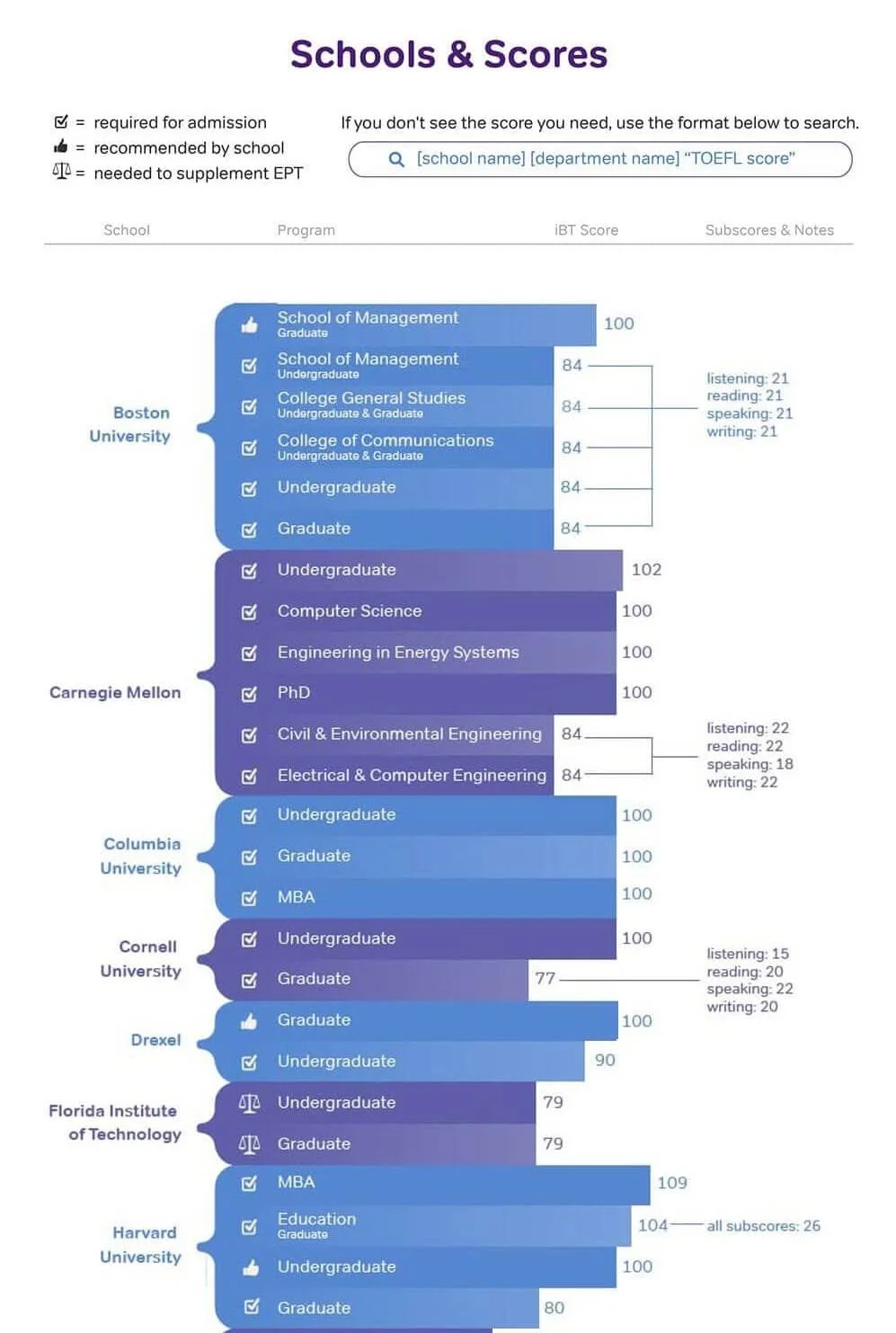
This infographic by Magoosh will give you a brief idea of TOEFL scores required by some popular schools and will help you set the target score for admission into your dream college.
Summary
TOEFL is used to judge a candidate’s capability to study at a university in English-speaking nations. It is also a requirement in many colleges and courses across Europe and the world for non-native English speakers.
It is hugely popular among top-notch universities and has helped students get into their dream college. The exam is just a prerequisite to filter out applicants who are not fluent in academic English, and the test does not guarantee admission into top schools. Students should focus on their overall application as well, besides preparing for TOEFL.
We have tried to cover key points of the TOEFL exam but there is no better resource to know about it than the ETS website. Please click here to know more.
If you have already given the TOEFL exam and need help with your application, please book a call with Nistha. We have helped many students to get admission to schools like Harvard, MIT, and Columbia.
We can help you get into your dream school abroad.
TOEFL exam FAQs
What is TOEFL?
TOEFL is an English-proficiency exam that is primarily used to judge the applicant’s readiness to join a university abroad.
What is the fee for this exam?
The fee varies based on the test country/location. The applicant has to pay 185 USD if they are planning to give the exam from India.
What are the eligibility criteria for TOEFL?
The exam does not have the eligibility criteria per se. Indian applicants should have a passport to register for the test.
Can I give TOEFL multiple times?
ETS conducts the exam 60 times a year and you can give it as many times as you want. The only caveat is that you need to wait for 3 days before registering for the next attempt.
You can register online up to 2 days before the exam date.
What is considered a ”good” score in TOEFL?
You only need to score above the minimum benchmark set by the university you are targeting for admission. Generally, a score of 100 makes you eligible for admission to most top universities.
Which books are recommended for TOEFL preparation?
The Official Guide to the TOEFL iBT® Test is considered a great resource to prepare for the exam.
Which is better- TOEFL or IELTS?
The exam which is widely accepted in the region/universities you are planning to get admission into is better for you. There is no point in giving an exam if it is not accepted at the university of your choice.
Back when I wrote GRE, I got 2320/2400. The scoring and format has changed since then but I have talked to multiple candidates who cracked 330+ score in GRE recently – I realize that few best practices remain same.
So, I am revisiting what I think works well when you are taking an online adaptive test like GRE. It’s all old wisdom packaged afresh in millennial slangs. Remember that you, yes YOU, can score 330+ in GRE.
The first thing that will make your mind boggle is that GRE is a frickin’ long test. It is not for weak hearted and given how much social media has screwed your and my attention span, it sounds insane to sit 4+ hours and focus on a damn screen and remember what the word ‘reticent’ means!
This is what I suggest – take a practice test without any additional prep. This helps in understanding what is your current level and what are the areas where you will need to put in more efforts. By doing this, you can avoid wasting time on the areas of your strength.
After taking any test, go over the scorecard carefully. Since this is only an initial evaluation, you want to take a look at the sections where you performed the worst. For most of the engineers, the pain lies in verbal section and mostly the reading comprehension. However, it could be math section for you and don’t be surprised to find that you ran out of time. It happens. This reality check will make you take time management more seriously.
Ok, now that you know which sections are going to be your undoing, let’s start preparing for it! For e.g. If you got 4 out of 7 text completion (TC) questions wrong, then you know you need to get your act straight there and better download that vocabulary app.
But before we dive into the books and the online tests, go and take that damn appointment.
2. Take your GRE appointment
I had a friend in NYC when I was working on Wall Street. Let’s call him Ankit. Four months into our jobs, he announced that he is soon going to write GMAT and do an MBA. Next thing I know he has his new fancy book delivered by Amazon and I am already visualizing Ankit going to Harvard with his Macbook tucked in on one side.
He gave me a proper FOMO and as it would happen, I would write my own GMAT ten months later. In between, we would meet often and I was always in awe of his knowledge on finance related topics. He is going to make a great banker, I would say to myself. He was not getting enough time in the hectic job. I asked him if we could start preparing together. But the man was too busy. I asked him if wants to book the test dates at the same center but he felt he needed a little more preparation.
My scores came out and I got busy with my business school apps and job. After getting the coveted admit to NYU 1 year later, I pinged him and enquired with excitement, “Dude, so where are you heading?”. The dude told me he is going to appear for the GMAT very soon and then apply in a jiffy. Whaaaa?!?!
As it turned out, Ankit never wrote the GMAT and while he remains a great friend of mine, I know he was just too scared to face a bad score. It happens!
So, my advice is – don’t be Ankit.
It is easy to keep procrastinating on writing this test forever. You know what is worse than a score of 300? Not writing GRE and never fulfilling your MS dreams. Don’t let that happen to you.
Book that damn date so that you are committed to it. Mark it with big red cross on your calendar. People have reported that 2-3 months is an ideal time for prep – keep it soon enough so that you don’t lose tempo.
3. Collect the GRE preparation material
You would need some essentials and then additional practice resources depending on your weak points.
Kaplan GRE practice test (considered tougher than actual test)
McGraw-Hill GRE practice test
d. Vocabulary Preparation
Quizlet flashcards
Magoosh’s GRE Vocabulary Flashcards
Word Power Made Easy by Norman Lewis
e. AWA
You cannot write well until you read well. GRE is a lot about how well-read you are and then doing some focused reading that can help you in improving the vocabulary, understanding proper grammar and writing the essays. Few candidates have recommended essays in Arts and Letters Daily, and The Best American Essays of the Century by Joyce Carol Oates.
I find Magoosh AWA guide to be one of the best and would highly recommend that for AWA tips and practice.
4. Planning last two weeks
I am not a good finisher and had a hard time not going psycho in the last week of the exam. There is only one way to calm your nerves – feeling more in control. Have a good 14 or 10 day plan for last few days before the exam.
a. Practice, practice and only timed practice
Many people take the practice tests in bits and pieces; I sympathize with them. GRE test is not a sprint – you cannot excel at the first section and then make excuses that your back started hurting by 3rd hour. You cannot complain that you knew how to calculate that median but time ran out. GRE is a marathon and the only way to prepare is do timed practices.
Whatever tests you take, sit down and put an alarm on your smartphone. Do it in time else it is useless. If you want to score 330 or more in GRE, you simply must take at least 10 full length practice tests.
b. Back breaking reviews
Are you jumping after getting 318 on Kaplan? Don’t be a fool. Sit down and study all the answers one by one. Not just wrong ones but also the right ones. Frankly, taking tests is again useless if you do not sit and reflect on your performance.
You should know why an answer is right or wrong. The actual result matters less than the why of it.
c. Revise
You will come across tricky questions from day one – you should keep marking them. Read the answer, understand why you got it wrong or why you did not feel confident about it even if you guessed it correctly. Keep it marked. Revisit these questions in last 10 days.
Do you get them correctly this time? If not, be alarmed. The whole point of the preparation is to know what you did not know at the beginning. This is why reviews of your practice tests are important. Don’t worry, do it again now. Review and revise after 5 days.
Why 5 days? – no point in doing it immediately because you would identify the correct answer by memory and not by logic. Let few days pass before you revisit these tricky questions.
Remember that a score of 330+ in GRE needs high precision. You cannot rely on getting most of the questions right – the key is to avoid getting anything wrong. This requires painstaking revisions. You have to review your performance and improve consistently.
What we want is to learn the underlying concept and not just the answer to this question.
d. Stop studying on the last day
It can be counter productive to take tests till last day. One day before your GRE, you should try to calm your nerves, relax, and be mentally prepared to focus. Apart from revising few areas, you should try not to study on your last day before the exam.
So, what does it take to score 330+ in GRE
As you can see, an early start followed by meticulous practice and timely test taking can go a long way in getting your coveted scores. If you have prepared and revised well and keep your cool on the exam day, you can totally score 330+ in GRE.
Lastly, know that it is ONLY AN EXAM and you can always retake it. Do not let pressure of scoring high wreck you. Good luck!