We are getting lot of interest from MIS and MEM programs’ applicants. Plus, those who are interested in Data Science and Analytics specifically. Let’s look at some of the most commonly asked questions.
Should I go for MIS only if my profile is not good enough for MS in Computer Science (and other branches respectively for MEM)?
This is a misconception that MIS stands second to core engineering MS programs. I have known students with excellent profiles and a shot at top MS in CS programs to opt for MIS because of their career goals. It is important to understand the difference in career paths that stem from MS CS vs MIS. You should see which program aligns better with your career goals and not choose based upon its perceived reputation in your head.
If I want to do MBA later on, then should I still go for MIS/MEM?
Many MIS/MEM programs are offered by business schools (and some by engineering schools). As a result, you might be taking some courses along with the MBA students. I recommend doing MBA much later in career for either switching your career stream or to get a jump in career ladder within your industry. Doing a MIS/MEM (granted that it fits in with your aspirations now) will not rule out an option for MBA later on. You might be studying some of the courses again but you can still do it if you feel the need to do so.
Are the job prospects after MIS/MEM worse that MS or MBA?
Please understand that all these are different programs and hence comparing them is not ideal. MS and MBA have been there for a long time and have established reputation whereas MIS/MEM programs are comparatively newer and still building their base. And this is the reason that they are growing steadily in demand as well. Would you rather do MBA when fewer people were doing it and there was a higher demand or when the market is saturated and practically everyone has an MBA?
Top MIS/MEM programs such as Duke, CMU, Stanford etc are highly competitive and graduating from them is highly rewarding in terms of career opportunities. So, I feel that if you graduate from a good MIS/MEM program, you will not be compromising on any job prospects compared to other fields. Currently, there is an employment boom for engineers (especially CS related) which may change later on. Therefore, job prospects after these programs depends on the industry demands and not the reputation of these programs alone. As is true for MS or MBA, doing MIS/MEM from higher ranked schools should open lucrative opportunities for anyone.
How can I make my MIS/MEM application stronger?
Following things can help especially for MIS/MEM- – Having at least a year of fulltime work experience. This is because management programs benefit from exposure to industry and students can better contribute to the classes if they have worked previously. Also, they are able to better understand some concepts that are applicable in real world jobs – Get at least one LOR from the Industry. This can come from your Manager if you are employed or a project guide if you are an engineering student and did some industry project/internship.
Should I apply for MIS or not?
If you want to get into IT consulting, Analytics, Project Management, Product Management etc kind of careers, then and ONLY then you should opt for MIS and NOT because it is less competitive or easier entry for US.
Our students are joining MIS/MEM/MS Business Analytics/MS Data Science programs at Columbia, UT Austin, CMU, TAMU, Duke, Syracuse, Buffalo, NEU, UIC etc every year. Contact us if you need help with your MIS/MEM applications.
Wondering if you should join or apply to Duke MEM program? We have our 2019 alum, Yusuf Bhinderwala, share a video review of his experience at Duke. It has all the latest updates.
And, for those who prefer to read – our older alumnus, Kanchana, shares what is it like to study MEM at Duke in a detailed QnA. She also talks about why she chose Duke over UIUC MSTM program. So, all those who are considering applying to Duke MEM and wondering what to expect, here we go.
Coursework
What kind of technical courses are MEM students allowed to take? Anything, simply anything
Are there any restrictions as such? No. Provided you deliberate with the management on why you want to take up a course from the law school or Fuqua School of Business (if it’s not an allowed elective).
My main area of interest is Computer Engineering, so if I wanted, could I just pick up some courses in that area that are listed for the MS Computer Engineering course?
In the end, you are investing in an amazing experience where you can take away something new. Would you want to learn what you already know or expand your horizons? Think about that, sincerely!!!! Rope in people who are close to you and discuss your options. Don’t do an MS just for the sake of it…
I do not want to take up the course with the view of becoming a technical manager or anything of that sort. I would be more leaning towards being an entrepreneur. In that aspect, how do you think the course would help me?
Makes you managerially fit, lets you explore dimensions of studies that you never thought would affect your deliverables as an entrepreneur.
How is the course and what kinda projects do we have to do? Is it a lot of theory? OR is practical stuff involved?
It’s a constant learning process. They use what is known as case study method. Any subject you take, will require you to do substantial amount of work after the lecture. It’s a system of learning where the practical problem is thrown at you first and you figure out ways to solve it, then the concept related to the same is something that is taught in the last.
There is no theory or practical concept. Duke MEM involves a lot of case study analysis. It will stimulate your intellectual thinking and make you understand the concepts that you will learn in class.
In fact most of the non-technical jobs like Business Technology Analyst, Business Analyst etc have case interviews. They will put forth a problem to you and you have to find out all possible angles of approaching it. It’s purely creative and not technical…. So don’t worry when I say case interview.
Job Prospects and Job Hunt
How are the job prospects? Like what kinda companies hire us? and do we get paid well?The common notion is companies don’t hire freshers for a managerial post. Is that true?
It all depends on what you have to offer, if you are good enough, you can get whatever role you want. If you don’t have the aptitude and skills for it, you will never get the job, until you work towards it by taking related courses. No one will hire you as a manager if you don’t have the experience or substantiate with enough work/ study experience. If you are searching for a non-technical position, you may have to start from the beginning of the growth ladder for that non-tech position in any company.
Avg salary is somewhere in between $75,000 to $85,000 for starter positions. For people with prior experience and who have niche skills, it can cross even $100,000.
Do you get enough good companies to pick and choose among them?
Companies don’t come to you here. You have to network and get your job. It’s not impossible to get a job though. You have e-recruiting sites here, but you have to get in touch with new contacts through LinkedIn. Your choice of companies are not limited to the ones that come to the campus, you can apply to other companies through their respective sites and using a referral that you personally get in touch with through LinkedIn. And Duke trains you for this.
I have three years of work experience. Would I still have to complete an internship before joining? Further, how tough is it to get an internship immediately after nine months from arrival?
The Internship Presentation is a chilled out thing, really. It’s a final 15 min presentation on your take-aways in your work/internship experience. It doesn’t even involve a lot of technical know-how to be presented. So if you are planning to take up an internship for the assessment, there is no point. You can leverage your work experience itself. You don’t need to separately do an internship if you have had the work experience.
The process of getting a job or an internship is different. There is the concept of NETWORKING that you will detest after some point. It is basically keeping in constant touch with your contacts that you make at career fairs, LinkedIn and other people you would have met otherwise. IT IS A FULL TIME COMMITMENT OR JOB TO DO INTERNSHIP/JOB HUNTING. It’s the same case in any grad school. What helps is that Duke will actively train you to Network! And you will have a series of Resume, Cover Letter Workshops and many such personal development activities that you have to promise yourself to make use of once at Duke. Because you honestly won’t find the time to do anything else besides managing your coursework and the endless team meetings.
Networking
Apart from the curriculum what kind of other opportunities are available to a MEM graduate (like some sort of consultancy club etc.) anything you can think of which is not mentioned in the curriculum but helps networking and developing?
Check out the MEMPDC at Duke http://www.dukemempdc.org/ . I am executive member of the CDAR club and I have conceptualized and organized a few activities for MEM student community. Apart from the four main clubs we have the Finance and Consulting clubs that have some exciting workshops and activities organized as well…. You can take part in any of them or even opt to be in the leadership team.
Your fees also covers the gym and all the athletic facilities at Duke. So you can make use of the same. There will also be MEM Olympics that covers an array of sports that you can take part in as well. Honestly, I would suggest you plan your academics in such a way that you get to participate in some activities atleast. The course itself is very heavy, even though it seems to be easy. Duke’s MEM is rated higher than Stanford’s MS&E and having had a stint with Stanford MS&E curriculum, I can personally tell you that it is true.
Duke MEM vs UIUC MSTM
I have admits from UIUC MSTM and Duke MEM and I am confused what to choose. You had the same choice, why did you decide on Duke?
I personally did not choose UIUC because I wanted more international exposure. 90% of the admits in UIUC last fall were Indians whereas it is around 50% in Duke. Having more diversity in a collaborative program like MEM enhances the experience multi-folds and it was an important factor I used to assess UIUC against Duke. Industry collaborations and opportunities are slightly better than UIUC is what I hear.
Duke having more feathers on its cap in terms of companies and industry relations, will only prove beneficial to you. Last but not the least, Duke has a very reputed Business School, Medical School, state of the art facilities as it is a private university, and is proudly called “The Stanford of the East”. It definitely has more visibility in terms of the MEM program.
Advice for incoming students
What other advice would you give to students who are going to Duke for MEM?
Please come with an idea of whether you are going to finish it in 2 or 3 sems. Your peers here will confuse you. The program is completely doable in two semesters. But if you are adamant on going through the Career Fairs thrice then 3 sem option would be ideal. But people have told me that they waste a lot of time doing it in three semesters. I am completing it over two sems because I want to get back to work-life as soon as possible, I work effectively in lesser time as opposed to being complacent in three sems and this will also reduce my financial burden by a semester of living expense.
Plan your courses beforehand as registrations for the famous courses closes within 2 secs of it opening…. I am not kidding. Also make sure that you plan to have all your classes over two to three days of the week instead of one subject a day, as you may lose time to go out and explore the University and what it has to offer besides academics. Look at which courses have a lot of team meetings as well. That will help you narrow down the courses.
Most (95%) courses have team meetings. It will get really cumbersome. So be prepared to interact with people you may not like and also may have to shell out your weekend for the same. That is also one of the reasons why you need to have some free time over the week as well for yourself. It’s how you extract value from the MEM program at Duke that will matter in the end.
More applicants are considering MS in MIS and MEM programs for their Master’s ambitions these days. Let us understand the scope of these programs and whether you should consider them too. The process for applying to these programs is same as MS in USA.
What is MS in MIS about?
MS in MIS stands for Master’s in Management Information System. It is one of the most popular techno-management programs that engineers go for.
Specifically, MS in MIS is an engineering management program that teaches how to use IT to manage huge volumes of business-relevant information to facilitate strategic decision-making. One might think of it as a less competitive version of MBA specializing in IS (but then, less reputed than an MBA too).
Why are techno-management programs getting more popular?
As technology spreads to every tiny aspect of our lives, role of engineering management is becoming more relevant in every domain and industry. Be it pharmaceutical or an agricultural company, everyone is dealing with information. While chemical, mechanical, civil, hardware electronics engineering deal with tangible products, software and computer engineering deal with the abstract information.
Understandably, there has been a constant increase in the demand for managers who understand technology and management aspects alike. This gave rise to programs such as MEM (MS in Engineering Management), MIS (Management Information Systems), MIM (MS in Information Management), MSIS (MS in Information Systems) and so forth.
With few differences, these programs aim at combining technical depth with business breadth so that the students can understand both management and engineering language. One theme that underlines all these programs is that they are core business programs with engineering electives or vide versa. The focus is still on management courses such as statistics, analytics, supply chain etc and one can pick electives in database, programming, networks etc.
What is the curriculum of MIS and MEM programs?
It has a combination of engineering and management electives. Some programs are heavier on engineering courses and some are more focused on management courses. Therefore, it is crucial to study the curriculum before choosing to apply to a program – make sure it fulfills your interest.
The three semester, 16-month curriculum can be reduced to one year for those with at least three years of professional work experience. One of the most prestigious and job friendly MIS programs. However, it can be expensive but you are getting a CMU degree.
The MSMS degree is 90-unit curriculum, with courses at Sloan, in other MIT departments and Harvard University. Those are two schools to kill for – enough said.
The 48-unit degree program is intentionally interdisciplinary, combining aspects of computer science, cognitive science, psychology and sociology, economics, business, law, library/information studies, and communications.
Combining computer technology from Courant Institute of Mathematical Sciences and business preparation from Stern School of Business, the MSIS at NYU prepares graduates for successful careers in management positions that require deep technical skills.
Texas A&M is one of the most affordable comprehensive public universities in the nation. The department also offers scholarships and graduate assistantships.
Classes for the twelve-month on-campus program are designed to accommodate working professionals. Small class sizes and evening classes allow students to get an intimate, collaborative experience while not having to put their careers on hold.
10 month, STEM designated degree that creates business leaders prepared for disruptive innovations due to emerging technologies, such as deep learning and blockchain.
The Master of Science in Information Technology and Management is a 36-credit curriculum that prepares students to better understand the world of information technology.
The MSIS offers concentrations in big data management and analytics, enterprise systems, cybersecurity, information technology, health informatics, and management of information technology.
$55,000 for 12 months
What is MEM program?
MEM stands for Master’s in Engineering Management. It is the generic techno-management program with courses in Marketing, Finance, Management, Operations, Modeling and available engineering electives (not just software but industrial engineering, nanotechnology etc).
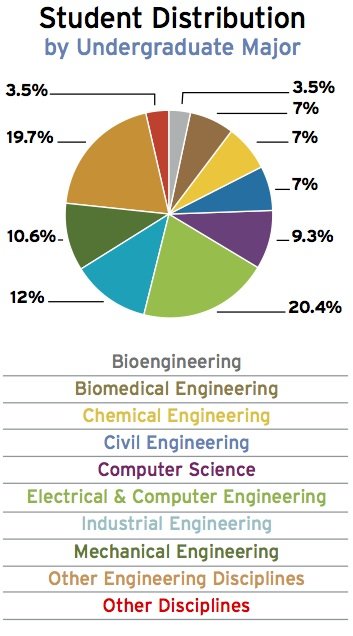
Duke MEM students by backgrounds
Duke’s MEM program is leading in this category. Look at their electives to get a sense of the course offering. Above chart shows how the incoming student profile is distributed. As you can see, it is widely spread among various engineering majors.
Some other engineering or techno-management programs go under the names of MIM, MSIS, MISM etc.
What kind of jobs can you land after MIS or MEM programs?
MIS – Expect roles such as IT consultants, data analytics engineer, system analysts, data analysts, systems engineer, database administrators.
MEM prepare candidates for consulting, business analysis in any engineering related work function.
Our students are joining MIS/MEM/MS Business Analytics/MS Data Science programs at Columbia, UT Austin, CMU, TAMU, Duke, Syracuse, Buffalo, NEU, UIC etc every year. Contact us if you need help with your MIS/MEM applications.
Here are the fabulous results for Spring/Fall 2017, we have some great new schools to our portfolio now – UIUC MS CS, UT Austin, MS CS, UCLA MS CS, UC Davis PhD, Wisconsin Madison MS EE, CMU ECE, Berkeley MIS, Foster MIS, Virginia Tech CS, Purdue Mechanical etc etc! If you are applying next year and want to work with us, check out our Counseling Options.
Abhishek – MSBA (310, 7.6, 4 yr work-ex) – NEU MEM
Nitasha – MS Analytics (310, 7.4, Fresher) – ASU MSBA, Stevens BI, RIT Stats, Rutgers MBS
Priyasha – MIS, MEM (710, 0.82, 12 yr work-ex) – MIT SDM, UWashington Foster MSIS, Berkeley MISM, UMCP, Cincinnati, TAMU, UIC, Syracuse
Ronak – Analytics (333, 7.6, 6.5 yr work-ex) – Columbia Applied Analytics
Here are Spring/Fall 2016 results (awesome, isnt it? 🙂 )-
Akash B – MS ECE (332, 9, 3 yrs work-ex) – Georgia Tech, UC San Diego ($5K scholarship), UMN Twin Cities, NCSU
N Saxena – MS/PhD CS (332, 75%, Fresher) – Harvard, Columbia, UC Santa Cruz, Buffalo, Syracuse
Souptik S – MS CS (338, 76%, 3 yrs work-ex) – UPenn, U of Wisconsin Professionals MS, UMass Amherst (with RA), CMU INI (with graduate fellowship), NCSU, SUNY SB
Shashank R – MS CS Data Science (324, 9.6, 2 yrs work-ex) – Georgia Tech, UCSD, CMU BIDA, USC, U of Washington MSIM, NYU MS Data Science, SUNY SB, NCSU
Anirudh R – MIS/Operations Research (334, 7.5, 2 yrs work-ex) – U Berkeley MSOR, Dartmouth MEM, Columbia MS&E, Duke MEM
Nikita K – MIS/MEM (324, 9, 1 yr work-ex) – Dartmouth MEM, Columbia MS&E, Duke MEM, TAMU MIS, UMCP MIS, USC MEM, UIUC MSTM
Kanagaraj – MS/PhD EE (315, 9, 5 yrs work-ex) – Rutgers PhD, Columbia MSEE
Keshav S – MS CS (324, 9, 2 yrs work-ex) – UCSD, UMN Twin Cities, NCSU
Ishan M – MS CS (319, 9.4, 4 yrs work-ex) – UCSD, Ohio State, NCSU, ASU Polytechnic
Gayathri J – MS ECE (325, 8.7, 3 yrs work-ex) – UMN Twin Cities, UFL, Gatech Shenzhen, Portland State
Sharan S – MS Business Analytics (324, 9.2, 5 yrs misc exp) – UIUC – Spring 2016
Rafi A – MS CS (78%, 3 yrs work-ex) – Waterloo – Spring 2016
Akshata M – MS Business Analytics (323, 8.9, Fresher) – UT Austin, CMU BIC, CMU MISM, IUB Data Science
Sheelabhadra D – MS CS (326, 8.4, 1 yr work-ex) – TAMU MSCS, CU Boulder, NCSU ECE, UFL CS, WPI
Chakshu M – MIS (700 GMAT, 78%, 6 yrs work-ex) – CMU, UMCP, Cincinnati, TAMU
Neha A – MIS (710 GMAT, 3.6, 2 yrs work-ex) – CMU BIDA, UIC MSBA, Connecticut
Suvrodeep G – MIS (650 GMAT, 7.6, 5 yrs work-ex) – TAMU, UMCP, SUNY Buffalo
Deepika A – MS CS (317, 80%, 3 yrs work-ex) – NCSU, SUNY SB, USC, NEU
Anshul G – MEM (325, 8.2, 2 yrs work-ex) – Cornell MEM, Duke MEM, Tufts with $15K schol
Sanchit M – MS CS, MEM (318, 7, 2 yrs work-ex) – Duke MEM, NYU
Pritesh R – MS CS (320, 64%, 2 yrs work-ex) – U of Utah, NCSU
Vinod S – MS Mechanical (332, 7.9, 2 yrs work-ex) – UIC, NCSU
Tariq I – MS CS (322, 7.2, 4 yrs work-ex) – ASU, UC Irvine
Sathwik N – MS CS (313, 7.7, 2 yrs work-ex) – ASU, NCSU
Ravi T – MS Industrial/Financial Eng (311, 7.7, 3 yrs work-ex) – ASU
Samantha S – MIS (301, 8.7, 4 yrs work-ex) – CMU MISM
Shubham S – MS CS (311, 7.2, 4 yrs work-ex) – NEU
Shilpi K – MS CS (312, 8.5, 6 yrs work-ex) – UTD, USF, NEU, SUNY SB PhD
Karthik T – MS ECE (318, 9.2, 3 yrs work-ex) – TAMU, USC, UTD, CU Boulder ITP
Yasho V – MIS (318, 6.5, 1.5 yrs work-ex) – UMCP, Cincinnati, CMU MISM, USF, UTD, Syracuse, UIC
Selina B – MS CS (320, 9.2, 1 yr work-ex) – USC, Waterloo
Sanjana W – MS CS (313, 8.3, Fresher) – UC Santa Cruz, ASU, UTD
Srikanth M – MS ECE (323, 8 in MS, I yr work-ex) – UC Santa Cruz
Piyush P – MS CS (318, 73%, 3 yrs work-ex) – ASU
Apurva P – MS CS (325, 69%, 2 yrs work-ex) – NYU
Ankita S – MS CS (318, 8.4, 2 yrs work-ex) – ASU, CMU MSISPM
Melvin T – MS EE (314, 8.2, 2 yrs work-ex) – Clemson, UTD, Portland State
Aashish D – MIS (314, 61%, 3 yrs work-ex) – UMCP MIS, SUNY Buffalo, Syracuse, UIC, USF, UTD, UMCP MIM
Shivam S – MS CS (317, 8.2, 2 yrs work-ex) – NCSU, NEU, UTD
Nitesh G – MIS/MEM (320, 8.2, Fresher) – Notre Dame, CWRU with 13k scholarship, UTD MIS (instate tuition fee scholarship), NEU MEM
Nitesh G – MS Telecommunications (320, 8.2, Fresher) – CU Boulder ITP
Sumanth N – MS EE Robotics (303, 79%, 4 yrs work-ex) – UC Santa Cruz, WPI, University of Bonn
Aditya V – MS EE Robotics (322, 7.7, 3 yrs work-ex) – WPI
Rajdeep K – MIS (310, 60%, 5 yrs work-ex) – UFL (ISOM), UTD (ITM)
Siddharth N – MS CS (319, 8.2, 1 yr work-ex) – CMU MSIT – Privacy Engineering, ASU MCS, NEU, TU Munich
Manika B – MS CS (312, 7.75, Did ME) – NEU, SJSU, NJIT
Aditya K – MIS (321, 6.3, 3 yrs work-ex) – NYU, USF, UTD, Syracuse
Mohit V – MS EE Embedded (317, 9.1, Fresher) – SUNY SB, NCSU, UTD, UNCC
Suchitra D – MIS (316, 77%, 2 yrs work-ex) – Syracuse, Cincinnati, Buffalo, UNCC Data Science, UIC MIS, UTD MS CS
Hari N – MS ECE (314, 7.9, 5 yrs work-ex) – UMCP ENTS
Saloni S – MS Data Science (311, 7.1, 1 yr work-ex) – IUB
Ranadeep G – MS CS (314, 7.7, 3 yrs work-ex) – Rutgers, NEU MS IT
Sanjana E – MIS (308, 8.45, 2 yrs work-ex) – Rutgers, USF, UIC
Priyank J – MS CS Cybersecurity (303, 61%, 1 yr work-ex) -RIT, IIT, Drexel, De Paul, George Washington University
Aroushi S – MS CS (313, 73%, Fresher) – UTD, Houston Main Campus, U of Glasgow, U of Manchester
Hemant P – MS CS (310, 80%, Fresher) – UTD, SUNY SB, NEU
Supraba M – MS CS (316, 8.4, 1 yr work-ex) – UTD, IUB Data Science
Preethi T – MIS (313, 7.5, 1 yr work-ex) – USF, UTD
Ram K – MIS (314, 7.4, 3 yrs work-ex) – Utah, USF
Mohit G – MS CS (312, 77%, 1 yr work-ex) – UTD
Sajin S – MS ECE (325, 7.3, 1.5 yrs work-ex) – UNCC
Rucha K – MS CS (310, 70%, Fresher) – UNCC
Tushar A – MS CS (319, 66%, Fresher) – NYU Poly
Pallavi K – MS EE (310, 9 in MS, Fresher) – NYU Poly
Asha A – MS EE (312, 7.8, Fresher) – U of Rochester ECE, CU Boulder Power Electronics, SUNY Bufallo ECE, UTD Energy Mgmt, Rochester Entrepreneurship Mgmt, IIT
Varun C – MS CS (329, 76%, 1 yr work-ex) – ASU IT, RIT
Adarsh S – MEM (317, 8.2, 1 yr work-ex) – NYU MoT, NEU MEM
Sujay P – MS ECE (305, 75%, 6 yrs work-ex) -Southern Methodist, NEU, Stevens, Pittsburgh
Sadavath S – MS in Business Analytics (325, 80%, 2 yrs work-ex) – UT Austin
Akash S – MS in Mechanical (319, 9.55, 1 yr work-ex) – UC San Diego, Columbia,CMU, USC, U of Washington Seattle, ASU
Mohnish P – MS in ECE/CyberSecurity (325, 8, 2 yrs work-ex) – NYU Poly, CMU MS IT, John Hopkins, Columbia MS&E, Columbia MS in Computer Engg
Arushi A – MS in Data Science (320, 84%, Fresher) – Columbia
Arushi A – MS in CS (320, 84%, Fresher) – USC, UC Irvine
Hari P – MS in CS (314, 8.5, 2 yrs work-ex) – SUNY Stonybrook,NCSU (MS CN), NYU Poly
Karandeep – MS in Civil Engg (337, 8.7, 1 yr work-ex) – UIUC, TAMU, U of Colorado Boulder, Colorado State Univ
Navaneeth R – MS in ECE (307, 8.1, 1 yr work-ex) – UMCP ENTS, ASU, UIC
Vipul M – MS in CS (315, 65%, 4 yrs work-ex) – CMU BIC, ASU, NEU MS in Information Assurance
Vini G – MS in CS (321, 8.98, 3 yrs work-ex) – Cornell MEng, USC (Data Science)
Vini G – MISM (321, 8.98, 3 yrs work-ex) – CMU
Pragya T – MIS (650 GMAT, 68%, 3 yrs work-ex) – CMU, TAMU, U of Cincinnati, SUNY Buffalo, UIC
Pratik C – MS in EE (Robotics/Embedded) – CMU Robotics, Tufts, KTH Sweden
Anirudh S – MS in EE (324, 8.61, Fresher) – Ohio State University, NCSU, Virginia Tech non thesis, TU Delft
Sushma G – MS in CS (318, 9.5, 1 yr work-ex) – USC, Cornell MEng
Nishad S – MS in Embedded/EE (329, 7.98, 3 yrs work-ex) – UNCC, NCSU
Vikas S – MS in Mechanical (315, 9.08, 1 yr work-ex) – CMU, USC, U of Washington Seattle, ASU
Kevin G – MS in Mechanical (322, 9.1, Fresher) – U of Washington Seattle
Kevin G – MEM (322, 9.1, Fresher) – Cornell MEM
Indona V – MS in CS (325, 82%, 4 yrs work-ex) – NCSU, TAMU, UC Irvine
Anas S – MS in CS (324, 8.0, Fresher) – NCSU
Hardik J – MS in Mechanical (313, 68%, 5 yrs work-ex) – TAMU, U of Washington Seattle, UNCC
Shantanu K – MIS (317, 65%, 2 yrs work-ex) – U of Cincinnati, UMCP MIM, UIC, USF, UTD (50% tuition waiver)
Sahil N – MIS (312, 9.0, 2 yrs work-ex) – CMU, UMCP, NEU, USF, UTD, UIC
Neyaz S – MS in CS (331, 7.27, 4 yrs work-ex) – UFL, NYU Poly, Vanderbilt, SUNY Buffalo, IUB
Kalyan C – MS in CS (319, 8.3, 4 yrs work-ex) – UFL
Pranjal – MS in CS (303, 71%, Fresher) – RIT, U of Delaware
Ankita D – MIS (300, 8.92, 2 yrs work-ex) – Syracuse, NEU, IIT Chicago, NYU Poly, Stevens
Srishti S – MS in EE/CE (Robotics) (321, 66%, Fresher) – WPI, UNCC, Colorado State, NYU Poly
Yash G – MIS (321, 7.37, 2 yrs work-ex) – U of Arizona Eller, UIC
Vikrant M – MS in EE () – NYU Poly, U of California SantaCruz, Vanderbilt, SDSU, Utah State Uni
Vivek J – MS in Business Analytics (322, 7.24, 2 yrs work-ex) – Drexel with 12K scholarship, Louisiana State U, Waitlisted at University of San Francisco, University of Virginia
Deepthi V – MIS (314, 8.5, 2 yrs work-ex) – UMCP, Georgia State University
Alok S – MIS (322, 8, 3 yes work-ex) – TAMU, SUNY Buffalo
Saumya G – MS Chemical Engineering (314, 75%, Fresher) – Ohio State University, Columbia, ASU
Vinayak R – MIS (319, 72%, 2 yrs work-ex) – UIC, Syracuse, UMCP, U of Cincinnati, CMU, U of Arizona Eller
Jaskaran K – MEM (320, 8.36, 2 yrs work-ex in Mech) – Case Western Reserve University with 40% scholarship, UIUC MSTM, Duke
Srishty P – MIS (316, 78%, 2 yrs work-ex) – UT Dallas
Mohnish P – MIS (325, 8, 2 yrs work-ex) – CMU MIS
Samiksha R – MIS (294, 58.8%, 1 yr work-ex) – RIT, IIT Chicago, Texas Tech
Lokesh A – MS in CS (314, 60%, 2 yrs work-ex) – RIT
Ramya – MS in EE (304, 7.36, 1 yr work-ex) – NYU Poly
Sanket K – MIS (304, 63%, 2 yrs work-ex) – Stevens, WPI, USF, U of Florida, NYU MoT
Prakhar M – MS in Construction Mgmt/Environmental Engg (296, , Fresher) – Steven, Bradley, IIT Chicago
Rohit A – MIS (299, 73%, 3 yrs work-ex) – NJIT, NEU, UNCC
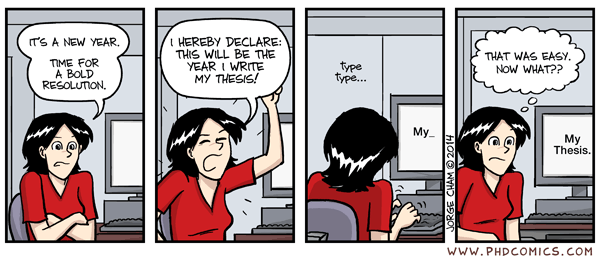
And for all the graduate and to-be-graduate students, your academic life is incomplete until you read all the PhdComics. Here’s one for you-