Salary Negotiations can be difficult and stressful but are an important part of any interview process, annual employee review, or promotion. Having the opportunity to negotiate your salary over email has some pros and cons. Negotiating over email gives you the benefit of carefully crafting your statements and reducing impulsive decision-making, such as accepting an offer you’re not truly comfortable with. On the downside, salary negotiation over email limits what you can say as you must be concise, and means that your tone or personality can get lost over text. Despite these obstacles, we have a few templates that provide a solid foundation for any salary negotiation email.
#1. Applying for a New Job – Compensation to Match Experience
Hi Ms Johnson,
I wanted to thank you again for our great discussion over the phone and let you know I have received the job offer package from HR. I believe I am the right fit for this role, and I am truly grateful to have been considered for the position.
Before I can accept this offer, I would like to further discuss the compensation outlined in the package. As we discussed, I have over 8 years of experience in the field, with five of those years in a managerial position. At my previous company, my team exceeded its quota by 30% and was the highest-earning group within the company. Further, in the last two years, I was able to increase my team size to over 20 people, which was one of the largest teams managed in my company. I believe that my experience makes me a valuable candidate for this job and goes above and beyond those requirements requested. As such, I feel that an annual salary of $105,000 – $115,000 is fair.
I know that I can bring the leadership and value that is required to do this job successfully. I am extremely excited about this opportunity, and I hope to discuss the salary further.
Thank you again and I look forward to talking with you soon.
Best Regards,
Monica
#2 Applying for a New Job – Compensation to Match Job Requirements
Dear Mr. Bedi,
Thank you for offering me the Account Manager role. I want to express my gratitude and excitement about working for the company.
Prior to going ahead with this offer, I would like to continue the conversation around my compensation. While the offer is greater than my current salary, I feel that the increase does not match the average cost of living to where I would relocate to. For instance, according to government statistics, my average cost of living would increase 22% while my salary would only increase 15%. Additionally, I will have to spend more time commuting to work.
For these reasons, I think a salary of $85,000 is reasonable to cover my increased expenses and continue to the same standard of living I currently enjoy. However, I understand this is a new role, and I am willing to consider other forms of compensation or reimbursement if also possible. This role is an incredible opportunity, and I would love to work for this company.
I want to thank you again for your consideration. I hope we can come to an agreement and move towards the next steps. Hoping to talk to you soon.
#3 Applying for a New Role/Promotion in your current company
Hi Brad,
I wanted to express my gratitude again for our conversation earlier about the new role and let you know that I received the compensation package from HR.
Although I love this offer, I would like to review the salary amount that has been offered. While the salary increase is the company standard of 10%, I believe that because of my years of commitment to this company and the value I bring to the team, I think a 13%-15% increase should be considered. Following the obstacles faced by the team last year, I took on roles and responsibilities that were far greater than expected of me. I increased my team from 2 to 7 members while still growing our group revenues year over year.
I understand that due to budget constraints, this increase may not be possible. However, if this is the case, I would be willing to discuss other types of compensations such as an increase in PTO days, an increase in my commission percentage, or something similar.
I truly enjoy being a part of this company and I hope to continue to help our team grow. I’m excited to continue the conversation and hear your thoughts.
Warm Regards,
Erica
What Next?
These three email templates should provide the foundation for any salary negotiation conducted over an email. Don’t forget to make the emails as personal to your experience as possible. Include examples and quantitative data that are appropriate to your arguments. And always try to have another person read your article or use a website like Grammarly.com to edit your emails; poor grammar and spelling errors make you look less professional. The most important factors of any email are to remain confident, be concise, and be respectful.
At the end of the day, you will still have to work with the people you are negotiating with. However, these people have also been in your shoes and know the importance of negotiating a salary. It can be an intimidating process but learning how to negotiate a salary is a necessary skill to earn your fair compensation and hopefully be on the other end of the negotiations one day.
Whether you are applying for a new job, discussing your annual salary increase, or interviewing for a promotion, negotiating your salary can be a difficult and stressful process. Depending on the size of your company, the industry you work in, and dozens of other factors, the salary negotiation experience can look quite different. However, there are a few key steps to prepare you for any situation, so let’s go through them.
With any salary negotiation, the key to success is being prepared. Since you’re reading this article, you’re likely ahead of the curve already!
1. Prepare your numbers
Arguably, the most important data point to bring to your salary negotiation is the salary or hourly wage you think you deserve. For hourly or task-based work, this can also include metrics such as per-task payment, commission percentages, sales quotas, and bonuses. Here are several important factors to consider
Years of Industry Experience – Showcasing your experience is often more important than your academic or technical credentials. Employers value on-the-job experience because it is proof that you can use your skills in a way that produces revenue for a company.
Years of Leadership Experience – No matter what job you are going for, even more, technical roles such as engineers or IT support, proving that you have leadership qualities in the workplace is a must. Proving that you can work effectively on a team means that you will help the company run more efficiently, making you more valuable as an employee.
Skills – Similar to your Industry Experience, outlining the various relevant skills you have for the job is crucial for your employer’s understanding. Research the job description to make sure you have examples for all the skills that are required, plus any skills that improve your value as an employee.
Education, Licenses, & Certificates – Providing these credentials is the bare minimum to proving you can do the job and can provide your employer with an understanding of your background in the field. If you don’t have space to include all your credentials here, pick the ones that are most relevant or most impressive based on your research of similar jobs or people already in the role.
Geographic Location – Cost of living can greatly differ depending on the city you live in. This includes costs like transportation, average rent, utilities, and so on. If you are moving to a more expensive area, this alone could be a reason for a salary adjustment.
These factors provide a great starting point to use as a basis for calculating your fair value as an employee. By looking at similar job descriptions with listed salaries, using websites like GlassDoor.com that share salary and wage statistics for different companies and jobs, and even asking around the office, you can get a sense of the value that each of these factors plays in calculating your salary. Find the market average salary for the role you are negotiating and use these factors to get a starting price before moving forward.
2. Prepare your talking points
Now that you have a salary price in mind, it’s important to express your thoughts concisely. Whether you’re negotiating in person, over the phone, or through email, it is important to exude confidence in yourself and your beliefs. Here are a few points to mention in your negotiations:
– Achievements
Mention achievements that are relevant to the role. It is important to explain why these experiences make you a valuable employee in the position. When possible, provide quantitative examples such as:
I grew sales X% vs. Last Year..
I increased work efficiencies by X% in 2021
I helped the company achieve (blank) goal, which did..
– Relevant Experience
Provide years of industry and leadership experience that are relevant to the role. If you have more than the required experience, explain why it makes you valuable. If you have less experience than required, explain why the experience you already have is more valuable
– Skills
Explain why your relevant skills or certifications make you a valuable candidate for the job. Skills that are in high demand, like coding, IT certifications, or cold calling will inherently express value towards your employer.
Check out these Top 10 Emerging Skills by Harvard that you need to enhance your expertise.
3. The Actual Process of Salary Negotiation
Now that you are armed with knowledge and research, it is time to negotiate your salary. Regardless of the type of job or format, there are a few additional steps to take before or during your negotiation. Here are some Do’s and Don’ts to keep in mind:
– Don’t Pass on Negotiations
No matter what, if you’re changing jobs or titles, you should try to negotiate. If you don’t negotiate, you may be leaving money on the table which can have financial implications for the future – many wage increases are percentages on your base pay. Don’t forget to show that you know your value and that you’re willing to fight for it.
– Don’t Accept the Negotiations Right Away
Always leave the negotiations saying you need time to consider your discussions. This shows that you are a careful thinker while giving you proper time to review the negotiations and come back with suggestions if needed.
– Don’t Mention Salary Right Away
Doing this can show you’re only focused on the money, and you may lose out on the opportunity altogether.
– Don’t Be Afraid to Walk Away
If the offer isn’t right, that is ok. Some employers may be paying below industry standards or not enough for what you need. You are valuable and should work for a company that sees that.
– Do Practice
Whether it’s with a trusted friend, co-worker, or mentor, practice makes perfect. If possible, try to practice with someone who has conducted a salary negotiation and/or works in the same industry you do.
– Do Ask for More
Justlike bartering for goods at the street market, you always want to plan to negotiate down to a price. If you want $70,000/year, start at a price 5-10% higher to give yourself some room to negotiate. However, be reasonable in your counteroffer, as you don’t want to insult your employer.
– Do it with Confidence
If you can’t show that you believe you are worth the salary you want, your employer likely won’t either. Even the best employers are still worried about their bottom line, so you need to be your #1 advocate. You did your research, you know the fair market value for yourself, don’t sell yourself short, you earned this!
– Do have Flexibility
Not all things are possible. Some wage increases can be capped by company standards, or even legitimate budget restrictions. If your employer says your requested salary isn’t possible after a long negotiation, that may be the truth. If this is the case, consider some alternatives to salary (listed below).
4. Non-Salary perks to negotiate if wage increase is not possible
Sometimes, there isn’t enough money to go around, but that doesn’t mean there is nothing to negotiate. These items can be included with your salary negotiation or simply added in when discussing your annual wage increase.
PTO/Day’s Off
Planned Salary Negotiation in Future – This is a great tactic for when employers say they need more time to evaluate your performance either for a new or current job.
Flexible Work Schedule
Transportation Stipend – This is especially effective when moving to a new location or if your new job will require a longer commute.
Stock Options (when applicable)
While Salary Negotiations are a tough and uncomfortable process, they are crucial in illustrating your value to your company and understanding how your company values you. Don’t forget to do your research and be confident!
This year, many students will apply for a US student visa to go and study in the US. But only 85% of them will get one.
Why do other 15% get rejected?
In this post, I want to explain the UNDERLYING cause for cause for visa rejections & what you can do to avoid it.
Real Examples of US Student Visa Denial
I have seen less than 5 visa rejects among our clients in last 8 years. One had admission from IIT Chicago but his US student visa got denied. His father had only 20 lac in savings.
And there was another person from Gujarat whose visa was denied too. Why? His brother was already working and settled in US and sister lived in Canada.
What’s common in both the cases?
They are rejected for one reason – the Visa Officer feels that these people are more likely to immigrate to US which is another way of saying – they are NEVER COMING BACK!
US hates this. They don’t want students to stay there after their graduation. They want you to finish your studies and come back to your home country. In fact, the joke went that if there’s anything that US fears after terrorism, it is immigrants.
I have talked about how US visa policies make no sense in other posts here. The irony is that if international students really started to leave after their graduation, US wouldn’t have many amazing companies that were founded by immigrants including Instagram. But let’s leave that for now.
Number of F1 student visas issued by US in 2018
So, US is one of the toughest countries to get a visa for Indians. They don’t want people moving there unnecessarily. During your visa interview, this is the biggest flaw that US Visa Officers (VO) look for. They are trained to detect people who are trying to sneak into US under false pretenses.
6 biggest reasons why Student Visa can get rejected
So, if you have admissions to US schools and you are applying for a F1 visa, do not say or show anything that makes you look like a potential immigrant.
Lets take a look at what are these things in case of student visa:
1. Suspicious looking university
If you are heading to a University that very few people have heard of (aka ranking >150-200), VO would question your ability to secure a good future after graduating from it. He would doubt if you can find a job after graduating, which means you might look for other ways to supplement your income and start working (even illegally). Such suspicions are enough for him to reject your visa.
2. Course does not match your profile
This, right away, makes the VO suspicious why you are attending it.
3. No clarity of goals
Again, it makes you look desperate and sneaky. See, a genuine student trying to study in US and build a good career should be clear about his/her goals and how this course would help him/her – which brings me to my next reason:
4. Cannot articulate your reasons for attending this university
This shows that you don’t care about education and that you are enrolling only because you want to sneak into US.
5. Little savings (low bank balance)
This means you are more likely to find ways to work in US and not come back to India!
6. Family already in USA
Yes, it shows you have no strong ties to India and you are likely to stay back in US to be closer to your family.
Note: There is one other reason for visa denial and that is Administrative Reasons, also known as 221G rejection.
This can happen if you come from another religion or work in an industry which is on the technology alert list (TAL) which includes biotech, defense, pharmaceuticals etc.
Don’t worry too much about this because you cannot do anything about it. Focus on the first 6 reasons and make sure you prepare your answers correctly.
Hope this helps. For a more expressive version of this, watch our YouTube video and don’t forget to subscribe.
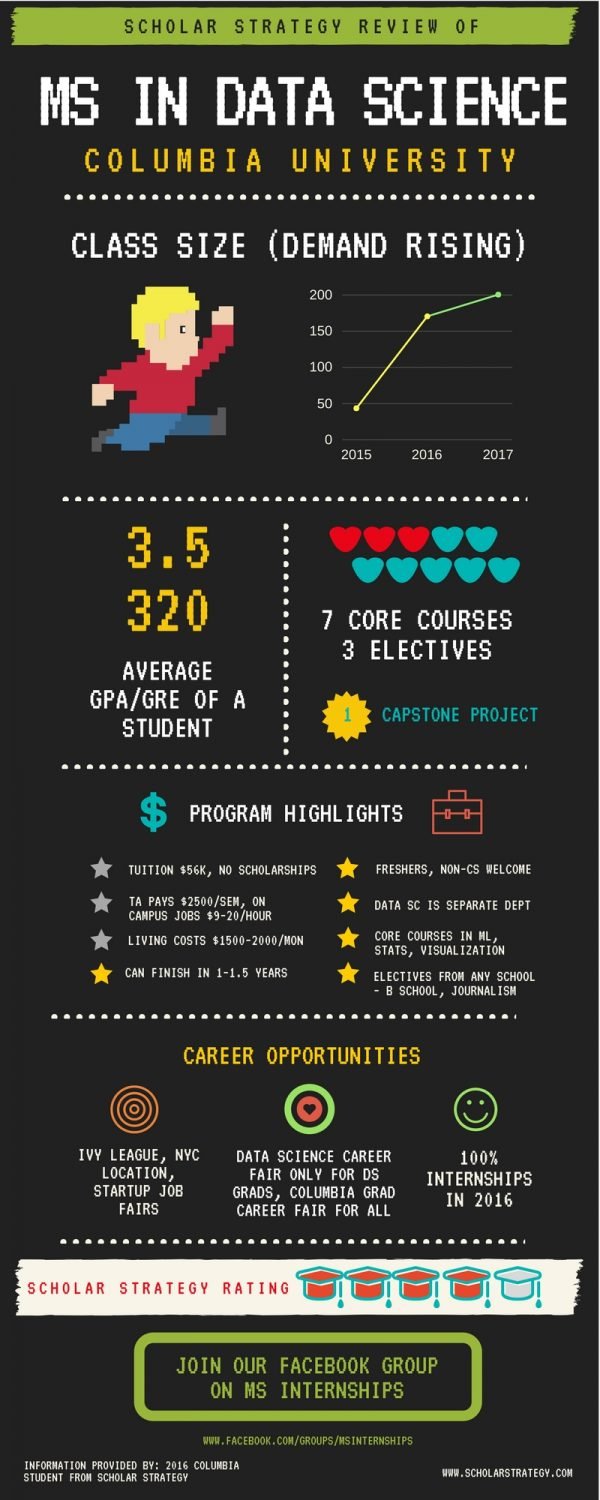
There are a decent number of Data Science programs in the US and their count is increasing every year. We are going to review how good Columbia Data Science program is in this post. We base it on the effectiveness of the curriculum, job opportunities and cost of attending. And then, in the end, we make our recommendation whether someone should attend this program or not.
Here, we go-
Columbia Data Science review by ScholarStrategy
Curriculum
It is a 30 credit course (10×3) with 7 core and 3 elective courses and 1 capstone project. Core courses include Machine Learning, Visualization, Statistics and Inference Modeling. Elective courses can be taken from any department (Journalism, CS, business school, ECE). For example, cloud computing and analytics, Big data, building story from data etc. It is a 1.5 years course (or can be completed in 1 year but not recommended). The curriculum is good and challenging. TA’s conduct special training sessions on Python and R whenever required for a course. One is expected to have a good understanding of Statistics and Linear Algebra. We feel that curriculum designed for an overall exposure and can give a good platform to begin your Data Science journey.
Career opportunities
Being an Ivy league brand, expect good career services office and resources to help you find a good career opportunity. Data Science is a separate department and it holds a separate career fair only for DS students, which is a big plus. Additionally, Columbia career fair is open to all. Apart from this, the program benefits a lot from its location as there are multiple startup job fairs in NYC which are all a subway ride away. Arushi, despite being a fresher, managed offers from Amazon, Milliman Max, and Synergic Partners (Madrid). Everyone got an internship in 2016.
Cost of attending
This is where Columbia hurts. With around $60,000 in tuition alone and $2000 per mon of living costs, program is one of the costliest in the US. There are practically no scholarships and on-campus jobs pay very little ($10-12 per hour) and so does TAships ($2600 per sem).
Others
Location and Brand are a big plus and give you unlimited opportunities at networking and exposure. With average GPA of 3.7 and GRE score of 326+, the admission is very competitive. The program encourages freshers as well as non-CS grads to apply, therefore class is overall diverse in background.
Competing programs
Biggest competitors are CMU BIDA, CMU MCDS, Harvard DS, UT Austin MSBA, U Washington, Georgia Tech etc. While CMU is still the touted leader, Columbia Data Science is catching up fast.
Watch everything in a short video:
Result
So, given all the factors, we feel that Columbia Data Science program is defintely worth attending if one can manage the finances. We give it a rating of 4/5 hats!
My advice for people applying to specialized programs:
Earlier we had only MS in CS and MBA kind of programs. Now you see many specialized MS programs such as Data Science, Business Analytics (BA), OR and of course Information Science (IS).
Universities start these programs when a course starts attracting many applicants. For eg Data Science became so popular that many universities started their own MS in DS degrees.
When to go for a specialized degree?
If you are sure that you absolutely want to pursue a career in this field
If you have a competitive profile (because mostly experienced folks apply to such programs)
When not to go for specialization?
If you want to keep your options open (career fairs for MS CS would attract more employers than MS in AI for example)
Remember, picking the right major can make or break your chances. Despite a good profile, Aastha got rejected from a few schools.
Here are 7 specific steps to make your LinkedIn profile ready for job hunt. You are most likely doing it wrong.
Have you noticed when a classmate walks up to a company representative at a networking event to try getting a job — and completely bungles it? It typically goes like this:
Unprepared candidate: Hey, my name is ___ and I’m a big fan of the work you guys are doing…
Company representative: Hey, so, tell me about yourself
Unprepared candidate: Umm…Sure, I am a Master’s student at University of Chicago. I love the course and was working at Accenture previously. I was the student representative in my school and I love taking responsibility….<2 min awkward ramble>
Company representative: Uh huh…great, so, good luck!
This is not only true for offline events but imagine a recruiter viewing your profile on LinkedIn and getting no clue about what you want or why you are good at it.
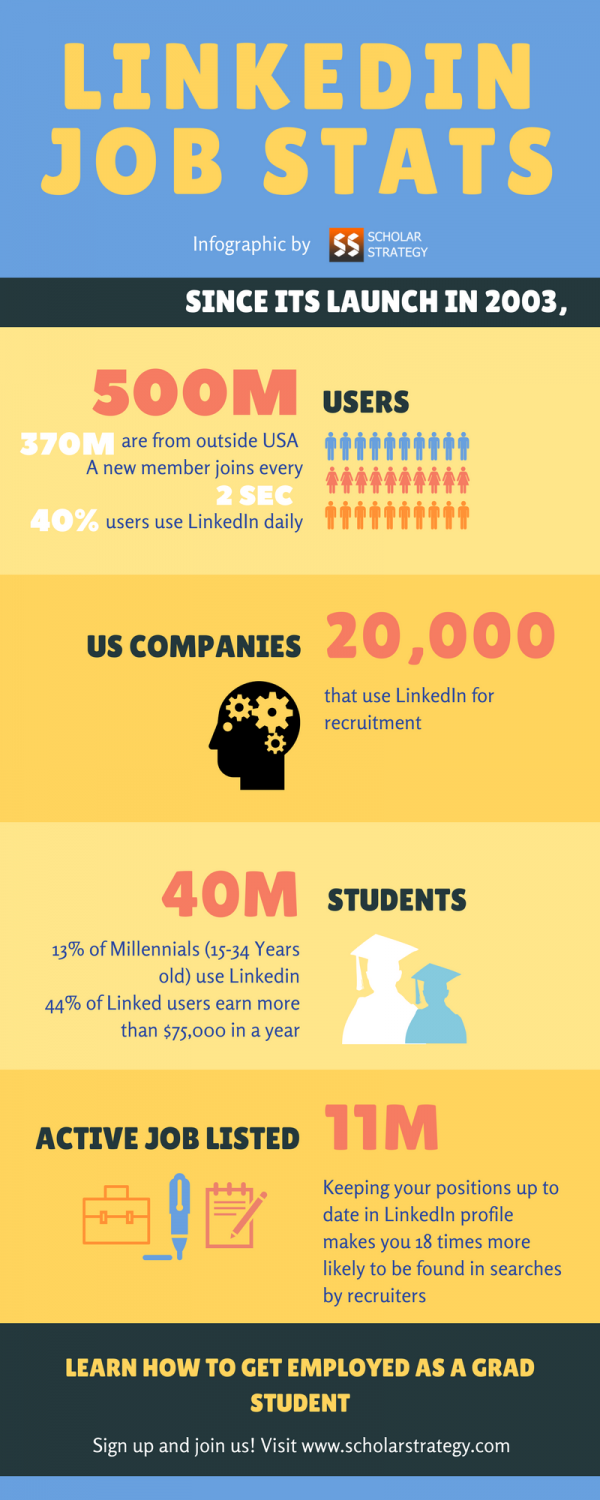
Check out this infographic (using data from expandedramblings and omnicoreagency) that shows the insane growth and influence of LinkedIn platform.
With 500M users, 11M+ active job listings and 20K companies in US alone using it for recruiting, LinkedIn cannot be ignored when you are crafting your internship and job hunt strategy.
And yet…80% of LinkedIn profiles I come across are not fully utilizing the power of the platform. I find it amazing that people choose to ignore such a public part of their professional life.
Unfortunately, most people do not realize the long term impact of LinkedIn presence. Which is why, I am going to talk about some LinkedIn myths first and then dive into exact steps to get your profile exactly right. Of course, we cannot change our background but what we can do is write it intelligently and make our profiles more searchable and memorable!
Here are some misconceptions that people have about LinkedIn:
#1 I do not have a good background to create an effective profile
Well, just like you need a to create a good resume with what you have, same with LinkedIn. It is possible to showcase your profile more impressively by using the basic techniques we discuss here. Everyone starts from somewhere. The profiles that you find so impressive today started with very basic stuff.
#2 LinkedIn is just my resume
LinkedIn is so much more than your resume. Plus, while the resume is tailored for a specific job position, your LinkedIn profile has to look good for a broader category of jobs and companies.
#3 Nobody responds on LinkedIn
I have personally connected with leaders in my industry through a cold email on LinkedIn and connected some of them into clients as well as referrals. If you are not getting the desired response, you are probably doing it wrong. Important things to consider are –
Are you using correct keywords?
Is your headline wisely crafted?
Does your professional summary and experience section tell the recruiter what they are looking for?
Unless you address these, LinkedIn profile will not work for your job hunt. As simple as that. And it is a long-term strategy but if you do it consistently and always keep up to date, you will see results!
1 Understand what recruiters/employers are looking for
More than 94% recruiters use LinkedIn actively. The fact is that every interviewer checks the profile of the candidate before interviewing them. It is the biggest candidate profile database and you need to understand what recruiters are looking for in suitable candidates.
Most importantly, this is what they dislike seeing:
No project descriptions under positions
Incomplete/outdated profiles (up to date profiles are 18x more likely to be shown in the search results)
Unclear summaries
Unprofessional photos (read selfies)
Very few connections (on an average, a CEO on LinkedIn has 930+ connections, try having 500+ yourself)
What they are looking for:
Crisp summary to get a good idea of your background and expertise quickly
Impact that you have been able to create in various roles (quantify!)
Intelligent activity – what posts you like, share, comment etc.
Recommendations from senior folks that sound personalised and genuine
2 Decide what role you want
LinkedIn profile is a part of broader job hunt strategy. To create an effective profile that aids in your hunt, you first need to prioritize 2-3 roles that you are targeting to recruit for. More than 3 can become hard to manage.
I recommend targeting related roles which require overlapping skills and fit with your background (experience or/and program of study).
For e.g. a Computer Science grad might target Software Engineering, Data Scientist, and Data Engineer.
Another CS grad might target IT Analyst, Business Analyst and Program Manager roles.
An MIS grad might be targeting IT Consulting, Software Engineering and Product Manager roles.
Targeting divergent roles which require very different skillsets is hard to manage because a visitor/recruiter may be confused about your ambitions.
We will discuss below another very important reason why you must figure out what roles you are looking for.
3 Research keywords
Job hunt has become very keyword driven process because given the exploding amount of data online, employers need some mechanism to filter relevant candidates. The downside is that the search results can be only as good as the process. As a candidate, you need to make it easier for the employer to find you and this is where it is a must that you understand how keywords work.
Employers use application tracking software to review resumes and online job applications. Such software looks for keywords within your resume or application to filter out applicants who may not be qualified. So, even if you have a good profile for the role but you are missing out on standard keywords related to that job, you might miss out on being shortlisted.
That said, we are not going to go paranoid on keywords. But we will make sure, we use whatever keywords are relevant to us. Please understand that keywords alone will NOT get you recruited but it helps to be shortlisted.
I recommend a two-step process for finding 6-7 relevant keywords for your profile:
Research job postings
Research the profiles of seniors and other experienced professionals
For the sake of this article, I will focus on product management role.
#1 Research job postings
We first need to understand the mindset of our employer and speak the language that they are speaking. Best way to do this is to read 20-30 job descriptions for our target role and find commonalities.
You can search for jobs on LinkedIn by specific location. Put in your criteria (I would recommend not narrowing too much at this point – remember, we are just researching keywords right now). This is what I found for a basic search of product manager positions in Bay Area.
If you are looking for internships, look into product manager internships.
Next step is to read through 20-30 of these roles. What you are looking for are the job descriptions that clearly mention the skillsets required in a candidate. This is usually listed under:
Who You Are
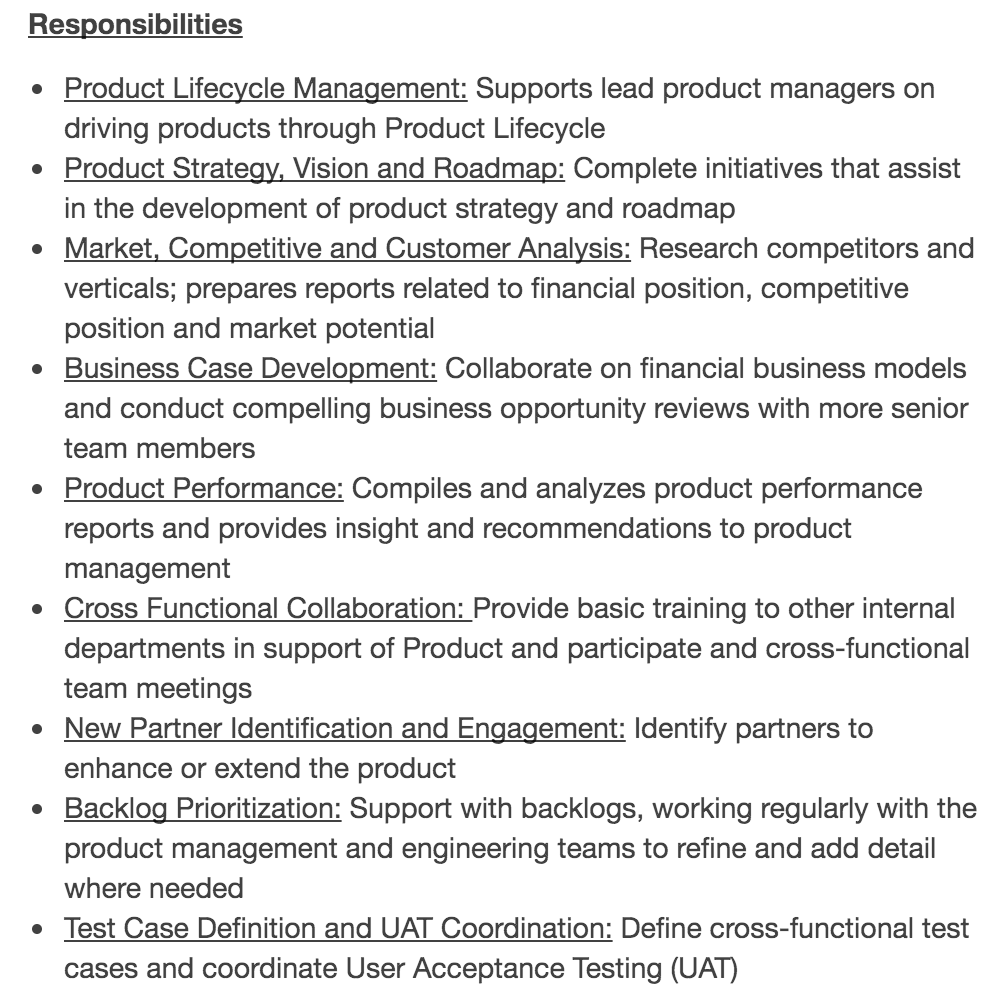
Responsibilities
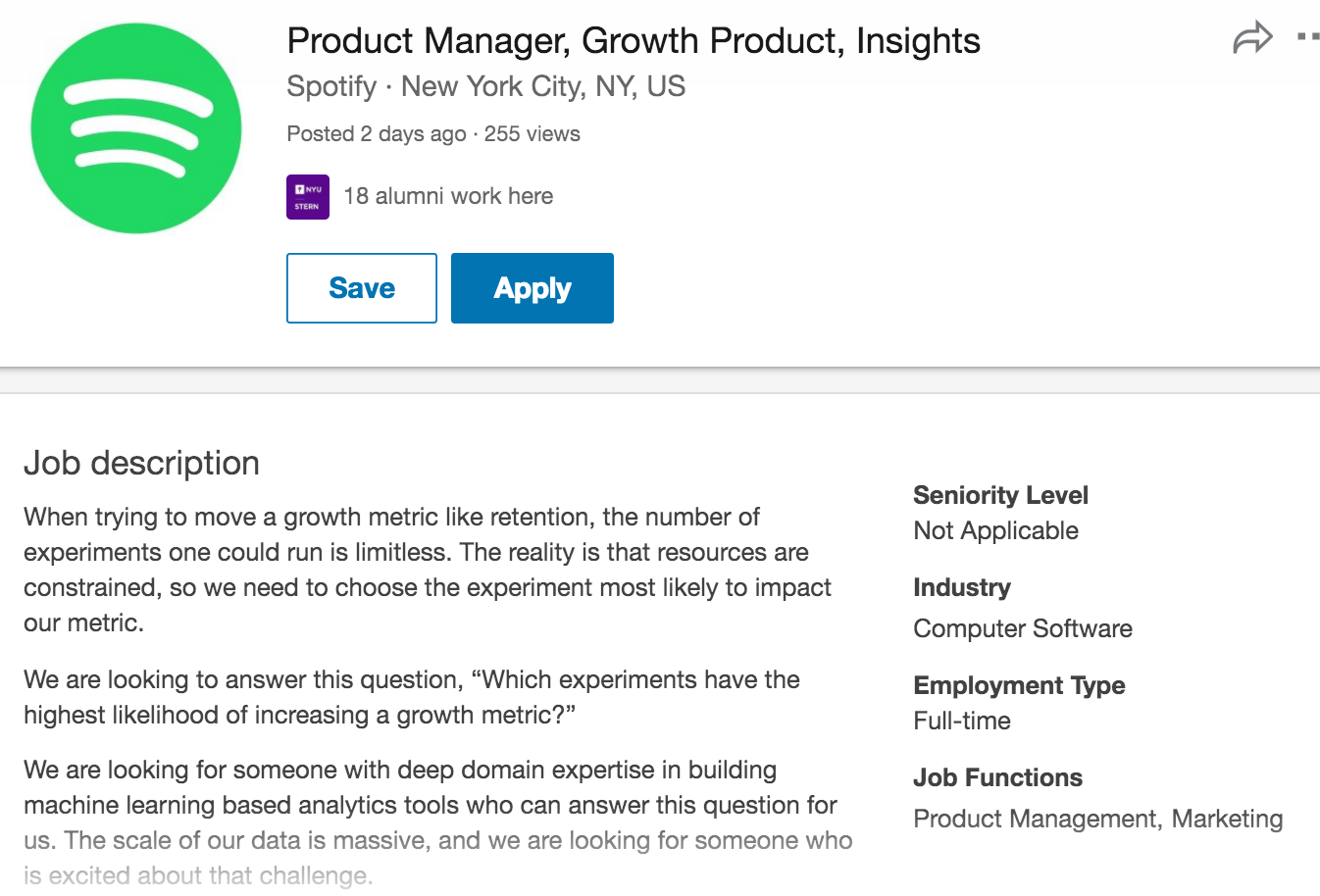
You will find 5-7 openings which are more specific in their descriptions. These are the ones we want. For example, Spotify had a Product Manager opening and I am picking it because it mentions specific skillsets they are looking for.
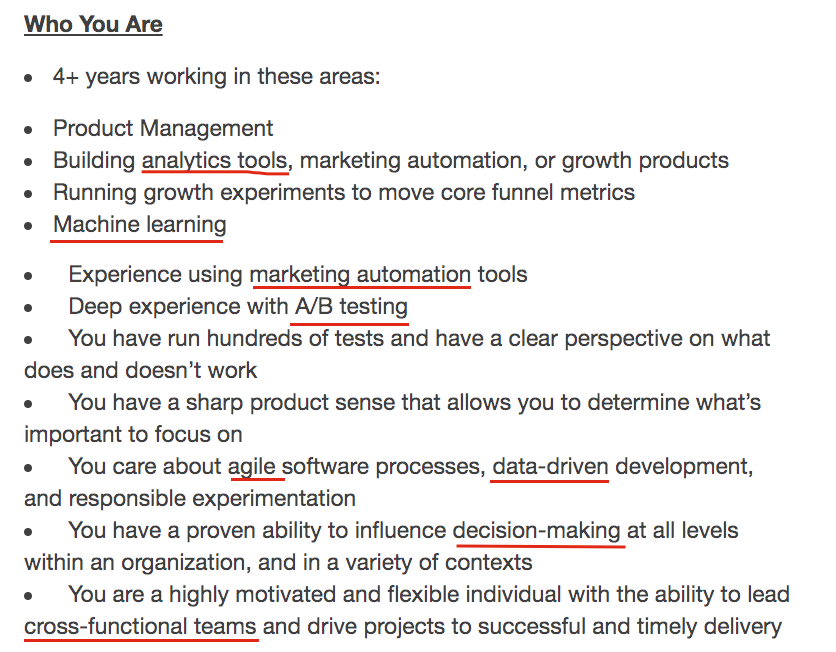
If you scroll down, we will come to the section of our interest-
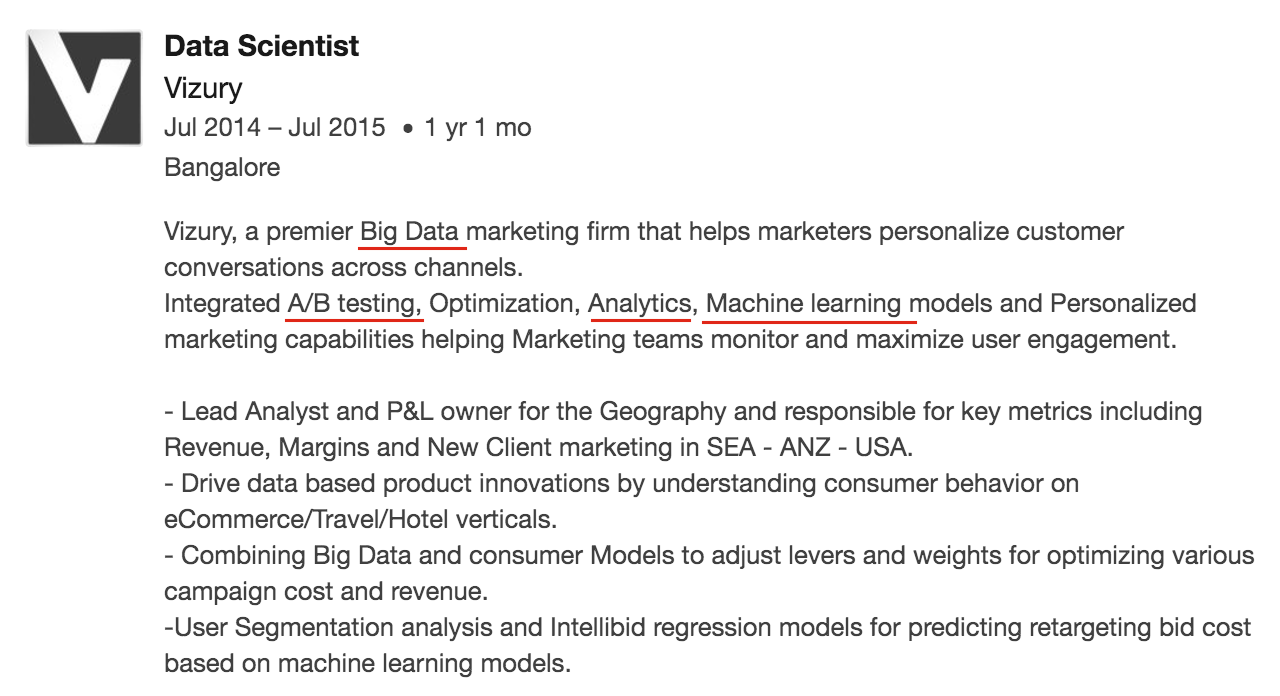
This section usually gives you the best keywords for this role. I can spot the ones underlined in red. Another example from Equinix-
Scanning enough of these will give you a list of 10-15 keywords to begin with.
#2 Research the profiles of seniors and other experienced professionals
People who have been in industry for sometime are used to interviewing and know what it takes to be recruited. Just like practice makes you perfect at something, researching and doing your homework on good profiles and experts in your fields can help you avoid the common pitfalls.
Begin with a LinkedIn search for your desired job title in the people section.
That is the beauty of LinkedIn, it shows me 500K+ search results for ‘Product Manager’ in United States!
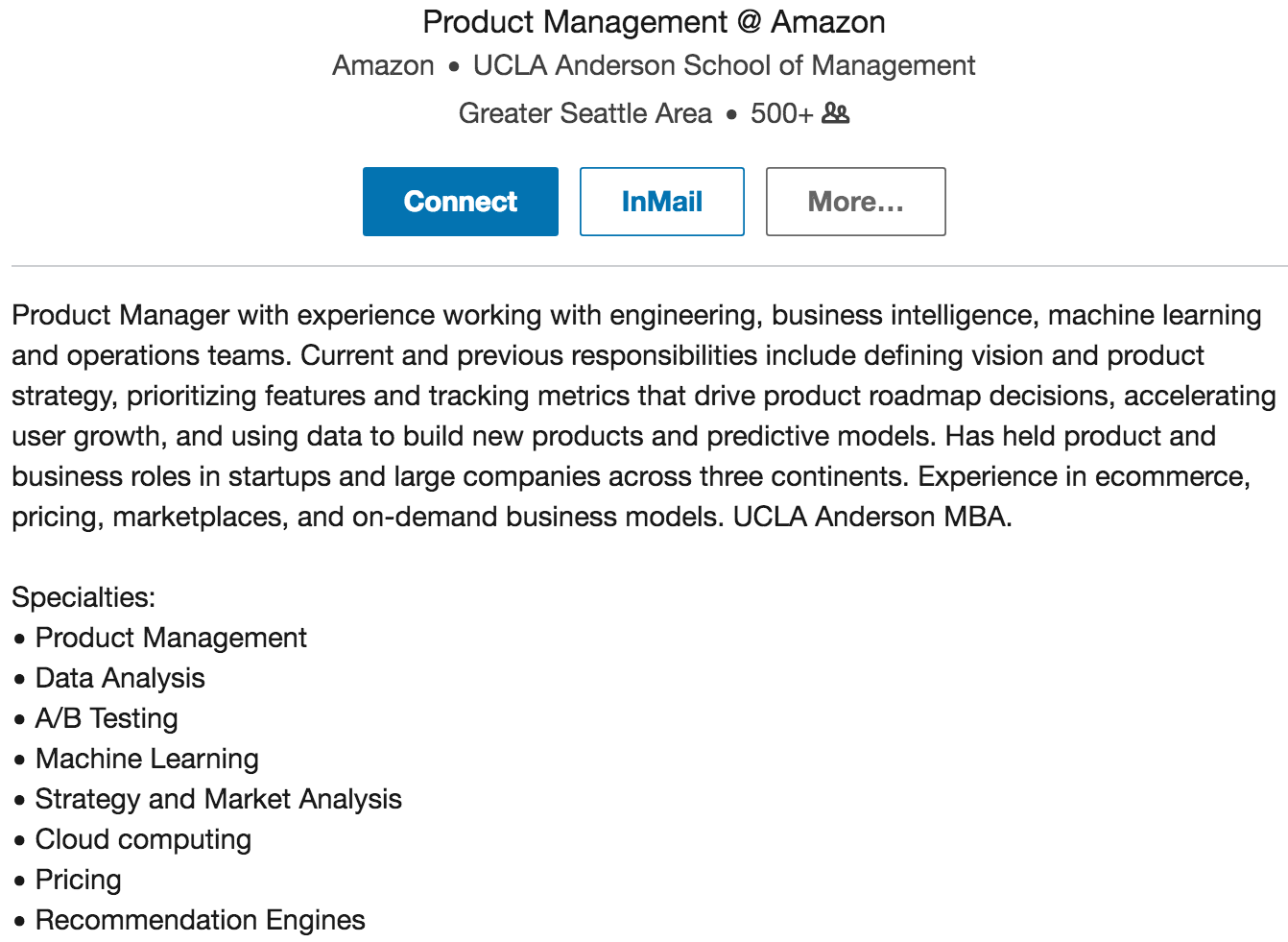
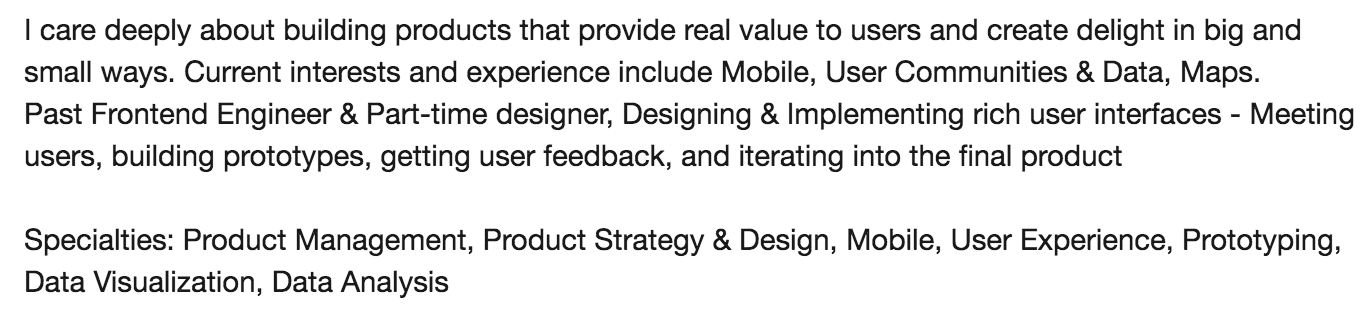
We will look into 10-20 profiles, especially focusing on the Profile Summary written on the top. Keep looking till you find a well written summary with a list of keywords. I have a great example here-
People usually list keywords under:
Specialities
Area of Focus
You know you are looking at good keywords when you can find it both in the job descriptions and the profile summaries of good professionals. For e.g. we have seen ‘A/B testing’, ‘Machine Learning’, ‘Analysis’ in both of our searches which validates their utility!
Next step is to pick those keywords on this list that you created which are relevant to your prior work and academic experience. For e.g. if you have never touched upon A/B testing, don’t use it. (and this is a great way to figure out what skills you are missing, may be you want to do a quick refresher and experiment on A/B testing now so that you can use it in future!)
By the end of this step, you should have 5-10 keywords that you can use. Voila!
4 Use keywords in the right places
It is time to start designing your profile using the keywords we have shortlisted in last step. I recommend using keywords at two places:
Experience
Professional Summary
5 Write great description for positions under professional experience
The worst thing you can do is just add titles in your positions and not describe what you did. For one, titles cannot clearly communicate your accomplishments in that role. A simple approach is to copy paste the bullets from your resume in this section. But you can be a bit smarter!
Ideally, we want to have a 2-3 lines summary paragraph that highlights the big things you have done in this role followed [optionally] by 2 bullet points mentioning the details of your two most important projects/deliverables. I would not keep more than 2 short sentences under each bullet.
The summary gives a quick refresher of your skills and responsibilities and big picture impact you created. Bullet points provide details that someone really interested in your profile might be looking for!
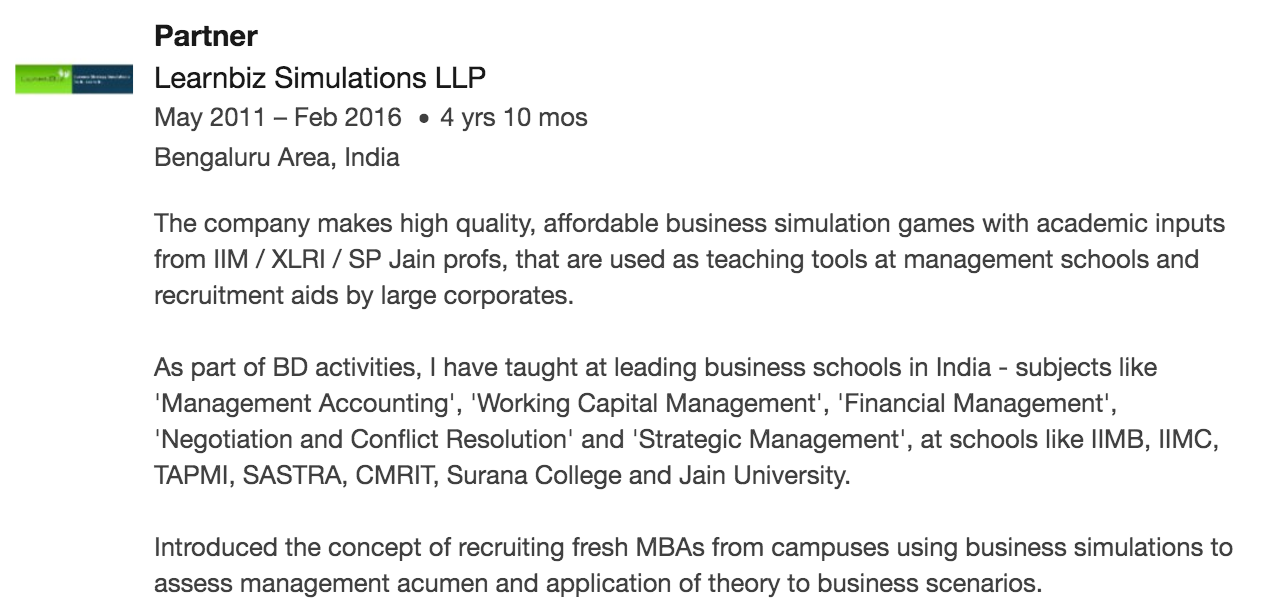
Let’s look at this example. The first paragraph wisely describes what the company does (important for lesser known startups). Second and third paragraphs summarize this person’s contribution.
What can be improved here?
The title Partner does not indicate the seriousness or level of seniority – it will be better to mention specific functional role and responsibilities
Quantify the impact of his BD efforts – e.g. contributing to x% increase in sales or partners
What is already good?
Talking about innovative approaches taken in the work – e.g. his recruitment using business simulations (can add the impact on sales)
How to use keywords?
Now, it is time to pick the relevant keywords we shorlisted in previous step and use it in our description here. For e.g. following profile does a good job at integrating the industry relevant keywords (underlined).
6 Write a good professional summary
Next step is to write an effective professional summary for your profile. It is the section that appears at the top of your profile – between your photo and your experience section.
Some people try to copy this section from their resumes but this is how it is different:
Resumes should be customised for a particular job position but LinkedIn is more generic. Therefore, you should have a broadly relevant summary on LinkedIn and very targeted summary on your resume.
We saw in the beginning of this article how many people struggle when asked to ‘introduce’ themselves. And that is just sad given that you already know that you will be asked to introduce yourself time and time again. Consider your LinkedIn professional summary as your online introduction. No one likes to hear a long ramble and no one likes to hear a bore. So, our two thumbrules for a good professional summary are:
Keep it short
Keep it human
#1 Keep it short
LinkedIn website collapses anything more than 200 characters on desktop and 90 characters on mobile devices. So, you want to write important stuff in first 90 characters. One can expand to read it but even then you don’t want to write more than 2 paragraphs.
In fact, the preferred format is one summary paragraph and then, a list of your expertise. This is what we noticed in our examples in our ‘research the keywords in profiles of professionals’ step.
#2 Keep it human
This is your chance to tell your professional story – not only what you have done (which is evident from the experience section anyway) but why and how. This is where we add a human touch and stand out from our competition. And, you can add if you are looking for internship/job.
But, if you read a bunch of LinkedIn profiles, you will come across some that make no sense whatever.
Imagine reading something like-
“To obtain a career that will allow myself to take full advantage of my passion and experience in software engineering and computer science.”
Or
“Motivated self-starter with a proven track record of success.”
These are epic fails because – 1. They tell you nothing about the qualification/expertise of this person 2. They tell you nothing about the personality/achievements/dreams of this person. We remember someone because we can put a face to them but descriptions like these make you robotic and totally unremarkable.
So, avoid the fake or MBA buzz words like ‘self-starter’, ‘go-getter’, ‘motivated’ blah blah. Come up with your words, your way of saying things, your voice and put it up there. As James Altucher says, a good self-promotion has lot of ‘self’ and less ‘promotion’. Let me see your self.
Compare with the following-
“My projects finish on time and in the budget. My PMP is the product of eight years in the trenches, filled with valuable lessons learned. It is tremendously rewarding to leverage my strong influencing skills to ensure resources remain available as expected to ensure my projects hit schedule and budget benchmarks. Equally comfortable with Agile, Scrum, and Lean Six Sigma methodologies, my projects succeed because I remain focused on the big picture while ensuring project members have the resources necessary to achieve milestones.”
I bet you can see a confident project manager behind this who knows how to deliver!
Coming back to a structure for this section, what, I found, works is a short summary in a para followed by list of keywords/skills that are crucial in your field.
This is another profile which did a good job at this-
Notice the human language, a clear big picture and expertise. As the seniority level grows, the profiles become more specialised and you will find a senior professional talking about more and more specific skillsets. As grad student, you can however, keep it relevant to 1-2 fields.
7 Create a kickass headline
Now comes the time for the most visible part of your profile i.e. the headline. It is your business card of the old days. But unlike a business card, it is not a mundane business title qualification that we have to flaunt, we can make it more interesting.
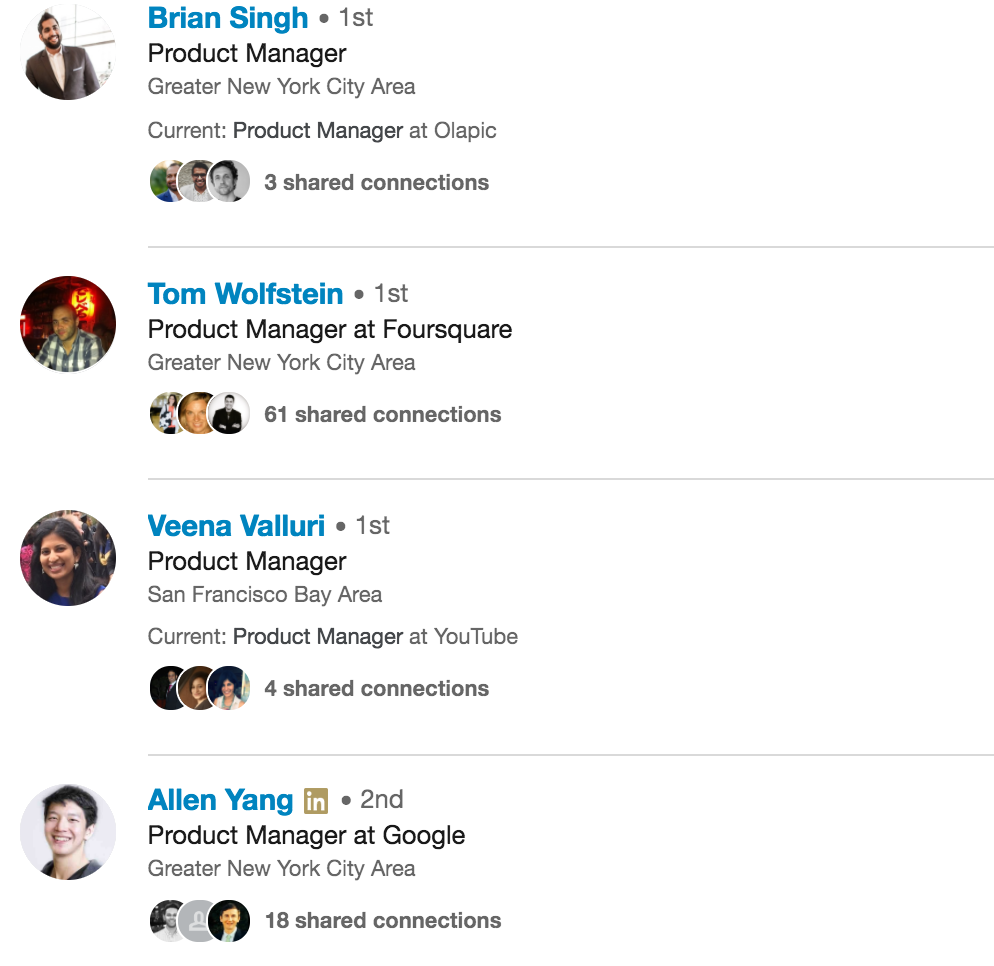
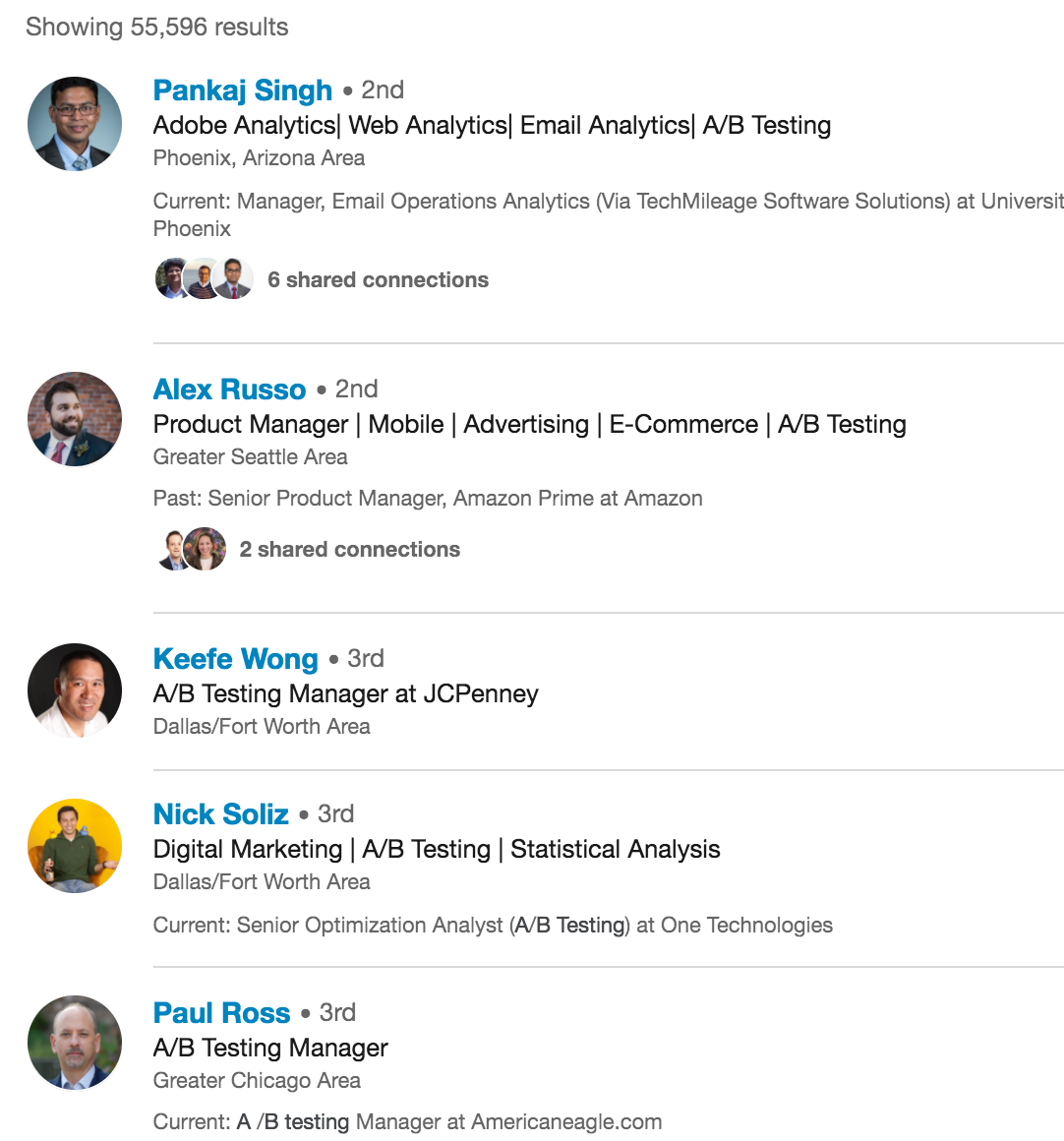
Let us first understand why is the headline in your LinkedIn profile is so important for job hunt. Go on LinkedIn and do any search on people and you will see a list that shows:
Headshot
Headline
Relevant current/past role
Apart from your profile picture, it is your headline that people notice in the search results and that determines how likely they are to click on you. You might have a great profile inside but if you do a sloppy job with your headshot and headline, your chances of being shortlisted go down.
A lazy way of creating your headline is: Position X at Company Y
This is a good approach when you are working at a well-known company and have a flauntworthy title. If not, you will need to be more creative. And if you are actively recruiting, then, put some sincere efforts here!
I like to use the headline to highlight:
Brands in your background – e.g. famous companies/schools in your resume
Titles – Founder (leadership roles), Investor (power words), Data Scientist (any job role in demand) are good to be showcased
Expertise – As shown in above search listing, these people have chosen to highlight ‘A/B testing’ in their headlines. If you are an expert in a niche area and actively recruiting for it, you can consider fitting it in your headline.
For Grad Students, I recommend showcasing top school names, company names and role for which you are recruiting.
Here are some examples-
Ex-Google, CMU grad seeking BigData jobs at startups
Database Research Assistant at NYU | ex-Accenture consulting | seeking Analytics internship
Other creative ways
I came across a profile where the professional had actually listed all his courses under education section. And I thought, what a sneaky (but brilliant!) way to add keywords to your profile! Now, he may have not used ‘Decision Optimization’ professionally in a project but he has still managed to mention it without faking anything 🙂
I would suggest using innovative approaches to make your LinkedIn profile more ‘searchable’ only if you are actually comfortable with these topics. Remember, you can be asked to elaborate on any word in your resume during an interview. You don’t want to be someone who struggles to justify the things he has mentioned in his resume. Nothing mars your reputation like untruthful claims!
To summarize
A LinkedIn basic profile covers these sections
Headline
Professional Summary
Experience under various positions
But, this is the order we follow while writing your LinkedIn profile for job hunt-
Various positions under the experience section
Professional summary
Headline at the end
See it in action
See all this advice in action in this video
Want to get more?
Want to get the presentation used by me in the video? Enter your email to download that right away.
Applying for graduate schools?, we have step by step advice on Scholar Strategy newsletter. Please sign up now.
Ankit had an admit from Rutgers MS in Data Science program but the school was asking for $1500 tuition deposit fee. Ankit did not want to pay it because he was still waiting for CMU.
Many applicants face this dilemma.
Don’t worry, you can get extensions on the deposit payment deadlines. This is how.
What is tuition deposit fee?
Applicants who have been accepted for admission will be required to submit a tuition deposit payment to hold their place in the new incoming class. The tuition deposit is non-refundable and non-transferable. Therefore, if an admitted applicant pays the deposit, but fails to enroll for the particular program and term of the admission offer, the deposit will not be returned. After the end of the add/drop registration period tuition deposits paid will be credited to the enrolled student’s account – Columbia Graduate School
Unfortunately, all newly admitted MS students are asked to submit a tuition deposit to accept the offer of admission and secure their place in the class. Earlier, only a few Programs asked for this fee but it is becoming increasingly common for Universities to charge a hefty fee on the name of tuition deposit these days.
Why do universities ask for tuition deposit fee?
First, we need to understand why universities ask t his. Historically, people apply to multiple universities and can accept admissions from multiple schools. Even the I20 is something that you can request from multiple schools. What happens is then the candidate chooses one final school and all other admits are wasted.
What this means for the university is it impacts their yield.
What is the yield?
Let us say university sends out 1000 admits and only 200 people end up accepting their offers. So the yield is 20%. Universities care for their yields because it impacts their rankings. So, they want people whoever they have admitted to accept the offer else their yield goes down. This is why they want to pressurize you and lock you in early.
Even in my days, some universities used to ask for deposits in some of their programs but amount has been increasing ever since. Especially after covid, when 90% of the students deferred their admits, universities were hit badly. So, I have noticed that their deposit fee has increased suddenly after covid.
As I told you before that 1500 USD fee is really high and some schools are also asking 2000 or 4000 dollars. This is why this issue has become especially important now. People just cannot pay a lot of these deposits. So, hopefully our next piece of advice is going to save you some real dollars!
True Story: How Kartik got an extension
Kartik is one of our clients in 2022. He had admits from a few schools and one particular school was asking for 750 dollars deposit fee. This was in end of February and Kartik did not want to commit to a school that fast. In this video, Kartik shares what he did to get an extension.
Here is the email that Kartik used to get an extension:
Respected admissions committee,
I'd like to extend sincerest thanks for admitting me to your prestigious MS in Computer Science program. I cannot wait to put in all of my sincerest efforts in Boston starting this Fall.

A few days ago, I was diagnosed with covid for the 2nd time, and it's just that for the coming few days, myself and my family won't quite be physically or mentally in a place to finalise such an important career and life decision. It would just be such a big help if there could be any extension at all in the deadline for the tuition deposit. Regardless, this is like a dream come true, and I cannot wait to get started this Fall.

Best,
Kartik
What is the right way to get an extension on tuition deposit fee?
As you can see, universities want you to pay a deposit because they are insecure whether you would join or not. Problem is that unless you have another admit, you don’t want to miss out on something in your hand. What if you lose this admit too and don’t get a better one?
Tell them you are waiting for more admits [BAD]
Some advisors suggest that you tell them that you are waiting for more admits. That may have worked for someone but it seems like a riskier bet to me. This is exactly the reason why universities make you pay because they don’t want you to wait and go to another school! So, they are very likely to reject this request.
Some people even suggest telling them that you have a good offer in hand and you need more time to decide. Again, this approach can antagonize the university (because you are telling them that they are not good enough for you to make a decision) and they are not likely to accept your request.
Show appreciation + personal reason [GOOD]
I like Kartik’s advice. Why not tell the university how much you appreciate them and want to join them?
Then you give a personal reason (which doesn’t sound fake) as to why you need more time to pay the deposit. This is your best chance to not alienate them and get them to make an exception for you.
As we see in Kartik’s case, it worked out very nicely.
So, the crux is you can be nice and win too. Isn’t that awesome?
Creating a resume is an important part of the job application process and there are plenty of ways to make your resume stand out from the rest. While ensuring your former jobs and other experiences align with the job you’re applying for, it is equally important that you highlight the right set of key skills in the resume to show that you are the best candidate for the job.
While there are hundreds of skills that you can mention, a handful are crucial for making the hiring managers feel that you researched ahead of time and are well-rounded candidate. Although the skills should change depending on the type of company and role you’re applying for, here are some general guidelines to help you get started.
What are the Key Skills for Resume that Industry is looking for?
While it makes sense to think that managers hiring for an engineering role want to see the longest and most impressive list of technical skills, that’s just not the case. While all of these skills are crucial to landing the job, companies want to know that you are more valuable than just the technical skills you have. Proving that you are a leader, a creative thinker, and can show value in meetings and not just on the computer will help you land the job. Here are some examples that you can make your own:
1. Leadership
No matter what job you are applying for, even if it’s an entry position, showing that you are a leader is incredibly important. Leadership does not have to mean managing a team or project. It can mean being vocal about new ideas or problems that arise or even being a crucial member of someone else’s team.
Employers want to know that the most technical people on their staff can make tough decisions when necessary and be able to tackle problems on their own.
2. Presentation Skills
Alert Einstein once said, “If you can’t explain it to a six-year-old, you don’t understand it yourself.” As an engineer, it is your job to understand and explain extremely technical things to people without an engineering background.
Being able to boil down complex ideas and problems to your superiors or clients can be a daily or weekly part of any engineering job. Knowing how to present ideas in a concise way is a highly attractive skill for engineers.
3. Pressure Management
One hard truth of engineering jobs is the real-world time constraints. As the most technical part of many staffs, engineers are often working the longest hours with the most pressing deadlines. New challenges can arise late into projects so showing your employers that you can handle the pressure is a must.
This does not mean you have to show that you’re the fastest coder or worker. It can merely mean that you understand how to quantify how long tasks will take, know how to delegate them effectively, and communicate these timelines accordingly.
4. Problem-Solving
Solving one problem often leads to two more. It’s a harsh reality of any part of life, from cleaning your house to auditing a business. Showing that you can problem-solve in a business environment demonstrates that you have creativity and critical thinking skills.
Illustrating that you have problem-solving capabilities comes in two parts. The first part is assessing the problem. Understanding that there is a problem and identifying what the causes are is more challenging than it seems, so try to give some clear examples. The next part is showing that you can come up with creative and efficient solutions. These solutions can’t just make logical sense but have to work well within the constraints of time and money, which are most important to employers.
5. Project Management
This skill is important because it essentially wraps all of the above skills, and many more, into one. Leading a project takes leadership, creativity, and a deep understanding of the task at hand. This is where examples of personal projects or large team accomplishments are perfect to explain during your interview. Demonstrating this skill shows that you are organized and efficient while having to take on many responsibilities other than just engineering.
There are essentially two categories all skills can be categorized in. There are hard skills and soft skills.
Hard Skills
Hard skills are more tangible skills that are acquired through accreditation, education, and practice. Some examples include coding, web development, and prototyping. Hard skills are important to share because they give a value to the efficiency and productivity of an individual.
Soft Skills
Soft skills are more based on personality and not easily transferable. For instance, it’s easy to teach someone how to code, but not as easy to teach someone how to communicate. Some examples of soft skills are communication, negotiation, problem-solving, and pressure management. These skills show employers the type of worker you are and how well you can fit into a particular team or work culture.
Where Should You Display Key Skills on Your Resume?
There are typically two places you can list your skills. The first and main place is in the skills section of your resume. Generally, this section is at the bottom of the page or the right-hand side of your resume and consists of a short-list of bullet points, about 8-12. Each skill should only be listed in name and have no other explanation. You will have the chance to attach stories and examples to each skill during the interview process.
The second place you can add these skills is embedded in your career experience itself. Using words like “Managed a project that..” or “Presented ____ to ____” will illustrate that you have these skills while tying them to a particular event. This practice makes your resume stronger and can save you space.
Best Skills for Engineering Resumes
While the above list of skills is important for the current engineering job market, there are a few more that should be considered for most engineering positions. As Google points out in its hiring practices, tailor everything to the job you’re applying for.
Computer Science
Teamwork
Creativity
Communication
Research Skills – can include types of research you specialize in.
Quality Assurance – can include a specific industry you have experience in.
Design Abilities – can include specific products you have experience in.
Software Skills – you can list specific software you specialize in. Include if listed in the job description.
Supplies Management
Data Management – can include types of data you have experience in.
Accounting Skills
Systems Management
Language Skills – types of languages you speak with a level of proficiency (e.g., fluent in French, conversation mandarin)
Machine Learning
Data Structures
Web Development
UX/UI
Cloud Management
Debugging
Cyber Security
CAD
Prototyping
Troubleshooting
Project Launch
Workflow Development
Budgeting
Project Lifecycle Management
Like we said, there are dozens, if not hundreds of examples you can use. It’s always best to research the job description and company you are applying for to assess key skills that are most valued there and then fit them in your resume. Remember, it doesn’t just matter what you think is the most relevant and valuable, it matters what they think. Think of yourself as a product you need to sell and the skills are what’s on the packaging.
1.92 lac students appeared for CAT 2021. Only 3000-5000 will make it to IIMs. Rest 1.87 lac can beat themselves for not making it or they can explore one of the other options.
It is a brutal competition indeed. Many people take gap years just to prepare for CAT and if you don’t make it to top 2.5%, you have no chance of making it to schools like IIMs. There are some very talented, smart and intelligent people in this pool. So, in this post, we explore the way forward for anyone who couldn’t clear CAT.
Let’s get right into it. Here are the immediate next steps to consider:
1. Think what you wanted to do after the MBA and try it directly.
Most people don’t seem to realize that most careers don’t even require an MBA (especially roles in startups).
2. Get work experience
If MBA is crucial for your career goal (read Investment Banking, Consulting, Finance), get good work experience and go for an MBA later with a better profile. B Schools always value great work experience, so your time is not wasted.
3. Take GMAT instead
Honestly, if you are looking for better options after CAT, there is nothing better than GMAT. With the amount of preparation you do for CAT, you can easily get great scores in GMAT. There are many schools in India (and of course all abroad) that accept GMAT scores including IIM A, B, C, XLRI, SP Jain etc. Plus GMAT score is valid for 5 yrs. You can check out our GMAT guide to learn everything about cracking the exam.
4. Use CAT score to apply abroad
You don’t have to delay your MBA plans. Use your CAT score to apply to other schools. For example, HEC Paris accepts CAT score for some of its Master’s programs
Do I need to say that please don’t take a drop? Ok, let me say it. Please never take a drop 🙂 There are solid options that you can try instead of CAT, so, get going.
Remember, what doesn’t kill you makes you stronger and not making it to IIM most definitely will not kill you. Many people who did not make it to IIMs are thriving in their careers. So can you.