
All about GRE Exam 2022 (Graduate Record Examination)

Scholar Strategy MS in USA

Let’s take a look at the GRE exam which is required for MS/MBA applications and how you can do better at it.

Applications for undergraduate and graduate programs like MBA and MS in USA is much different than what we are used to in India. Let’s take a look at what the process is like.

Following are the components of the application process-

  1. Taking a exam like GRE, GMAT or TOEFL
  2. Shortlisting schools for your aspirations
  3. Preparing required documents for the application
  4. Apply by the deadline

Note: Ideally, shortlisting schools should be done before giving GRE but students prefer to get the tests out of the way and be comfortable with the score before focusing all energies into shortlisting schools and actually applying to them. A candidate is able to typically apply to around 10 universities for MS and MIS programs.


1. Taking GRE, TOEFL exams

In this post, we elaborate on GRE tests

What is GRE?

GRE stands for Graduate Record Examination. GRE General Test is a standardized computer based test conducted by Educational Testing Service (ETS). You can find details here but we will summarize the important points for you-

Taking a GRE General Test costs $205 and sending your scores can cost $25 for each school as of 21 Feb 2020. You need to create or have a My GRE Account to register online for the computer based GRE General Test, check more details here.

What is the format of GRE exam?

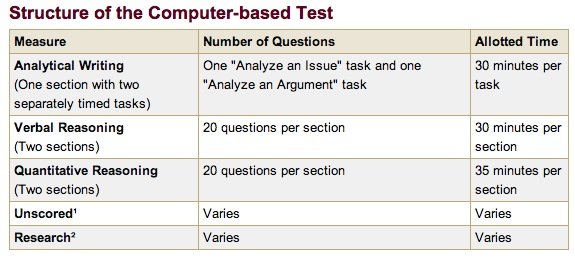
GRE General Test consists of six sections. The first section is always the analytical writing section involving separately timed issue and argument tasks. The next five sections consist of two verbal reasoning sections, two quantitative reasoning sections, and either an experimental or research section. These five sections may occur in any order. The experimental section does not count towards the final score but is not distinguished from the scored sections. You can skip back and forth within sections. The entire test lasts about 3 hours 45 minutes.
GRE

When should you write GRE?

GRE scores remain valid for five years, so it makes sense to give it early and have enough time to focus on applications. Tip: Do not leave GRE to be taken in last 2 months of the application deadline. One, it increases stress and might affect your ability to score higher. Two, in case you are not happy with your score, you will have to take GRE again but you can only take GRE once a month. Therefore, we recommend that you take GRE at least THREE months before your application submission timelines. For e.g. for Fall applications, try to give GRE by July of preceding year.

What is a good GRE test score?

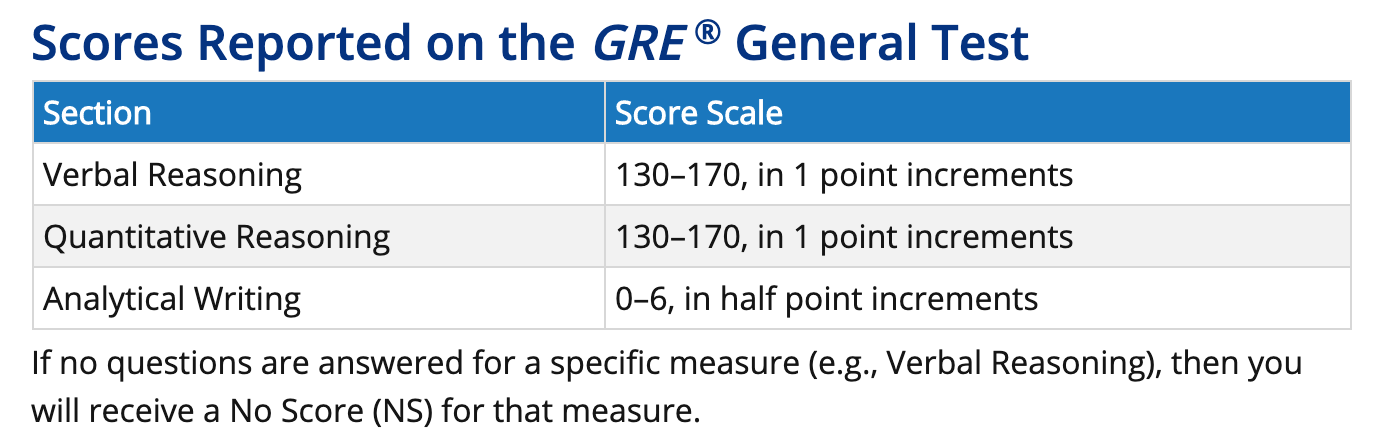
Latest GRE tests are being scored out of 340. Anything above 320 is considered a good score. Remember that just taking the GRE does not mean that your scores are available everywhere. When you actually apply to specific schools later, you will explicitly need to send your score report to that school. Bad news is that it costs $25 (INR 1400) to send your score to each school. Great news is that you can send upto 4 reports free on the day you take the GRE test. Tip: So, it makes sense to know at least 4 schools you are most likely to apply and send your scores to those when you take the test. (That is a saving of $100 right away!)
TOEFL – The TOEFL iBT test measures your ability to use and understand English at the university level and is required for Indian students to apply to US or European schools. The test costs $180 in India. You can register online. The scores are out of 120 and anything above 105 is considered good. If you sincerely prepare for GRE verbal section and have been going to a English primary school, you should not need to worry too much about TOEFL. Again, its more of a formality and its score, unless too low, will never impact your application results.

How much does GRE score matter?

We have seen students fretting for months on GRE. It is one thing to prepare well and it is another thing to stress about a test. Particularly, we Indians, tend to take tests too seriously. But remember that GRE is not your regular entrance exam!

“You do not pass or fail GRE or GMAT, you just show that your aptitude is above a certain level”

These tests are only a small part of the overall application process – so acing one doesn’t mean you’ll get into Harvard and bombing it doesn’t mean that you won’t get into a good school either. You simply want to score more than a baseline that is used as a filter by schools to weed out low aptitude students. Want to know a secret? – even if your score is low but overall profile is awesome, you can explain why you did poorly on the exam and if reason is sound enough (for eg. You had some personal family problem, illness etc), a school will most likely not reject you on basis of low score alone.

FAQS:

  1. What is GRE subject test? –  The GRE Subject Test is a special requirement mostly for Ph.D or for students who want to change their Undergraduate stream. It is usually optional if you are applying for MS in your field. Some say that taking it still helps improve your profile but I recommend spending the time you would on a subject test on the application contents instead.
  2. Can I give GRE again if my score is low? – Yes, so give the exam without being stressed. Taking it multiple times does not put you at a disadvantage.
  3. What is the best time to give GRE? – Please give it at least five months before you plan on submitting your applications.
  4. Where can I give GRE in India? – Ahmedabad, Allahabad, Bangalore, Calcutta, Chennai, Gurgaon, Hyderabad, Mumbai, New Delhi and Trivandrum.

Preparation Material:

The best available software to practice for GRE is POWERPREP® II software and the best part is that it is FREE. It consists of two full-length, simulated practice tests for the computer-based GRE revised General Test. The strategy we recommend is to take the first test when you are beginning to prepare for GRE to understand where you stand. Use your scores to understand where you need to put more efforts, for e.g. do you need more work on verbal (if so, which section) or quantitative. Next step is to prepare thoroughly, take other available tests from Barron’s, Kaplan, Princeton etc. When you have taken all other tests and have taken a test date, you take the PowerPrep second test again. Note that this is the closest simulation to actual tests, so the scores that you get on PowerPrep are the best estimation of how much you are likely to score in real test. Also, even after taking the two tests, keep giving it multiple times as you get some new questions each time. More information available here.

How to get a 330+ score in GRE exam?

Please read our detailed post on getting a score of 330 and above in GRE.


Key Takeaways:

Ok, if you had to just remember 5 things from this post, remember this-

  1. You need to take GRE General Test to apply for MS in USA and other countries.
  2. You should take it THREE months before you intend to submit the applications. For Fall applications, give GRE by July.
  3. User PowerPrep software wisely to prepare for GRE. We recommend taking it once at beginning of your preparation and once just before appearing for the real test.
  4. Do sufficient research to shortlist 4 schools that you intend to apply before appearing for GRE so that you can send 4 FREE score reports.
  5. Don’t obsess over GRE scores, as long as its not too low, it doesn’t matter. The only factor to consider here is the cost factor. It is expensive to take these tests, so give after ample preparation.
  6. You can score 330+ in GRE.

GRE is only one part of the applications. For other parts, check out our next posts on School Selection and Preparing Key Documents.

Which MBA programs are worth considering in Europe

Europe has some of the world’s oldest universities – Cambridge, Oxford, the University of Paris, to name a few. Many such universities have the best and globally renowned business schools. While the US is the most popular destination for international MBA aspirants, many European schools compete aggressively with American schools for top ranking spots.

In this article, we will uncover why you should consider doing an MBA in Europe.

Why should you do an MBA in Europe?

Europe is one of the most popular MBA destinations for international students. The reasons given below make it the ideal location to pursue your dream of getting an MBA from a top college.

Best MBA schools

Europe is home to some of the oldest and globally renowned universities. As per QS Global MBA Rankings 2021, Europe’s top 10 MBA schools rank within the top 25 globally. 

Short course duration

Most of the top European universities offer MBA courses that students can complete in 12 months. Adding specific specializations may extend your course duration by a few months.

The time you will need to do an MBA in Europe with specializations is still less than in the US, where an MBA is usually 24 months.

International exposure

Top business schools provide you a global perspective on business and teach you critical skills that would enable you to work in some of the world’s best organizations with high salaries.

Studying at top universities in Europe allows you to network with people from diverse cultural backgrounds and nationalities. A network built during your time at a B-School can be leveraged later when you are looking to form business partnerships. Most of these universities have a strong alumni network, which can guide and mentor you, whenever you need assistance in the time of professional adversity.

Also Read: MBA in Canada for Indian applicants

Eligibility Criteria

Eligibility criteria for MBA in Europe vary based on the university and your native country.

Most European nations have their regional language, and universities teach the majority of the courses in their local language. International students aspiring to study in European countries have to prove their proficiency in the local language (usually by giving an exam) or have the option to enroll in courses taught in English. 

MBA is one of the few courses with the language of instruction as English, keeping in mind the course’s global recognition and nature.

The standard eligibility criteria for admission to top MBA programs in Europe are:

  • A Bachelor’s degree.
  • A work experience of at least 3 years (exceptions apply).
  • A good score in GMAT, GRE, or an equivalent exam.
  • Proof of English proficiency. Universities require students to submit the score of English proficiency exams like TOEFL and IELTS.

Also Read: Why MBA? Here’s how to decide

Top 10 MBA schools in Europe in 2021

As per the QS Global MBA Rankings 2021, these are the top 10 business schools in Europe (in the ascending order of ranking). 

  1. HEC Paris
  2. INSEAD
  3. London Business School
  4. IE Business School
  5. IESE Business School
  6. Esade Business School
  7. Oxford (Said)
  8. Cambridge (Judge)
  9. Imperial College Business School
  10. SDA Bocconi

The table below gives you the key information about an MBA at Europe’s top 10 business schools (data collated from the website TOPMBA).

QS Global MBA RankUniversityCountryDurationAvg. GMATFee (USD)Avg. Work ExperienceAvg. Salary(Post 3 months; in USD)
5HEC ParisFrance15 months69070k-80k6128,206
6INSEADFrance10 months71090k-100k6105,900
7London Business SchoolUnited Kingdom21 months701100k-110k5106,837
9IE Business SchoolSpain11 months68570k-80k793264
11IESE Business SchoolSpain19 months68190k-100k6123,662
13Esade Business SchoolSpain18 months65770k-80k6104,161
16Oxford (Said)United Kingdom12 months69080k-90k596,233
17Cambridge (Judge)United Kingdom12 months69370k-80k699,753
22Imperial College Business SchoolUnited Kingdom12 months65060k-70k682,853
23SDA BocconiItaly12 months665(source: The Economist)60k-70k6120,760

Cost of an MBA in Europe

The course fee at most of the European business schools is less in contrast to American business schools. While a full-time MBA at a top B-School in the US will cost you around USD 150k, the average fee for the top 10 business schools in Europe is around USD 80,000. The comparatively short duration of an MBA in Europe also saves students time, reducing the opportunity cost.

There are many means by which students can finance their MBA abroad in regions like Europe.

Scholarships, grants, and tuition waivers by the universities are some of the common ways to reduce your education cost.  

Click here to know more about financing your MS or MBA education abroad.

Job Opportunities

An MBA degree from a top business school comes with an excellent job assurance: regarding the quality of work and compensation. 

European B-Schools is a top recruitment destination for global corporate behemoths looking to employ the best talent. Consulting companies like BCG, Bain & Company, and McKinsey & Company give more preference to MBAs from Oxford SAID, INSEAD, and IE Business School than many famous American business schools. 

As given in the table above, the average salary for schools like HEC Paris and SDA Bocconi is higher than USD 120k. This amount is more than the average wage of an MBA grad at many American universities recognized for their MBA degree. 

Immigration options

Besides the prospect of a good job, many European nations provide desirable work visa options compared to the US. 

EU Blue Card work permit is one such option. As per the EU Blue Card Network, “The EU Blue Card is a work- and residence permit for non-EU/EEA nationals. The European Blue Card provides comprehensive socio-economic rights and a path towards permanent residence and EU citizenship.” In layman’s terms, it’s the European version of the American Green Card.

Some countries like the UK allows graduates to stay in the country for 6 months after course completion. Students can utilize this time to find a job of their liking.

Conclusion

Europe is an ideal destination for an MBA if you aspire to study Business abroad at a school ranked among the best in the world.

While the US is more popular than Europe for an MBA, the fee and the opportunity cost in European schools are far less; yet, the quality of education is almost identical. The salary offered in the top European schools is similar in contrast to many famous MBA schools in the US and, in some instances, even more.

Book a call with Scholar Strategy NOW if you have finalized your decision to do an MBA abroad and need assistance with your application. 

Our clients are studying at Harvard, MIT, Columbia, and many other top business schools. 

TOEFL vs IELTS – which one should you take?

Introduction

TOEFL vs IELTS is one of the most common query for any study abroad applicant. These are two of the most renowned exams used to judge the test takers’ English fluency. Most of the applicants are non-native English speakers aspiring to study abroad in English-speaking nations or universities where the language of instruction is English. 

Even though these exams test the applicant’s English proficiency, their structure and method of scoring differ. 

This article will address the common “TOEFL Vs. IELTS” dilemma that troubles people who dream of studying in a foreign university. 

What is TOEFL

Test of English as a Foreign Language (TOEFL) is an exam used to judge the candidate’s English fluency. It measures proficiency using 4 sections- Reading, Listening, Speaking, and Writing. 

Over 11,000 universities accept the TOEFL scores in over 150 countries. Most American universities accept TOEFL scores as proof of English proficiency. 

Decided on TOEFL? Click here to read ALL about TOEFL.

What is IELTS

The International English Language Testing System (IELTS) is used to measure the test-takers’ English proficiency level. Most of the IELTS exam applicants are students planning to study abroad and people planning to migrate to a foreign country for work. 

Types of IELTS 

IELTS exam is categorized into 2 types–IELTS Academic and IELTS General Training.

IELTS Academic 

IELTS Academic measures an applicant’s ability to converse in English- the way they need it in a university and academic environment. A good score on the test reflects your skill to study in English-speaking nations or enroll in a course taught in English in foreign countries.  

IELTS General Training

IELTS General Training is recommended for those who wish to study below degree level or people who want to migrate to Canada, Australia, New Zealand, and the UK. The exam measures the general English proficiency that is needed for living abroad. 

Most of the candidates who wish to study abroad give the IELTS Academic exam. For the rest of the text, the term “IELTS” would imply the IELTS Academic test.

IELTS Format

IELTS is conducted as either Paper-based or Computer-delivered. 

The test measures your ability to communicate well in English and has 4 sections- Reading, Listening, Speaking, and Writing. Apart from the Speaking section, all the other sections are completed on the same day. The Speaking section can be conducted up to a week before or after the other sectional tests. 

Unlike TOEFL, the IELTS candidate communicates with a human rather than speaking to an automated computer system.

IELTS Score

The score is categorized using a nine-band scale.

Band scoreSkill level
Band 9Expert user
Band 8Very good user
Band 7Good user
Band 6Competent user
Band 5Modest user
Band 4Limited user
Band 3Extremely limited user
Band 2Intermittent user
Band 1Non-user

TOEFL Vs IELTS

Here are some common factors that will give you a glimpse of both the exams and may help you decide on the TOEFL Vs IELTS dilemma.

EXAMTOEFLIELTS
DurationAbout 3 hours long.Around 2 hours and 45 minutes long.
SectionsReading, Listening, Speaking, and Writing.Reading, Listening, Speaking, and Writing.
PriceCost is usually between 160 and 200 USD (USD 185 in India)The cost differs across countries (INR 14000 in India).
Question typeMost of the questions in TOEFL are of the MCQ category.Besides MCQ, many questions require you to frame/type your answers.
Category of text used for the Reading sectionPrimarily academic text is used, which is slightly difficult to read because of challenging vocabulary and concepts.Has academic texts and articles from newspapers and magazines.
Scoring scaleScore on a scale from 0 to 120Score on a scale from 0 to 9
Number of score reports that can be shared for free45
The average score needed by American universities 74.4 (source: USNEWS.com)6.5
Exam frequency60 times in a year48 times in a year
English accents used North American, British, New Zealand, AustralianAustralian, Canadian, New Zealand, British, American  
Validity2 years2 years
TOEFL vs IELTS comparison

Which exam should you write?

You can use this 5-step process to solve the dilemma TOEFL Vs. IELTS-

  1. Decide the countries and schools you aspire to get admission to. 
  2. Research which exam is accepted by most of the universities and countries you aspire to go to. 
    Generally, most universities in the US accept the TOEFL score. In contrast, most  schools in countries like the UK, Canada, Australia, New Zealand, and the UK prefer the IELTS score as proof of English proficiency (some universities in these countries accept both TOEFL & IELTS). 
  3. Prepare for the exam that is widely accepted in the area you aspire to study at.
  4. If both TOEFL & IELTS are accepted at your desired university, we suggest you give a sample exam of both the tests if you aren’t very confident about your English proficiency. This will help you understand your strengths and weaknesses. 
  5. Suppose you get your target score, good for you. If you don’t, focus on the test that is more aligned with your strengths. For example: 
    • In TOEFL, the Speaking section is conducted on a computer, while on IELTS, the Speaking section requires you to have a conversation with a human. If you are frightened of interviews, focus more on IELTS while improving your confidence on the side. 
    • If your reading skills and vocabulary aren’t that good, going for IELTS will be a better choice since TOEFL’s Reading section primarily has academic text, which is slightly hard to read.

Conclusion

TOEFL & IELTS are among the most popular English proficiency exams students give as part of their journey of getting admission into a top university abroad. 

While the sections in both the exams are the same, their structure and method differ. 

We have tried to cover critical points that may help you decide which exam you should give.

While making any crucial decision in life, being self-aware of our strengths and weaknesses is of utmost importance.

The same goes for deciding the exam you plan to give. After deciding on your target universities, focus more on your strengths while simultaneously working to decrease the intensity of your weaknesses. 

Ask yourself these questions while making the final decision-

  1. What are my target colleges?
  2. Which exam is accepted in most of my target colleges?
  3. Which are my strengths and weaknesses in English? 

If you would like to know more about these exams, there is no better resource than the exam’s official website- TOEFL and IELTS.

Are you already done with TOEFL or IELTS? Now is the time to focus on your application.

Book a call with Scholar Strategy if you aspire to study in universities like Harvard, MIT, and Columbia. 

All about TOEFL 2022

all about toefl

Test of English as a Foreign Language (TOEFL) is an exam primarily used to judge the applicant’s ability to communicate well in English — the way they need it in a university. It is a prerequisite for international students/non-native English speakers to apply for admission in many universities worldwide, where the language of instruction is English. 

The exam measures the applicant’s English skills in reading, listening, speaking, and writing. Students who are interested to pursue higher education abroad register for the exams like TOEFL.

ETS (Educational Testing Service) conducts and manages all the logistics associated with the exam.

Looking for GRE? Read all about GRE test here.

Types of TOEFL exam

TOEFL is conducted in two formats, i.e., TOEFL iBT (Internet-based Test) and TOEFL Paper-delivered Test.

TOEFL iBT

This is the internet-based/online version of the exam. Over 98 percent of the TOEFL exams given have been taken online because of the easy availability of the internet today. This format has 4 sections: Reading, Listening, Speaking, and Writing. 

TOEFL Paper-delivered Test

The TOEFL Paper-delivered Test is conducted 4 times a year for candidates who can’t give the online version of the test. ETS schedules the exam in locations where internet testing isn’t available. It is like TOEFL iBT but doesn’t include the Speaking section.

Since most of the candidates give the exam online, for the rest of the text, the term “TOEFL” would imply the TOEFL iBT test and not the Paper-delivered Test.

Why take TOEFL

The TOEFL exam scores are accepted by over 11,000 universities in over 150 countries. 

Global recognition

Universities worldwide recognize the exam as a tool to measure a candidate’s readiness to study in colleges where the language of instruction is English.  

As per ETS, here are some statistics that show the popularity of this test:

  • TOEFL is preferred by 9 out of 10 American universities.
  • Accepted by 100 percent of universities in the United Kingdom.
  • Most preferred exam to measure English proficiency for admission in France and Germany. 
  • Widely accepted in top universities in Asia, including China, Japan, Hong Kong, and Malaysia.
  • The universities in Canada get more TOEFL scores than all other English proficiency tests combined.

IELTS is another English proficiency testing exam that is accepted in many of the countries. If you are confused between TOEFL vs IELTS and which one to write, you can read our detailed comparison here.

Flexible schedule

ETS conducts the TOEFL exam 60 times a year. The candidates can register for the exam on the ETS website, via email, or through a phone. 

Earlier, it was only conducted at specific test centers. ETS has now introduced a new edition of the exam- TOEFL iBT Home Edition. This edition gives you the comfort of taking the exam from home under the supervision of a live proctor. The conducting body recently launched it in response to the closure of test centers across the globe because of the COVID-19 pandemic. 

You can read more about the Home Edition exam here.

Ease of use & a good test experience

  • The most prominent advantage of the exam is that you can give it as many times as you want in a year.
  • The mandatory wait time between two consecutive TOEFL attempts is only 3 days. You can register online up to 2 days before the exam date.  
  • ETS provides a free sample test to help you prepare for the exam
  • You receive unofficial scores for the Reading and Listening section the moment you are done with the test. 
  • The applicants receive the TOEFL exam score within 6 days post the test date.
  • MyBest™ Scores: You can share your best overall score with universities by combining the highest section scores from all the tests given within the last 2 years

Eligibility

According to ETS, there are no specific eligibility criteria to appear for a TOEFL exam. The candidate should have valid ID proof to register for the examination.

The type of ID needed differs based on the citizenship and the test location preferred by the candidate. For applicants based out of India, having a passport is mandatory to register for the examination.

TOEFL Exam Format

The test has 4 sections – Reading, Listening, Speaking, and Writing. During the test, you will be evaluated by combining these skills. For example-

  • Read/listen and then share your response by speaking.
  • Read/listen to a question and then write your answer.

As per ETS, this is how the test structure looks like.

SectionTime LimitQuestionsTasks
Reading54–72 minutes30–40 questionsRead passages and respond to questions
Listening41–57 minutes28–39 questionsAnswer questions about brief lectures or classroom discussions
Break10 minutes
Speaking17 minutes4 tasksTalk about a familiar topic and discuss material you read and listened to
Writing50 minutes2 tasksRead a passage, listen to a recording, type your response

Exam Fee

The fee of the exam varies according to the test location. Applicants planning to give the exam from India would have to pay 185 USD.

The below table lists the fee for additional services provided by ETS.

ItemFees
RegistrationFees vary by testing location
Late registrationUSD 40
ReschedulingUSD 60
Reinstatement of canceled scoresUSD 20
Additional score reports (per institution or agency)USD 20 each
Speaking or Writing Section score reviewUSD 80
Speaking and Writing Section score reviewUSD 160
Returned paymentUSD 20

Click here to check the location-specific fee along with the addresses of the test centers in that location.

TOEFL Scores

A TOEFL score reflects your skill level to communicate in English. Each section of the exam is 30 marks each, which makes the total score of 120.

  • The score is valid for 2 years
  • You can view your scores online, or receive them by mail by selecting this option before the exam date.
  • You can send your TOEFL exam scores to up to 4 universities for free that you select before the test. Post the 4 free reports, ETS charges 20 USD to share your score with the university/agency of your choice.

What is a good score?

The idea of a good score is subjective and there is no single answer to this question.

ETS has set no passing or failing score. Many popular universities need you to have a required minimum score to apply for admissions. 

If you get above the minimum required score, your odds of getting accepted at a university increase, and anything below the minimum score would act as a stumbling block during your admission process. 

ETS proficiency level

ETS has provided a range of scores to help you better understand your ability to communicate in English.

Listening

Advanced (22–30)
High-Intermediate (17–21)
Low-Intermediate (9–16)
Below Low-Intermediate (0–8)

Speaking

Advanced (25–30)
High-Intermediate (20–24)
Low-Intermediate (16–19)
Basic (10–15)
Below Basic (0–9)

Writing

Advanced (24–30)
High-Intermediate (17–23)
Low-Intermediate (13–16)
Basic (7–12)
Below Basic (0–6)

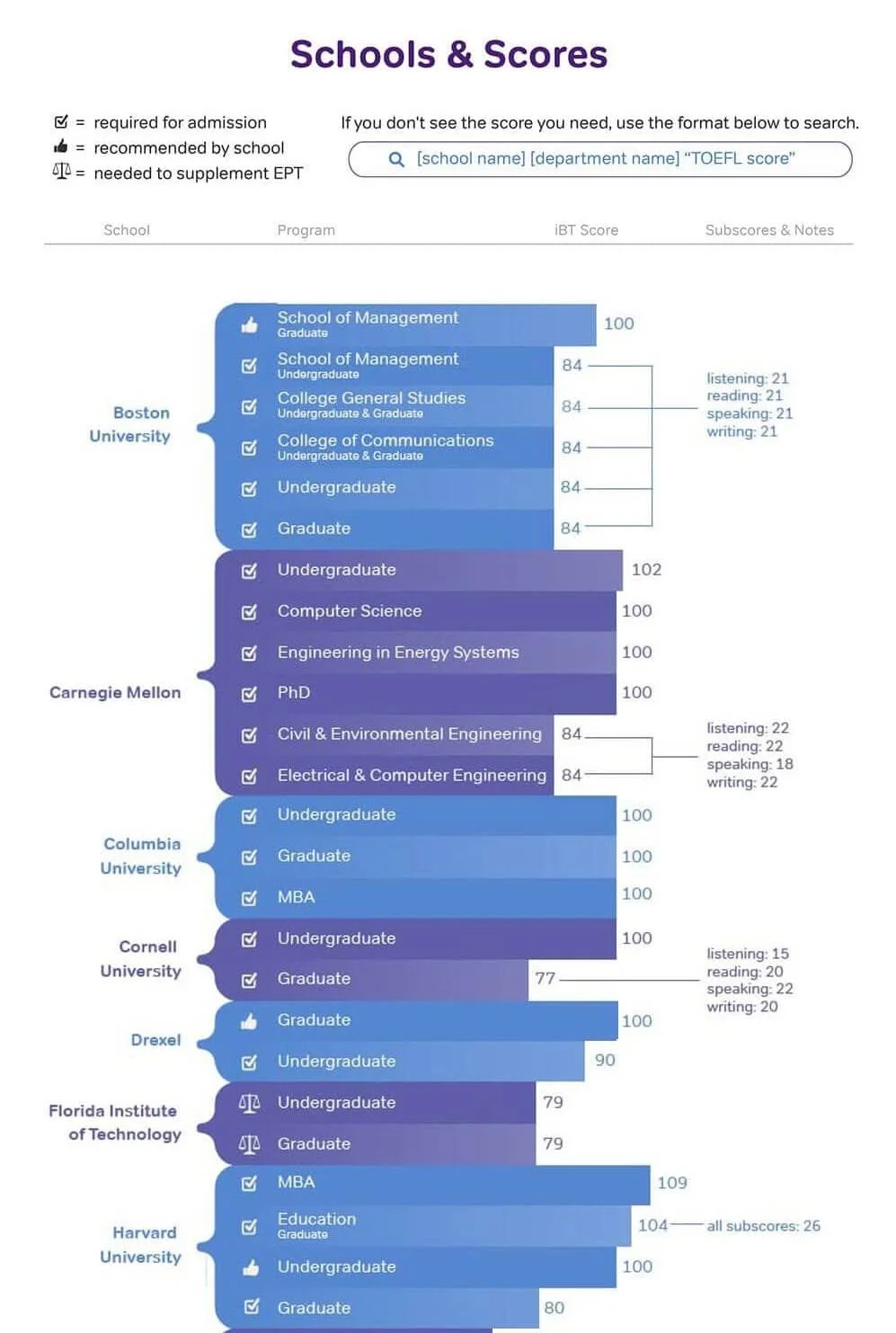
TOEFL score for top universities 

The minimum TOEFL score needed for admission differs across universities and departments within those universities. Use the below format to Google search for the score you would need to get admission to your dream college.

[university name] [department name] “TOEFL score”

For example: If you want to know the score needed for admission into Stanford University’s Graduate School of Business department or MBA, the search query would look like this-

“Stanford Graduate School of Business TOEFL score” or “Stanford MBA TOEFL score” 

This infographic by Magoosh will give you a brief idea of TOEFL scores required by some popular schools and will help you set the target score for admission into your dream college.

Summary

TOEFL is used to judge a candidate’s capability to study at a university in English-speaking nations. It is also a requirement in many colleges and courses across Europe and the world for non-native English speakers.

It is hugely popular among top-notch universities and has helped students get into their dream college. The exam is just a prerequisite to filter out applicants who are not fluent in academic English, and the test does not guarantee admission into top schools. Students should focus on their overall application as well, besides preparing for TOEFL. 

We have tried to cover key points of the TOEFL exam but there is no better resource to know about it than the ETS website. Please click here to know more. 

If you have already given the TOEFL exam and need help with your application, please book a call with Nistha. We have helped many students to get admission to schools like Harvard, MIT, and Columbia.

We can help you get into your dream school abroad.

TOEFL exam FAQs

What is TOEFL?

TOEFL is an English-proficiency exam that is primarily used to judge the applicant’s readiness to join a university abroad.

What is the fee for this exam?

The fee varies based on the test country/location. The applicant has to pay 185 USD if they are planning to give the exam from India.

What are the eligibility criteria for TOEFL?

The exam does not have the eligibility criteria per se. Indian applicants should have a passport to register for the test. 

Can I give TOEFL multiple times?

ETS conducts the exam 60 times a year and you can give it as many times as you want. The only caveat is that you need to wait for 3 days before registering for the next attempt.

You can register online up to 2 days before the exam date.  

What is considered a ”good” score in TOEFL?

You only need to score above the minimum benchmark set by the university you are targeting for admission. Generally, a score of 100 makes you eligible for admission to most top universities.

Which books are recommended for TOEFL preparation?

The Official Guide to the TOEFL iBT® Test is considered a great resource to prepare for the exam. 

Which is better- TOEFL or IELTS?

The exam which is widely accepted in the region/universities you are planning to get admission into is better for you. There is no point in giving an exam if it is not accepted at the university of your choice.

How to Study Abroad for Free

Studying abroad is a dream for many students. Some may aspire to study abroad to experience a new culture, travel, and enjoy the freedom of being away from home. Others might be interested in the universities renowned globally, because of prospects of a better future than their own country. While the intention may vary, one common concern of everyone is the hefty tuition fees. What if you could study abroad practically for free?

Many students kill their dreams of studying in a foreign university based on the assumption that they will have to spend a fortune on tuition fees and living expenses. 

Completing a degree from countries like the US and the UK may cost around 100,000 USD for many courses, it is not the case with every country renowned for its quality of education. 

In this article, we will uncover how you can study abroad for free or at a highly subsidized cost.

Three ways to study abroad for free 

1. Select the study program and the country that offers free education

While this may seem obvious, many students are unaware of the fact that many universities all over the world provide free or highly affordable education to foreign students. 

For example, students who enroll themselves at Paris’ La Sorbonne only have to pay a modest registration fee of around 200 USD, and no tuition fee. The only limitation is that the applicant should be proficient in French.

The language barrier should not stop you from studying in non-English-speaking nations. 

Many such countries, like Germany, offer courses that are taught in English. For instance, the Technical University of Munich offers an M.Sc. in Software Engineering that has the language of instruction as English.

And you don’t have to spend a penny on tuition fees in most public universities in Germany.

2. Apply for scholarships

This is the most popular method of limiting your expenses for studying abroad.

There are hundreds of scholarships to assist students who aspire to study in foreign universities. Most of them, that offer significant help as money, are competitive. Organizations award these scholarships based on factors like past academic performance, relevant work experience, and involvement in social work. 

Scholarships might cover just the tuition fee, or may pay you a certain amount monthly or annually. We would recommend you to apply for most of the relevant ones, even if you are planning to study in countries that charge no tuition fee. Many organizations who give these scholarships even pay for your living expenses, which makes your education free.  

You can also apply for grants. People use interchangeably the terms grants and scholarships, but there is a slight variation. Grant is mostly need-based, while scholarships are usually merit-based. 

Also check: Full Guide on Study Abroad Scholarships for students 

3. Work and Study programs

Working along with your studies can help you earn and cover your expenses more effectively. It can also help you understand the working culture of the country you are studying in and gain insights before you apply for a job.

We recommend that you check the Labor Laws of the country you are planning to study in, since many countries have work restrictions for international students.

  • While many countries don’t allow you to work full-time, a nation like the United Kingdom allows you to work part-time if you are staying for over 6 months. 
  • If you enroll in an Australian university, the government allows student visa holders to work for 40 hours every two weeks during the duration of studies and full-time when you are on vacation.
  • In Germany, the authorities allow students to work part-time for not over 20 hours per week during an ongoing term. 

The option of working part-time, along with your studies, may look lucrative from a distance but most of these jobs won’t cover your expenses entirely. We recommend that you plan well and stay updated on the country-specific employment laws before finalizing the country for your education. 

10 countries for free study abroad

1. Germany

Germany is the most popular destination among international students who don’t want to spend big bucks while not compromising on the quality of education. 

The country has universities that are ranked among the best globally. 

Most of the German public universities don’t charge a tuition fee. The students only have to pay “Semester Contribution” at the beginning of each semester, which is around 250-300 euros. It covers administrative expenses, public transport, and certain academic study material.

Also Read: MS in Computer Science in Germany.

2. France

It is not as popular among international students tight on budget, as compared to Germany, but offers many courses which charge no tuition fee for national and foreign students. 

The universities teach most of the free courses in French. Be proficient in French if you aspire to enroll in these courses. 

You can pay for a preparatory school, before starting your course, to enhance your French proficiency if you are serious about studying in France.

3. Norway

Most universities don’t require you to pay tuition fees, irrespective of your nationality. Just like Germany, the students only have to pay a semester fee of around 50 USD.

The only downfall is that most of the undergraduate courses have Norwegian as the medium of instruction. English taught courses are still more common at the Masters and the Ph.D. level. 

4. Iceland

The four public universities in the country charge no tuition fee, but only a registration fee of around 600 USD per year.

5. Austria

Education is free or highly affordable in Austria for locals and EU/EEA students. The country requires foreign students to pay a higher fee than the nationals and is around 810 USD per semester.

The country’s capital, Vienna, was ranked 13th in the QS Best Student Cities 2019.

6. Finland

Most of the colleges in Finland charge no tuition fee. This applies to citizens of all nationalities. 

Many courses are now being offered in English, and the cost of living in the country is low compared to the US.

7. Czech Republic

Education at any public university is free for students who can communicate well in Czech. People who want to study in English would have to spend around (4450 to 13500) USD per year.

The living cost in the Czech Republic is around 9200 USD per year.

8. Greece

All the EU/EEA students are eligible for free education for most of the courses at public universities. Non-EU students are also eligible for affordable higher education and have to spend around 1700 USD per year. The country is one of the most affordable countries to live in within the European Union. 

9. Argentina

International students have to pay a low fee while the education is free for the locals at the public universities in Argentina. The private universities in the country may charge north of 5000 USD per year.

The country’s capital, Buenos Aires, was ranked 31st in the QS Best Student Cities 2019.

10. Spain

The international students, not part of the European Union, have to spend around 840 USD to 2800 USD per year at public universities. 

The EU students don’t have to pay high education fees like others. Spanish cities like Barcelona, Madrid are among the QS Best Student Cities. 

Conclusion

Many dream of studying in an international student destination and at a university that is renowned globally. Unfortunately, many students aren’t able to make this dream true because of a lack of funds.

We covered various aspects of studying at a foreign university and discussed a few options. 

Even though scholarships are helpful, most of them will not cover your entire expenses. The ones that take care of most of your expenditures have a very low acceptance rate.

If you are low on a budget or don’t want the burden of an education loan weighing you down mentally,  then you should take admission in any of the German universities. The country is respected internationally for its historical inventions and has renowned public universities that charge no tuition fee.

Book a call with Nistha if you are serious about studying abroad and need help with your application.

All about MS in CS (Computer Science) in Germany

MS CS in Germany

MS in Germany is becoming increasingly popular among engineers. In this post, we look at MS in Computer Science (CS) courses and its options in Germany.

Germany has been a pioneer in technological innovations. The country is the origin of inventions ranging from the diesel engine to the printing press. It is home to many engineers and innovators who changed the world for the better. 

The German government always has been at the forefront of digitizing the country and is investing in the education of the workforce needed for this mission. It is among the top study destinations for international students aspiring to build a career in Computer Science and the IT industry.

Why consider MS in CS in Germany?

It has the world’s best universities

  • Many of the world’s highest-rated universities (among the top 50 by Times Higher Education) for computer science like the LMU Munich, Technical University of Munich, and Technical University of Berlin are in Germany. 
  • To sustain its culture of innovation, the country focuses on delivering a world-class education in engineering and research.

Offers highly affordable education

Studying abroad at a top-notch college is a dream for many students, but not everyone has the financial backing to support this dream. The general rule is: the better the university ranking is, the higher is the tuition fee. Well, Germany is an exception.  

  • The education in most of the German public universities is free, or either highly subsidized for local and international students as compared to other destinations popular among international students. 
  • The students have to pay an amount of around 250-300 euros at the beginning of each semester called the “Semester Contribution.” This is charged for the administrative expenses, student union, public transport, and certain academic study material.

Also read: MS in Canada compared to MS in USA

Cost of living in Germany

  • The cost of living in most German cities is way less in contrast to North American and other European countries favored by international students.
  • As per DAAD (the largest German support organization for the international exchange of students and researchers), the average monthly house rent for a student in Germany is around 350 euros. The rent varies across cities and may reach up to 725 euros for places like Munich.
  • The approximate per month living expense for an international student may vary from 750 to 1100 euros depending on the city. This estimate includes expenditures like food, rent for accommodation, and commuting, but excludes the tuition fee.

Job opportunities

  • Germany is the home of many Tech and IT behemoths like SAP and is the hub for innovation and research.
  • To speed up the German’s visions of digitization, the government is investing in training people from across the world to prepare them for IT and Tech jobs in Germany. 
  • A Software Engineer in Germany has an average salary of around 55,000-60,000 euros per year.

Best universities for MS Computer Science in Germany

Germany has 40 plus universities that offer courses in Computer Science.

According to Times Higher Education ranking of educational institutes, the best universities in Germany for studying Computer Science are: 

  1. Technical University of Munich: The count of CS faculty at TUM is among the highest in Germany. The university is renowned for promoting innovation and entrepreneurship.
  1. LMU Munich: One among Europe’s premier universities in research and is committed to international standards for teaching and research. 
  1. Technical University of Berlin: One of the largest universities in Germany. It aims to develop science and technology for the interest of society.
  1. University of Freiburg: Founded in 1457 and introduced the Faculty of Engineering in 1995. 
  1. RWTH Aachen University: The university has around 45,000 students and is renowned for its outstanding reputation in the field of research. 
  1. Technical University of Darmstadt: Among the leading technical universities in Germany. It is recognized in the international education community for its focus on research and innovation. 
  1. Karlsruhe Institute of Technology: Other than Engineering, the university offers courses in a broad range of disciplines, i.e. in natural sciences, economics, and the humanities and social sciences.
  1. University of Bonn:  It has the highest number of Nobel Prize winners and Fields Medalists in the past decades than from any other German university.
  1. University of Tübingen: The university was founded in 1477 and provides innovative courses on Machine Learning, Neuroscience and Behavioral Science, Computational Linguistics, and Management, etc.
  2. University of Erlangen-Nuremberg: “Knowledge in motion” is the university’s motto. The Faculty of Engineering is renowned for its excellence.

Eligibility 

The eligibility criteria for admissions in a postgraduate course in Computer Science in Germany vary due to university-specific guidelines. The criteria given below are common to most German universities.

  • An undergraduate degree in any field of Computer Science, Maths, Technology, or any other closely related disciplines. The aggregate percentage for admission in the best colleges should be at least 60. 
  • B1 or B2 Certificate.
  • An average GRE score of 310-325.
  • Proof of language proficiency based on the language of instruction in a particular course/university
    • IELTS: 6.5
    • TOEFL (iBT): 80-90
    • TestDAF with TDN-16
    • German Language Diploma: Second Level(DSD-II)
    • Goethe Certificate-C2 Level.
    • Proficiency in German is required if the mode of instruction is German or Dual (German and English).

The eligibility criteria, as per Collegedunia for some German universities, is given in the table below:

UniversityEligibilityELP Test scores
Technical University MunichGRE/GATE ScoreTOEFL: 88
UG in relevant SubjectIELTS: 6.5
RWTH Aachen UniversityUG in a relevant subjectTOEFL: 90
GRE scoreIELTS: 5.5
Technical University DarmstadtBSc in a relevant subjectTOEFL: 88
IELTS: 6.5
University of FreiburgUG in CS/Maths or closely related fieldTOEFL: 94
IELTS: 7.0
Technical University of BerlinPrevious degree with CS, IT & methodological scienceTOEFL: 87
IELTS: 6.5

Admission Process

The admission process is exhaustive and should be well-planned. The aspiring students should consult an expert if they are stuck during any phase. 

Ways to apply for admission

The process of admission may vary across universities. The three most common methods to apply for MS in Germany are:

  1. Via the university portal
  2. Uni-assist applications
  3. Through DAAD

Documents Needed

Besides university-specific documents, most universities you are applying to may ask:

  1. Academic Records and Application: These documents are evaluated by Uni-assist. 
  2. Standard admission test scores: Scores for admission tests like GRE and GATE (for Indian students). 
  3. Language proficiency test scores: German or English proficiency exam scores should be submitted based on the courses and universities selected. 
  4. Work Experience: Documentation of relevant work experience. 
  5. Some universities may require additional Documents: Letter of Recommendation, Statement of Purpose, and. CV.

Also read: Interview experience of MS in Germany?

Scholarships

The cost of doing an MS in CS in Germany is significantly less than compared to other popular study destinations in Europe and North America. Despite this, many organizations provide full or partial scholarships to deserving candidates to manage their living expenses in Germany. 

Some of the most popular scholarships for studying in Germany are:

  • DAAD Scholarships
  • The Deutschlandstipendium
  • The Friedrich Ebert Stiftung
  • Heinrich Böll Foundation
  • Bayer Foundations

Conclusion

Enrolling for an MS in CS course in Germany is a great option if you aspire to study at a university ranked among the best globally and in a country that is respected for its historical innovation. 

The tuition fee at most of the German universities, that offer courses in Computer Science and other disciplines, is significantly less than popular international education destinations like the US and Canada.

The job prospects after education in Computer Science at a German university are better in contrast to many European nations. You can dream of working at the best software firms in the world without the burden of an education loan.


We have now covered MS in Germany, MS in Canada and MS in USA. Which other country are you considering and would like to know more about?

What does Biden victory mean for International students?

Now that the US marathon election result week has culminated in a Joe Biden victory, are you wondering what it means for international students? How will Biden shape the immigration policies that affect OPT, H1B and naturalization process? And finally, how should you plan your studies abroad in the wake of a new President in the White House? Let’s take a look in this post.

First of all, welcome to a non-Trump world!

Trump made it amply clear that he is driven by nationalist agenda at any cost. Even if it caused US universities to lose their share of international students. First, a ban of new H1B, then curb on online only international students and finally raising the minimum wages for H1B, he kept sending clear signals to attack the immigrants.

Is Biden better for international students?

Biden once said of his priorities, “Trump just ended H-1B visas the rest of this year. That will not be in my administration. The people who have come on this visa have built this country. Let’s streamline the naturalization process, make it easier for qualified green card holders to move through his backlog” 

Democrats are more open and lenient on matters related to immigration. The fact that Biden recognizes America as a nation of immigrants gives a lot of hope to those wishing to build their careers in USA.

However, the specifics of Biden’s stance remain unknown. He is definitely not likely to pass on rash curbs on work or student visas that Trump didn’t hesitate in doing. However, at another time, his campaign also said, “Biden will work with Congress to first reform temporary visas to establish a wage-based allocation process and establish enforcement mechanisms to ensure they are aligned with the labor market and not used to undermine wages.”

Wage based allocation process means qualifying for work visas only if your salary remains above the mentioned threshold. So, all depends on this threshold. As per the latest action by Trump administration, there was a ridiculous 40% hike in the minimum wages required for a H1B sponsorship. It is highly unlikely that Biden will continue or increase this limit.

In a nutshell…

While Biden is overall less anti-immigrant than Trump, there are no promises or specifics known yet. Given the times we are in when countries are struggling to grow their economies, sustain and create jobs for their people, it is understandable that they would tightly scrutinize the borders. International students should cheer after a Biden victory albeit with cautious optimism. 

However, no one can be as bad at Trump. Therefore, change of office and Biden’s victory is a lot of reason to celebrate for international students!

How to take care of your interests?

If you are vying for the top jobs and top companies, US is still the place to be. A 3 year STEM OPT extension plus 6 years on H1B gives you ample time to figure your next move. 

If you want to potentially immigrate to a new country after your studies abroad and don’t want the anxiety related to H1B visas etc, you can consider more immigrant-friendly countries such as Canada. If the Democrats end up not relieving the difficulty on work and student visas, the competition for US schools might dip a little, giving you a better shot at your dream Ivy Leagues. So, for those who are not so set on settling abroad, it is a good time to get into US. 

Anyway with so much changing in the world, who knows what lies next? Why worry for a future long down the line when you don’t know what tomorrow entails 🙂

Other interesting read on the topic: this Scroll article

Cost of college education in the USA

study abroad salary and expense

If you are considering a college or Bachelor’s (undergrad) education in USA, this post will tell you how much will it cost you! Keep on reading to find some money saving tips at the end.

Cost of Bachelor’s or College in USA

Getting a Bachelor’s degree from a reputed US university is the dream of every Indian student. Like in any other country, various types of universities are present in the USA. College Board gives an estimate of many US universities. However, this estimate fee varies a lot. Top US universities are private non-profit institutes and charge around $60,000 per annum, including the living charges. Many other options with lower fees are also available.

College Board has released the total charges of different types of universities. On average, international students, including Indian students, have to pay the fee of $26,300 for bachelors in the USA at state colleges. In comparison, private universities charge around $36,000 per year.

These charges are just the estimation of the total expenses an Indian student might have to bear while studying in the USA. The expenses vary from person to person and depend on the university as well. A significant gap is present between colleges of the same type as well. For example, Michigan University is one of the top public US universities. Therefore, its fee of $64,500 (see this link for details) is comparable to many private universities.

Public vs Private Colleges

State-owned and public universities are much cheaper than private universities. They offer good quality education. Public universities have two fee structures: one for the residents of US and one for the international students, Therefore, Indian students applying for a Bachelor’s degree in the US should seek the fee structure for the foreign students. In private universities, usually, the charges are the same for both local and international students. Therefore, there is more diversity of pupils in private universities.

The least expensive option of studying in the USA is to get admission in a two-year program. Such types of degrees are offered by community colleges that approximately charges $3,700 per year. Even though the two-year of study at a community college is not considered a full degree, it can still be counted as the first half of your bachelor’s degree. The credits can be transferred to another university, where you can complete your bachelor of four years.

If you want to study abroad, you have to consider the total cost of living and other charges. After adding an estimate of living and transport expenditures, it is expected that you would have to arrange the following amount per year to cover the cost of your college education in USA:

  • Community or technical college – $18,000
  • A four-year study programme at a state university for in-state students – $26,200
  • A four-year study programme at a state university for out-of-state students $42,000
  • Private universities – $53,500

Also read: How to study undergrad in USA?

Is it possible to get financial aid?

It is imperative to differentiate between the expected expenses and the actual charges paid by the students. The US has numerous financial aid programmers. When the cost of studying abroad is estimated, the financial aid options are not factored it. As a result, the cost of studying in bachelors in the USA for Indian students can become less than the anticipated fee, if they avail funding schemes.

According to polls and researches, 85 percent of the bachelor students benefited from some type of financial aid during their studies. Top universities of the US like Harvard, MIT, Princeton, Caltech, and Stanford offer numerous scholarships and financial aid programs. More than 55 percent of undergraduate students get financial aid at MIT. Around 60 percent of students receive assistance at Caltech. Similarly, other universities dispense financial aid in the form of scholarships, grants, loans, and study schemes.

The most advantageous thing about these extensive financial aid schemes is that they cover both national and international students. Most of the universities in the US allocate a separate budget for international students. Therefore, Indian students can get benefit from these schemes to get a quality bachelor’s degree from the US with a minimum financial burden. The University of Pennsylvania has allocated about $10 million for the funding of international students. Similarly, Harvard and Columbia’s university provides individual grants to deserving international students as well.

Students applying to any university should check out the details of financial aid on their official websites. It is advised that students apply for a financial aid scheme at the time of their admission application submission. Some top universities also have the policy of not considering the applicants’ financial background at all. Instead, aid is given to every deserving candidate who is eligible for admission at the university.

Also read: Cost of MS in USA

How can you save money?

Cost of college education in USA can be a huge financial burden for the Indian students. Therefore, you should consider the following options to save money and get quality education:

Take admission in USA public universities

The standard of education in public universities in the USA is of the utmost quality. Therefore, if you want to get a proper education under the minimum fee, consider taking admission at a public USA university.

Live where the cost of living is low

Managing living cost in a foreign country can be exhausting. Select a university in rural or suburban areas as the cost of living is low in these areas.

Select universities where you can be a top student

If you are a good student and has the high chances of scoring scholarship on the basis of merit, choose a university where you will be eligible for merit-based scholarships. Apply to a university where your SAT scores are likely to be among the top positions. In this way, you can save lots of money by getting concession on your university fee.

Apply to universities where numerous financial aid options are present

As discussed in the previous section, there are a number of universities in the USA that offer financial aid on the basis of need and merit. While applying for bachelors in the USA, Indian students should opt for universities that provide financial aid to international students. This information can be found in great details on the respective websites of the universities.

How does Scholar Strategy help in your undergrad or college (BS) applications?

We provide strategic essay crafting assistance for the College Applications (Common App as well as other systems) because we know what admission committee is looking for. Drop us an email at scholarstrategy (at) gmail (dot) com for help with the same.

Best Courses to study in Canada for Internationals

Best Courses in Canada

What are best ROI Courses in Canada for International Students in 2020? Let’s take a look.

Courses with high ROI in Canada

Canada is working on increasing the number of international students in Canada through effective education strategies implemented since 2014. Quality education and high living standards in Canada has attracted many people from all over the world. The high-quality educated imparted in Canadian universities provides many opportunities after graduation and set the individuals on an excellent career path. Degrees from Canada, along with work experience, make it easy for the people to get settled in Canada permanently.

A general degree from a university in Canada can be completed in four years, which is considered to be the equivalent of an American degree. The Canadian education system is well-developed and keeps on improving with the passage of time. The courses offered in Canada covers all the modern aspects of life and business, which attracts a myriad of international students. Such opportunities can lead to numerous work opportunities in foreign countries, including Canada, the UK, the USA, and many other countries.

Before making the decision of studying in Canada, you should be familiar with the following factors:

Application Fee

The application fee for Canadian universities is between 100 to 250 Canadian dollars. It can vary a lot depending on the university you are applying to. Hence, it is better to check the university in the initial stages of the application process.

Standardized Tests

Admissions are usually finalized on the basis of high school grades. However, some universities may require SAT, ACT, or other standardized tests as well. AP or IB exams can also be taken for credits or placement in some educational institutes.

Tuition Fees

The tuition fee in Canadian universities varies a lot on the basis of the program. The average fee can be between CA$7,000 to CA$29,000 per year for the international students at universities. While the colleges cost about CA$5,000 to CA$15,000 per year, many financial aid programs, loan schemes, and scholarships are available in Canada to support international students.

Accommodation

The majority of the colleges and universities in Canada have accommodation facilities near or on the campus.

Visa and Legal Documents

Verification of the legal documents and visa approval is mandatory for international students before entering Canada. The application fee for a study permit in Canada is CA$235. It allows the students to study as well as work outside the campus for a limited number of hours during the semester and full-time during Summer or Spring breaks.

1. MBA

MBA has always remained one of the most essential courses in Canada. It provides a lot of international work experience and real-life exposure to the students, which helps them in becoming a successful businessperson and entrepreneur. Moreover, there is a considerable demand for jobs related to investment finance and management consulting in Canada. MBA graduates can specialize in IT-related fields like Analytics, data science, and Big Data, which has some of the most high-paying job opportunities in Canada.

Despite having an affordable education system, the MBA programs offered in Canada are expensive for international students. Even then, it has its own set of advantages and long-term benefits, which play a massive role in establishing stable career paths of MBA graduates in Canada. Soon after graduation, most of the individuals are offered high-paying jobs. Various types of MBA courses are offered in Canada. In India, Canada has just started to become popular for getting MBA degrees, so if you want to learn more about it, you must check out MBA in Canada for Indian applicants.

2. IT and Computer Science

IT and Computer Science programs have become highly popular since the last decade due to significant advancements in the technology sector. IT professionals are in huge demand all over the world, including Canada.

Hot Specializations in Computer Science

The tech industry in Canada is growing rapidly. Last year, about 11,500 more jobs were added to the massive IT industry. Most of these jobs are very well-paying, as well. According to the researches, an average annual salary of $81,500 is being paid to the IT experts. Moreover, experts of complex concepts of computing like blockchain, AI, and Big Data are enjoying a large annual pay of $100,000 or more.

Computers have evolved a lot in the last few years and impact every sector of society. As a result, IT has numerous different categories, and some of the specializations have become more popular than the others, such as:

  • Full-stack development
  • Project Management
  • Software engineering
  • Web Development
  • Program Analysis
  • Java Development
  • Cybersecurity
  • Cloud Computing
  • Database Administration 

Top Computer Science Universities in Canada

The majority of Canadian universities have state-of-the-art facilities which are important in enhancing the learning experience of the students and imparting modern education to the students. Such facilities have played a considerable role in producing leaders in the IT sector. The fee of the universities varies anywhere between CA$6,500 to CA$33,500 per year, depending on the scale of the university. It is always a good idea to check the fee structure of the respective university from its official website get authentic and updated information.

Also read: MS in Canada compared to MS in USA

The top universities in Canada which offer Computer Science courses are:

  1. University of British Columbia (UBC)
  2. University of Waterloo
  3. University of Toronto
  4. McGill University
  5. McMaster University
  6. Queen’s University
  7. University of Ontario
  8. Carleton University
  9. University of Alberta
  10. Concordia University

3. Engineering and Engineering Management

Though Computer science has seeped into every different field, the popularity of core engineering programs has remained almost the same. The engineering jobs have also grown steadily in Canada, and about 8,000 jobs were added to the technology sector in 2018.

Mechanical, civil, and electrical engineers are sought after the most in Canada. Moreover, an engineer with expertise in AutoCAD and CATIA are preferred by most of the companies. Ontario and Quebec are the ideal Canadian cities for engineering jobs.

An average annual salary of $81,000 is being paid to the majority of the engineers. The lowest-paying engineering jobs pay approximately $52,000.

Also read: Highest paying STEM jobs of next decade!

4. Business and Finance

Finance, commerce, and business management have always remained important in the prosperity of the economy as well as the success of an individual company. A degree in finance and economics will teach you a lot about the working of the financial markets and the procedures of the business environments. Moreover, studies related to finances allow you to develop a variety of skills that are applicable in many other fields as well.

In Canada, jobs like asset management, broking, accounting, banking, and investment management are in huge demand. Other than the undergraduate programs, MBA is one of the most popular courses in Canada and abroad.

5. Earth Sciences and Energy

With the rising popularity of renewable energy and eco-friendly developments, the demand for students in Earth Sciences has also increased.

No economy can prosper without reliable energy sources. Rapid depletion of fossil fuels and an increased rate of climate change has alarmed scientists as well as industrialists in Canada. As a result, many companies are investing a vast amount of money in finding eco-friendly solutions, and hence the jobs for renewable energy experts have augmented. Such jobs are not only high-paying but highly essential in revolutionizing the economy and protecting the planet from further damage.  Earth Sciences programs like Physics, Petroleum Engineering, Mining, and Geology are in huge demand.