CPT, OPT, H1B – All about student and work visa in USA

cpt opt h1b

Confused about CPT and OPT? How can you work on the student visa in USA? How can you work after graduating?

How does CPT and OPT work?

While many Indian students plan to go to US for advanced degrees, very few are aware of how the visa process works there and why it is important to know about students and work visa before you join any academic program.

F1 visa and Form I20

For students, there are two important visa categories that determine your career prospects. First is student visa (referred to as F1) without which you cannot study in US. When any university accepts you, it will send you a Form I20 which is required to apply for a student visa. Things to note:

  1. Having an I20 alone does not mean that you will get the student visa. You need to apply for it and pass through the interview process.
  2. An I20 from a good reputed university increases the chances of your getting the student visa. This is another reason why students should apply to good universities.
  3. You can study, do an internship and work for a limited time after graduation on student visa.

Good news is that you can work while studying in USA. Here is University of Washington describing employment options for students.

CPT and OPT

Curricular Practical Training (CPT) is a program that temporarily allows international students with an F1 visa to gain practical experience directly related to their major through employment, paid or unpaid internships, or cooperative (co-op) education. It must be part of an established curriculum. CPT must be completed before graduating. In addition, CPT can be part-time (20 hours or less a week) or full time (20 hours or more a week).

Optional Practical Training (OPT) is a program that temporarily allows international students with an F1 visa in the United States to work in relation to their major of study. F1 visa students are eligible for OPT after completing their first academic year. For a normal student, you are allowed 12 months of OPT.

International students with an F1 visa who have completed degrees in certain science, technology, engineering and mathematics (STEM) are eligible for a 24-month extension for post-graduation completion of OPT employment. 

H1B visa for fulltime work

But to work for longer term, you cannot keep using the CPT and OPT. You need the highly competitive work visa – referred to as H1B visa.

H1B visas are issued by employers and you cannot personally apply for them. This means you need to have a job offer from a company who is willing to sponsor your H1B visa (it has non trivial fee plus is subjected to regulations by US govt.).

Few complications are involved such as H1B visas are issued only for some job categories where govt feels enough local American work force is not sufficiently skilled or available. For eg. while H1B visas are easily issued for software programmers, they are not for marketing or HR roles – this is one reason why more foreign students go for Computer Engineering than lets say MS in Marketing. So, while a lot of Marketing jobs may be available in US, it is not necessary that companies will hire international students (who require H1B visas) for these positions.

I witnessed this first hand while doing MBA at NYU. Some of my classmates could not intern at bigger companies like Amex in Marketing roles because they were not sponsoring H1B visas for Marketing department. Usually, if a company cannot sponsor H1B visa in future, they also don’t offer internships to those candidates even though internships do not require H1B. In short, you need to understand that:

  1. To work long term in USA, you NEED H1B visa sponsored by a company.
  2. H1B visas are issued for specific roles and some fields are friendlier to getting these eg. IT, software engineering, finance etc.
  3. Indian students should consider whether they can get work visas after graduating in their desired field or not. If H1B visas are not easily issued in your field of study, one may have to come back to India for employment after graduation.
  4. Even when you get H1B visa, you can only work that employer. This means, you cannot work part time at any other place in parallel and you cannot start your own company while working on H1B visa.
  5. H1B visas are issued for 3 years after which they can be reissued for another 3 years – thus 6 years in total. By the end of your 6 years, if your employer has filed your green card application and it has reached a specific stage, you can keep extending your H1B visa on a yearly basis. However, if your green card has not been filed or did not reach that stage at the end of 6 years, you need to live outside USA for at least 1 year before you can get H1B for 3 years again.
  6. H1B visas are extremely competitive and subject to strict quotas. If the govt. receives more H1B applications than the quota, then they are picked by lottery and your getting the visa depends on your luck.

One more interesting thing about these visas – F1 visas are granted on your intention of coming back to your home country after studying and thus proving that you have no intention of working in USA. Thus, in your F1 visa interviews, you should be prepared to show that you want to come back to India after studying. On contrary, to keep working in USA, you need H1B visa.

A sensitive time comes when you start working on OPT (the limited time for which you can work directly on student visa until you get the H1B) and your company has applied for H1B visa. In this period if you are traveling to India and re-enter USA on F1 visa (till the H1B is issued), you may be declined an entry due to conflict of interests since your H1B application means that you want to work in US whereas F1 visa status expects you to go back to your home country upon completion of your program. This is why some people prefer not to travel after graduation until you have received your H1B visa.

So, you should be aware of some visa intricacies so that you can plan your studies, travel and career accordingly.

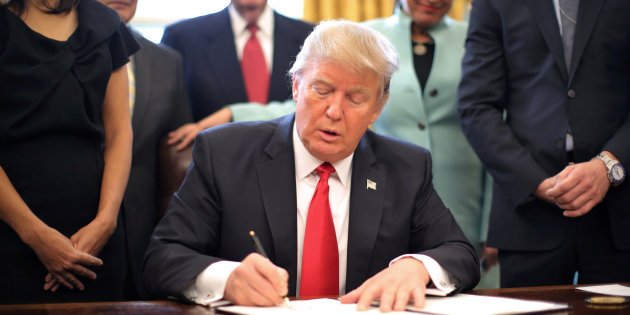
Lately, there have been a lot of attacks on H1B by Trump administration. You can read about latest updates on H1B right here on this blog.

Trump ban on new H1B visas: updates for Grad Students

Trump Suspends New H1B

Trump has put a ban on new H1B visas – what does it mean for Graduate Students? Here’s some clarifications and advice on moving forward.

President Donald Trump blocked visas for a wide variety of jobs, including those for computer programmers and other skilled workers who enter the country under the H1B and L1 visa on June 22, 2020. It is a temporary ban that will remain in effect till Dec 2020. src: NYTimes

Trump has said that the ban will help domestic workers in USA since the economy is already struggling. The visa suspension could open up 525,000 jobs for US workers, a senior administration official said. The official, however, did not explain how the administration arrived at that figure.

Watch Nistha’s analysis

Will Trump putting a ban on new H1B affect Graduate Students?

The ExecutiveOrder does NOT impact students on F1 visas, CPT or OPT. It only impacts the following categories of visa – H-1B, H-2B, L-1A, L-1B, or J-1. This refers to (intern, trainee, teacher, camp counselor, au pair, summer work travel only) and who do not already have such a visa as of June 24, 2020.

New entry suspensions do NOT apply to any of the following:

  • Individuals inside the U.S. on the effective date of the proclamation
  • F-1 students (including those on OPT, STEM OPT, and/or cap-gap)
  • J-1 students (including those on Academic Training)
  • J-1 exchange visitors in categories other than intern, trainee, teacher, camp counselor, au pair, and summer work travel.
  • Individuals outside the U.S. who already have a valid visa prior to June 24, 2020.
  • Individuals outside the U.S. who seek to apply for a visa in a category other than H, L, or the J program categories of intern, trainee, teacher, camp counselor, au pair, and summer work travel
  • Any application filed with USCIS including OPT, STEM OPT, H-1Bs, changes of status, etc.

How does it impact the students who graduate this year?

Trump’s Executive Order places a ban on new issuance of H1B visas till Dec 2020. If your H1B visa is already filed and approved earlier in 2020, you should not be affected. However, it is best to contact your employer and confirm this.

In general, the proclamation does not negate selection in the H-1B lottery or suspend an employer’s ability to file an H-1B petition for an employee. If you have more specific questions about this proclamation as it relates to changes to your immigration status that are or will be handled through your employer (such as H-1B, permanent residency, etc.) please reach out to your employer’s immigration team or legal counsel for specific guidance for your particular situation.

NC State International Students Office

So, who is this bad for?

The proclamation temporarily blocks foreign workers entering on H-1B visas (skilled workers) and L visas (for managers and specialised workers being transferred within a company). Trump also blocked those entering on H-2B seasonal worker visas, which are used by landscapers and other industries. The suspension also applies to J-1 holders “participating in an intern, trainee, teacher, camp counselor, au pair, or summer work travel program.” 

The order also restricts the ability of American companies with global operations and international companies with U.S. branches to transfer foreign executives and other employees to the United States for months or year-long stints. And it blocks the spouses of foreigners who are employed at companies in the United States.

However, the above does NOT ban someone who is already in USA as well as valid visa holders overseas, but they must have an official travel document that permits entry into the United States.

Is this a bad news for international students?

Not directly since it has no bearing on F1 visas whatsoever. Last month, we heard a good news that H1B will give priority to people who have studied in USA which is a great news for international students. However, if Trump carries on like this and makes H1B more restrictive, it creates a ripple effect on students ability to work after graduation. I have already written about What is happening with H1B – should I apply for MS? Such news create an uncertainty in the job market and employers become more cautious in sponsoring H1Bs.

Can there be more bad news for immigration in future?

The June 22, 2020 proclamation does instruct the Secretaries of the Department of Homeland Security, the Department of Labor, and the Department of State to work together to recommend modifications to the proclamation within 30 days and then every 60 days after that. So, we do not know at this time if the proclamation will change or if new proclamations will be issued. However, OIS will continue to monitor news bulletins for more information and update this FAQ accordingly once we know anything.

NC State International Students Office

What can I do so that these developments do not impact me?

Some of my colleagues from Citi who couldn’t get H1B were relocated to other countries. Companies try to retain their skilled employees as much as possible, they can move them to Europe or Canada if needed. Talk to your employer & figure out your options.

Of course, startups may not have all these options but if they really want you, they figure out a way especially now when remote working is widely acceptable.

If you were planning to apply to US for studies, be prepared for such announcements. I believe US is best innovation hub – the kind of work and salaries you get there is unmatched elsewhere. If your goal is immigration, look elsewhere as well.

There’s something called recession or Trump proof graduate – he’s the one who’s been so busy skilling himself that he knows he can find a job in any market. Be that guy. If you want to figure how can you become evergreen employable, try our career coaching services and contact us.

If you are solid in your fundamentals, you WILL find a job. It may not be what & where you wanted it right away but you won’t be unemployed.

Lastly, world is changing in unexpected ways. It’s better to be prepared for the worst. The moment you accept that anything can happen, you are half way ready to handle it. Think of backup options & be damn good in your field.

You can do this. Good luck ?

H1B good news for Indian students in US: special quota

h1b indian students

The H1B and L1 Visa Reform Act has brought relief for International and Indian students studying in USA. As introduced in House of Representatives and Senate, the act will require US Citizenship and Immigration Services to prioritize people educated in USA for the first time in the annual allocation of H-1B visas. This news came out on 23rd May 2020.

What’s good about this H1B reform act for Indian students?

The new system would ensure that the best and brightest students being educated in the United States receive preference for an H-1B visa, including advanced degree holders, those being paid a high wage, and those with valuable skills.

As of May 2020, H1-B lottery doesn’t differentiate between Indian applicants – whether they are students studying in USA or people employed in Indian companies. Trump often launched offensive on H1-B seekers. But as I pointed out before, his discontentment and attacks are truly meant to be not against people studying in USA but those who come from outsourcing companies and act as a cheap labor replacing American workers. Indian (International) students compete for highly paid jobs at companies like Apple and Facebook and are coveted in the tech industry.

Finally, few Senior Senators are looking into ways to differentiate between desirable H1-B seekers such as MS/PhD students and undesirable H1-B seekers from IT outsourcing companies.

In the Senate, it was introduced by Senators Chuck Grassley and Dick Durbin. In the House of Representatives, it was introduced by Congressmen Bill Pascrell, Paul Gosar, Ro Khanna, Frank Pallone and Lance Gooden.
The legislation reinstates Congress’s original intent in the H-1B and L-1 visa programmes by increasing enforcement, modifying wage requirements and securing protections for both American workers and visa holders, the lawmakers said.

IndianExpress reporting from PTI

What is interesting – these Senators come from both Republican and Democratic party. This strengthens the probability of it getting enacted.

What does it mean?

In long term, graduate students in US will get preferential treatment over Indian employees coming directly and trying to file for H-1B. This reduces the competition and bodes for better chances of procuring H-1Bs by the students.

More than anything, this is a strong message that USA doesn’t want to push away the very students who are studying in its hallowed universities, and whose education it is subsidizing through assistantships. It never made sense for US to invest in students and then tell them to leave the country before they could add to its GDP, contribute to its industries and status.

Many of the Silicon Valleys companies are run by Indians who went to study in USA. The govt is realizing that the whole anti-immigration narrative is hurting its desirability in the eyes of these talented students. While it wants to appease its homegrown workers, it also wants to retain these skilled students and let them create next unicorns on US soil.

Of course, this is still a proposal and you should keep an eye on the updates. However, this bodes well for applicants, graduate students and dreamers. If you dreamed of MS in USA, this bill is a gift.

What is happening with H1B – should I apply for MS?

Ever since Trump was elected, there have been articles that blamed his policies on H1B for Indians being forced to exit US. Let us focus on facts and discuss how it impacts your MS plans.

Relevant Anti H1B Bills proposed so far-

  1. Increase in minimum wage requirement to qualify for H1B
    1. A bill called Protect and Grow American Jobs Act was introduced to amend the original Act that created the H-1B program. It asks to raise the minimum salary requirement for H-1B workers to $100,000 a year, up from $60,000, and remove the Master’s degree exemption that allowed the replacing of American workers with foreign workers with master’s degrees. The House Judiciary Committee approved it in November 2017 but it is far from becoming a law at this point. Tech lobby is so strong, I’ll be surprised if this passes ever.
  2. Revoking work permits of H1B spouses
    1. A rule is proposed to revoke work permits of H1B spouses – popularly called H4 EAD. It is currently in “final clearance and review” process.

Bills approved and made into law so far-

None

Other impacts of Trump’s anti-immigration stance:

  1. Employers were wary of what rule might be proposed and hence, were more cautious in rolling out H1B applications for new employees. I have heard Amex managers etc thinking twice before hiring internationals.
  2. In October 2017, the USCIS made it so that H1B extension applications are subjected to the same level of scrutiny as on fresh visa applications. Earlier, if anyone made a mistake in the application, they could get an RFE (request for evidence). However, now USCIS can outright right reject with no obligation to send RFE.
    The ground reality is that some people are seeing a tougher time getting their H1B renewed especially if their real day to day work doesn’t justify the reasons for which the H1B was filed in the first place. If they are doing routine mundane tasks and not requiring higher skills, they are likely to be questioned and may even see revoking of H1Bs.

Who will Trump’s bias really impact? – outsourcing firms who are sending people on client side for no real reason. This was also reflected in the fact that the number of approved H1B petitions filed by Indian IT firms (Cognizant, Infosys) declined in 2017 whereas those by leading tech companies such as Apple, Amazon increased (as reported by NFAP).

Outsourcing IT firms have realized that they cannot bulk file for H1Bs now and there will be tighter scrutiny on applications. As a result, they are also more cautious and not filing too many H1B petitions now.

Quoting verbatim from the above NFAP report-

Emerging technologies, such as driverless vehicles, may also be increasing the demand for people with high levels of technical skill, including foreign-born researchers. Tesla (207 approved new H-1B petitions in FY 2017), Uber (158) and General Motors (179) all employ individuals in H-1B status.

It indicates a shift in preferring to grant H1Bs to direct employers rather requiring more sophisticated knowledge of technology than outsourcing IT firms.


Frankly, these are the only real things happening. I have seen articles claiming that people are leaving USA because of Trump’s policies and they are cherry picking evidence. The height of irresponsible journalism is when they cite reasons such as – H1B is too restrictive, you cannot work for anyone else, I did not get H1B 2 years after graduation. I wrote a big counter article on that which went viral and you must read it.

Let’s be objective. All this was happening before Trump as well. H1B was always restrictive (you could not start your own company on H1B), it was always harder for people graduating with questionable degrees from questionable schools, who did not learn any real skills.

At Scholar Strategy, I have heard from our students who got internships and fulltime employment at Tesla, Facebook, Amazon, Intel, Qualcomm, Google, Microsoft, Apple etc this very year. So, if you want to extrapolate Trump’s frenzy to a doomsday scenario for people who know their shit, all I have for you is ‘I don’t buy that.’

You may say many deserving people on H1B from outsourcing firms are now at risk. I say – yes, they are. But believe me, if you have good skills and are a good developer, Project Manager, Product Manager, software architect – you will never have dearth of opportunities – yes, you may have to work for it.

I advised a 34 year old woman, who was fed up of the IT firms politics and stagnation in career in India, get into MIT SDM program and she interned at Salesforce as a product manager this year. If she can do it, so can you.

But if you are trying to defend skill-less people sitting as managers in middle management layer in so many IT companies – you cannot. They were and are always at risk of being shoved out (even in India) – its nothing to do with H1B. After all, H1B is not a charity, it is a work visa with a specific purpose for its country.

I am not defending Trump by any means, but I am saying that there frankly has not been a damage to prospects of working in USA for good people. In fact, I would argue that going forward, it bodes well for people with advanced degrees from good institutes because they are the ones that will possess the requisite skills.

Updated thoughts after H1B report came out in Feb 2019-

Is it worth doing an MS in the US and get H1B visa?

After Trump and H1B news, is it worth doing MS in USA? Read our detailed analysis to help you decide whether it makes sense to pursue MS abroad or not

Why is Trump after H1Bs?

Trump has so much political pressure because of his promises during the elections that he is going over board. This has been worsened by Disney’s lawsuit where an American employee who was laid off sued that tech companies are not hiring foreigners because they cannot find that talent in US but they are hiring them because of low wages. Making it too tough will definitely antagonize Tech industry which itself is a non-trivial lobby. Therefore, I see it as a short term issue rather than long term.

Obviously, its a multi layered issue. Lets take a look-

What are the proposed changes to H1B visa norms?

As per HindustanTimes, following changes has been suggested in recent bills (some readers have pointed out that some of these are incorrect which shows how misguiding Indian media can be)-

  • Doubling minimum salaries of H-1B visa holders to $130,000 – BAD
  • Earmark 20% of H-1B visas for small and start-up employers
  • Remove ‘per country’ cap for employment visas to ensure equal distribution
  • Firms hiring H-1B visa holders need to make a “good faith” effort to recruit Americans first
  • Give preference to students educated in the US for H-1B visas rather than computerized lottery system – GOOD
  • Crack down on outsourcing companies that import workers for temporary training and then send them back home to do the same job – GOOD
  • Prohibit spouses of H-1B visa holders from working in the US
  • Prohibit companies with more than 50 employees, of which at least half are H-1B or L-1 holders, from hiring additional H-1B employees – BAD
  • Strict audit and vetting by Department of Labor to clamp down on fraud or misuse

Should international students be worried?

Many of these will negatively impact people getting H1B via TCS/Infosys kind of companies. An international F1 based grad student will only be impacted when-

  1. Min H1B wage is raised
  2. OPT extension is removed
  3. MS quota is removed

First point here is quite negative and if its raised to 130K as per the latest proposal on 31 Jan, it will be brutal. No doubt. In fact, if they clamp down more on TCS/Infosys scenarios, it might turn out beneficial to other H-1B applicants (including grad students) because of reduced competition!

There has been hue and cry over H1Bs in the past as well but anti H1B laws never passed. In fact, OPT 24 months extension was a big boost for international students. But it does not mean that the new law cannot pass. I think we need to wait for what happens with this bill. (as of 1 Feb, 2017)

Assuming it passes and minimum wage is raised to 100K+ will impact recruitment and many employers may cut down on campus recruitment of internationals. As one post here points out about Mech recruitment slowdown even from a school like UIUC – that is possible in other non-IT fields as well. Although to be fair, Mech recruiting has always been more sluggish than CS, EE, MIS/MEM recruitment because many jobs are in defense or state agencies which require American citizenship. It means that a student will have to hustle more for limited jobs. That is harsh reality.

So, there is no doubt that circumstances of finding jobs/internships will get TOUGHER if these laws are passed (only if min wage is increased too much, OPT ext revoked).

Now, is it worth doing MS in that case?

I would still be optimistic about MS but I will be cautious on financial matters. USA, still, remains a better job market than most other countries. For tech fields, it is worth a hustle. For non-tech fields, yes, be more wary. A better strategy can be to:

  • Apply to schools with chances of funding/lower financial burden.
  • Apply to schools in urban areas, metros such as NYC, Silicon Valley, Boston, Chicago – if companies get wary of recruitment, they stop traveling to interior locations.
    At the end of the day, there will always be jobs for people with strong skills (in in-demand fields such as IT, Analytics etc) but those who are relying on getting an easier pass just by graduating from US may have to bite a bullet.

In summary, I am not saying that things are all hunky dory and there is nothing to worry but unless this law gets passed, it doesn’t matter. Just like his ban on 7 nations is still in a state of confusion (with federal court ruling against his ban but executive order still prevailing) – things are murky. Let’s wait and watch. So, please be patient.

What I have heard about campus placements so far?

  1. UMCP MIS has seen decline in companies sponsoring H1Bs.
  2. A student seeing a decline in campus placements and H1B sponsorships at NCSU.
  3. Another student was more neutral about her MSBA program at ASU. She will inform once the fulltime recruitment begins this semester.
  4. A student who recently graduated and is on OPT has not reported any negative news in his company yet.
  5. A Harvard CS student is less fearful – ‘I’ve had emails this week from 3 different companies asking me if I’m interested in full-time positions starting after spring. It will definitely have some negative impact, but if you’re good and try hard enough, I’m pretty sure you’ll be able to find a job.’
  6. One ECE student from TAMU – ‘During career fair last week most of the companies were particularly asking about sponsorship requirement which I haven’t heard that much during the career fairs conducted last semester.’

I am not taking sides yet but bracing up for a tough ride if Trump goes rogue 🙂

I mentor students and have been directly helping MS aspirants at Scholar Strategy but I have tried to keep my views as unbiased as possible. The fact is when I went to attend UIUC and graduated, there was no STEM OPT extension. Lottery happened and I lucked out. I could get lucky only because I had decided to take a chance. So, take a calculated risk, an informed decision. Go for MS – not just for jobs but to build your skills and learn. Once you focus on learning valuable skills, job will find you (if not US, a better place) 🙂

This post was originally posted on Quora.

Should you be worried about Trump’s attack on H-1B?

Why is Trump after H-1Bs?

Trump has political pressure to get back jobs for Americans – can act upon that. This has been worsened by Disney’s lawsuit where an American employee who was laid off sued that tech companies are not hiring foreigners on H-1B because they cannot find that talent in US but they are hiring them because of low wages.

H-1Bs are the most coveted work visas: In 2016, the US Citizenship and Immigration Services announced that they received 2,36,000 H-1B petitions within five days of opening the process, more than thrice the number of mandated cap of 65,000 in the general category.

What are the proposed changes to H-1B visa norms?

As per HindustanTimes, following changes has been suggested in recent bills-

  1. Doubling minimum salaries of H-1B visa holders to $130,000
  2. Earmark 20% of H-1B visas for small and start-up employers
  3. Remove ‘per country’ cap for employment visas to ensure equal distribution
  4. Firms hiring H-1B visa holders need to make a “good faith” effort to recruit Americans first
  5. Give preference to students educated in the US for H-1B visas rather than computerized lottery system
  6. Crack down on outsourcing companies that import workers for temporary training and then send them back home to do the same job
  7. Prohibit spouses of H-1B visa holders from working in the US
  8. Prohibit companies with more than 50 employees, of which at least half are H-1B or L-1 holders, from hiring additional H-1B employees
  9. Strict audit and vetting by Department of Labor to clamp down on fraud or misuse

Should international students be worried?

There has been hue and cry over H-1Bs in the past as well but anti H-1B laws never passed. In fact, OPT 24 months extension was a big boost for international students. But it does not mean that the new law cannot pass. H-1B for international students on F1 is a different case from people getting H-1B via TCS/Infy etc (as is evident from some of the proposed reforms above). That said, what can hurt international students-

1. raising of minimum H-1B wages significantly. This directly impacts recruiting.

2. removing OPT extension.

Making it too tough will definitely antagonize Tech industry which itself is a non-trivial lobby. However, it may take some time before we see the opposition able to make a significant impact or pressurize Trump in the opposite direction. I am more worried short term than long term.

In summary, I am not saying that things are all hunky dory and there is nothing to worry but unless this law gets passed, it doesn’t matter. Just like his ban on 7 nations is still in a state of confusion (with federal court ruling against his ban but executive order still prevailing) – things are murky. Let’s wait and watch. So, please be patient.

What I have heard about campus placements so far?

1. UMCP MIS has seen decline in companies sponsoring H-1Bs

2. A student seeing a decline in campus placements and H-1B sponsorships at NCSU.

3. Another student was more neutral about her MSBA program at ASU. She will inform once the fulltime recruitment begins this semester.

4. A student who recently graduated and is on OPT has not reported any negative news in his company yet.

5. A Harvard CS student is less fearful – ‘I’ve had emails this week from 3 different companies asking me if I’m interested in full-time positions starting after spring. It will definitely have some negative impact, but if you’re good and try hard enough, I’m pretty sure you’ll be able to find a job.’

6. One ECE student from TAMU – ‘During career fair last week most of the companies were particularly asking about sponsorship requirement which I haven’t heard that much during the career fairs conducted last semester.’

I will keep you updated on what I get to know – I am not taking sides yet but bracing up for a tough ride if Trump goes rogue 🙂

This post was originally posted on our Fb group for MS internships and jobs.

STEM OPT – what do you need to understand?

sop for ms applications guide

Students are always confused about OPT and STEM extensions etc. because these directly impact how easily you are able to work in USA because admit it, one of the foremost reasons for pursuing MS in USA is to get a job there afterwards. Let’s look at some simple things you need to know about these without getting into the complications.

STEM stands for Science, Technology, Engineering and Math (STEM) programs and many graduate degrees qualify to be considered as STEM degrees such as:

  1. Business Analytics
  2. MIS
  3. Quantitative Finance
  4. Computer and Information Sciences
  5. All branches of Engineering including Industrial Engineering

However, it is better to ensure that the program you are applying for is STEM validated before you apply if that is your major concern. Frankly, I do not care that much. When I was applying for jobs, there were no OPT extensions. These things sometimes boil down to chance. What matters more to me is that there are good opportunities to be availed in USA and that is something I cannot say about Europe.

Earlier the students were provided with 17 months of additional OPT, which has now been extended to 24 months. This means that now you can hunt for jobs for up to 3 years (1 original + 2 years additional) after graduation. Why is it needed? Because to work in USA, you need to get H-1B visas. And number of H-1B visas allotted each year are less than the number of people applying for those (selected based on random lottery system). So, sometimes students graduated from MS programs are not able to get the H-1B. To give more time to these students, the government decided to extend the OPT so that they can try their luck at lottery again.

To qualify for the 24-month extension, you must:

  • Have been granted OPT and currently be in a valid period of OPT;
  • Work for an employer who meets all the requirements listed below in the STEM OPT Employer Responsibilities section
  • Have earned a bachelor’s, master’s, or doctoral degree from a STEM accredited program

We have discussed CPT and OPT in detail in the MS Book if you shall be interested in exploring further.