Similar to any resume, software engineer resume generally work the same. You want to be concise in explaining your experience but make sure your explanations are tailored to the job you are applying for. Below, we have shared some best practices along with some examples to get you started.
If you want more information on the types of skills or hobbies you should include on your resume, click on the below link:
Best Practices to develop a software engineer resume
No matter the job you’re applying for or the industry you hope to enter, there are some basic principles of resume writing that always apply.
Make It Relevant
Your resume is NOT a place to write down everything you did at your previous jobs. You likely have done a lot more than your resume suggests, and employers understand that. It is essential to include first and foremost the experience that is relevant to the job you’re applying for. If you need to fill in the space, you can include less relevant activities, but start with the job responsibilities that are most similar to the job you’re applying for.
Format It Correctly
Software engineer resumes need to look polished, but you can play around with the formats. Sometimes creativity will help you stand out, but there are some parameters you should work within. Resumes should only be one page, single-spaced. If you are running out of space, you can change the font, font size, and page margins.
Resumes are the First Impression
When employers are looking for job applicants, they are usually handed a stack of resumes that they skim through, only spending seconds on each one. To help yours stick out, try to use lots of action words or key-words that will stick out to the readers’ eyes. Remember, every job description should start with a verb such as “performed”, “developed”, or “created”. Check out Linkedin’s take on writing the perfect resume.
Before you get Started on your Software Engineer Resume
Writing a resume can be tough, but once you have a good one made, you can use it as a template for multiple jobs. However, you should never be sending the exact same resume to each job, because no two jobs are exactly the same.
We have some incredible resources to help you get started. So don’t stress too much and remember, practice makes perfect! Have a look at the below software engineer resume templates:
Resumes are a fact-based densely packed one sheet story about who you are, what kind of employee you are, and how you can bring value to the company you’re applying for. According to Google’s head of recruiting, “The no. 1 thing you want to be thinking about is to tell your story — not just your work experience, but also what you’ve learned and the accomplishments you’re most proud of.” This is where interests and hobbies for your resume come into the picture.
One way to tell a story and personalize your resume is to include a select few hobbies or interests that illustrate your life outside of work. While your resume should mainly focus on your career and educational achievements, your listed interests and hobbies for your resume help paint a fuller picture of what kind of person you are in the real world.
This is a great opportunity to connect with your interviewer on a personal level. Interviewers aren’t just looking for the most qualified candidate, but they are looking for someone they want to work with. Making personal connections during your interview is a crucial step in landing the job.
What is an interest?
Interests are various topics and themes that you enjoy engaging in your personal life. They are the things you feel most passionate about and that excite you in your free time. Some quick examples are modern art, traveling, blogging, or listening to music. Take a look below for a longer list of examples.
What is a Hobby?
Hobbies are similar to interests, but hobbies are the actual activity you engage in. A hobby is an activity you enjoy doing on a regular basis and have a decent amount of knowledge in the topic. These are things you should have examples of so you can share some stories with your interviewer. Some examples of hobbies are rock climbing, cooking, surfing, or gardening. Take a look below for a longer list of examples.
Should you Include Hobbies on your Resume?
While listing hobbies on your resume is an excellent way to share your personal life, it isn’t always appropriate. If you are running out of space on your resume or have too much relevant work experience already, this is some information you can remove and cover in the interview process. However, if you are early in your career and need to fill space, this is a great way to show skills you have while also conveying information about your life outside of work.
Here are some key examples of when it is appropriate to include hobbies on your resume:
You have minimal education experience.
You have minimal work experience.
The job listing description outlines responsibilities related to your interests or hobbies.
The company asks applicants to list their hobbies or interests.
The company is seeking out applicants with unique characteristics or personalities.
Each job application is going to vary, so it’s important to tailor your resume to that job. For some examples of how to write your resume, click here:
Adding hobbies is not just a space filler. When done intelligently, it can communicate insightful details about you that any sharp interviewer would pick up on.
For example, ‘playing chess’ shows that you can think strategically and won’t rush into decisions. Similarly, ‘playing cricket or football’ can show your ability to work well with a team. Additionally, talking about how you go surfing or bike riding every week can show that you’re hard-working and determined.
The important thing is to convey the right insights according to the job you are applying for. For most of the knowledge worker jobs these days, it helps to highlight logic, problem solving, strategic mindset, teamwork and persistence via your hobbies.
Where to List Hobbies on Your Resume?
Listing your hobbies should be one of the last things on your resume. Similar to skills, you want your hobbies and interests to be listed in bullet point form with no explanations. During the interview, you will have the chance to discuss your hobbies and tell stories. If you want to know what skills to include on your resume, click below:
While there are a lot of hobbies and interests that you might have, the ones you include on your resume should be appropriate, professional, and relevant to the job you’re applying for. Here are some examples.
Relevant Hobbies for an Engineering Resume:
Designing websites
Assembling computers
Artistic hobbies such as photography, painting, or drawing
Community Service
Exercises like surfing, rock climbing, hiking, etc.
International Travel
Public speaking
Playing chess
Writing or blogging
Reading (can specify genres you enjoy)
Relevant Interests for a Resume
Musicals or theatrical plays
Writing
Gaming
History (can specify areas of interest)
Volunteering (can specify areas of interest)
Travel
Nature
Foreign Languages
Listening to Music and/or Concerts
Conclusion
Interests and Hobbies on your resume
are a great way to educate your interviewer about your personal life before and during the interview process. Including these items can be a great way to fill the space on your resume or illustrate why you’re the right person for the role.
Remember, the interviewer is often someone who you will work with when starting the job. They are picking people they want to work with in the future, and think will be a great fit for their team. Don’t be scared to share a little bit about your personal life so the interviewer can begin to trust you and feel connected to you as a person. Creating these social connections is a great way to get the job!
If I graduated in last 2 years, my career strategy would be very different from what I followed in the previous decade. So much has changed (not just because of covid) that career planning needs to be rethought as well.
I am penning down some of the biggest trends I’m seeing on the horizon and the kind of changes we can expect to see in the short and long term. Let’s see if you agree with me.
1/Balance
Employers (esp in the West) are finally realizing that millennials don’t want to and don’t have to keep working 24×7. Internet has created opportunities that simply did not exist before. They can earn good money on the side while having fun. So, why would they dedicate their whole life to a mundane job? This means they have to offer better working conditions to attract and retain talent.
USA and a few countries in Europe are feeling the brunt of ‘The Great Resignation’ – a phenomenon where in record number of employees (4.4 million in Sep 2021 and 4.5 million in Nov 2021 in US alone) are voluntarily quitting their jobs. Quitting in November is a strong trend because people usually don’t quit before the holiday season.
A Microsoft survey showed 41% of employees are considering resigning from their jobs in 2021, compared to 15% rates pre-pandemic.
The real shocker, for me, was to see Goldman Sachs saying that it is ‘working to improve the work-life balance of junior-most employees, known as analysts, by reducing their hours and other measures’. For those of us who have seen Wall Street’s ruthless working culture from close quarters, we were smiling to see this first-of-its-sorts acknowledgment that employers are not able to simply buy people off anymore.
But let’s dig deeper into what is driving this Great Resignation phenomenon. I believe the top reasons are that employees are:
experiencing post pandemic burn out
used to WFH and don’t want to go back
not considering job as their number one priority anymore
saw side hustles succeed and now they can actually afford to leave (power of the creator economy, see point no. 5)
not feeling valued at work and not willing to compromise on it
People are re-evaluating their options after Covid. It seems we are entering a new era of making different life choices. YOU, now, have a choice to pursue careers more to your interest and exploit your talents (even weird ones) – never before in history have we seen something like it.
Yes, we are still to witness this playing ou with same intensity in Asia. In fact, India has seen job market worsening since covid broke out.
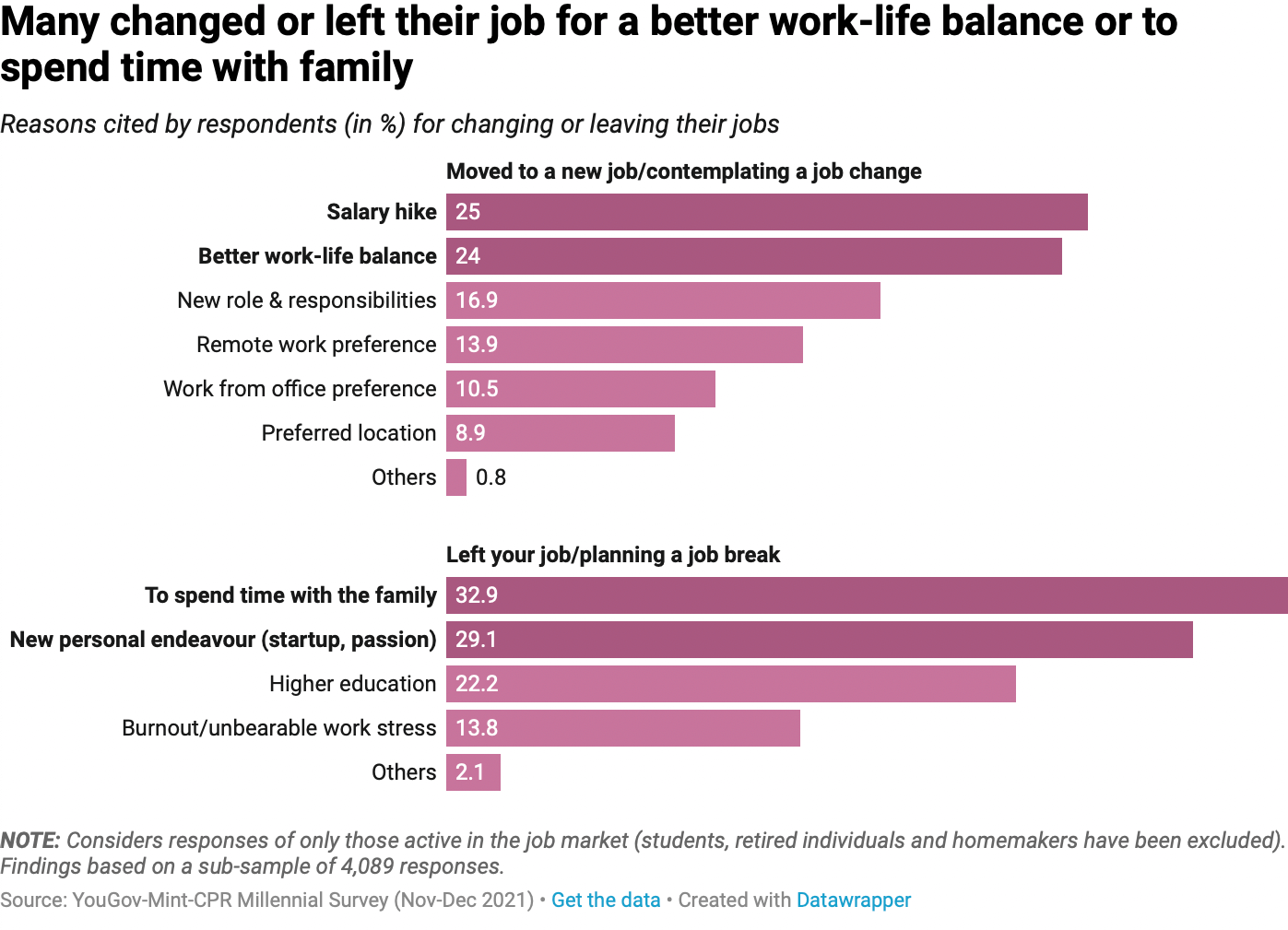
However, the Technology sector (which was not affected by covid) is seeing increasing churn and even Indians are not considering salary as their primary motive in job seeking as discovered in this survey.
src: Mint
2/Quality of Education
India has an average PTR (pupils to teacher ratio) of 28 i.e. there is 1 teacher for 28 students (lower than China & Brazil). It indicates the burden on a single teacher of teaching multiple students as well as the lack of time that each student gets. Combined with the relative unattractive perks of teaching jobs, Indian education has always suffered from lack of teachers, more so, good teachers.
However, with a generous push from the pandemic, the way we consume education has already changed from fully offline to significantly online. Arguably, it is a welcome change. E-learning supports ~50% faster learning speed & 25-60% retention rate vs 8% in offline learning i.e. students can learn faster and retain more because of recordings and option to replay. Also, if students cannot understand a concept in college classroom, they have ton of online courses and videos to learn from.
This has leveled the quality of education accessibility for tier 2 & 3 locations. Further, poor quality of teachers is offset by the teaching talent online. Good for everybody.
3/Value of Degrees
Most Indian graduates are not qualified to work and yet subpar colleges have survived so far. Why? Because employers wanted a degree. Will we see a future that does not care as much for formal education? In the long term, yes.
The change would be catalyzed by job opportunities that do not require a degree. FYI, Google, Apple, EY, Tesla and a few other firms have started hiring people without 4 year undergrad degrees. Time will see only more companies adopting this trend and give impetus to self-learned talent. This will force Universities to figure out their shit as well – why should students take on hefty education loans to pay tuition fees if they can simply compete for jobs without their degrees.
4/Tests
It took a pandemic for universities to realize that admissions can continue even if the applicants did not have SAT/GRE/GMAT scores. But what does it mean for the candidates? With no exam scores to compensate for lower gpa, will applicants with not so good acads suffer in applications? It is possible. But, in the long run, as degrees matter less (point 3), the supply and demand of candidates in college admissions might just balance out.
5/Gig and Creator Economy
There are at least 59 m gig workers in USA as of 2021 – that’s 1/3rd of its workforce. Gig workers are people like freelancers who are hired for a special task and mostly work remotely. Gigs range from sophisticated work required by large enterprises to something as mundane as transcription or house cleaning. With companies like Urban Clap and Fiverr empowering the service professionals, more and more people are taking up gig working.
A parallel track is that of the creator and influencers who have sprouted like mushrooms on social media. I foresee a future where many students would not even sit for placement in colleges because they have already started their YouTube/IG channels and are making good money.
So, those are my broad comments on the year to come. We are truly living in an exciting time and I am forever bullish on the future. DO YOU AGREE WITH ME? Please share in your comments below, I am very curious to hear your thoughts!
If you liked this post, you would enjoy our free newsletter where we talk about designing a career that makes you come alive. We promise we never spam.
Did you think Data Science & ML jobs are taking over the world? You’ll be surprised. Here are Top 10 STEM Careers for all engineers seeking a global career
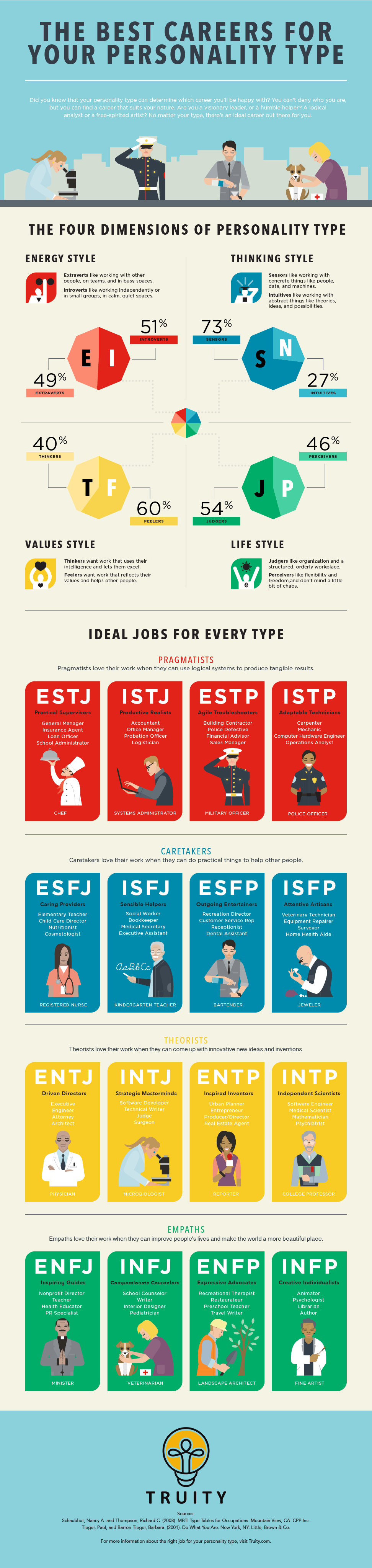
When I joined MBA program at NYU, I was made to give the TypeFinder personality test based on the famous Briggs Myers’ system used to classify people in 16 different personalities. This personality type helps in determining what kind of careers are better suited for a person. After having a varied exposure in different roles and places (engineer, team lead, director of operations, founder, author), I have come to believe that this definitely helps. Because, believe me, an introvert person is not going to enjoy a consulting or sales role in the long run and there is nothing worse than being stuck in a job that is not right for you. This is why, I lay a lot of stress on understanding what your goals are before applying so that you do not apply to programs not suited for you and end up in a job that you would never enjoy.
So, long story short, I would highly encourage you to take this test and check out what kind of personality you have. The longer version is paid but you can take a shorter 3 min free version of the test here – http://www.typefinder.com/test/type-finder-research-edition
Once you give the test, you can check out what kind of jobs align with your personality-