Data Science vs Business Analytics – Which is Better?

So which one is the right choice for a successful career? A master’s degree in data science vs business analytics? Both programs draw insights from data using statistics and software tools. But both are very different in their end goal. But, which one has better job prospects? Which one is right for you?

Let’s evaluate this step by step in this guide to understand the key differences between master’s programs in data science vs business analytics.

Definition and Curriculum

Let us first define these degrees and understand their curriculums.

A Master’s in Data Science focuses on training students in the skills needed to analyze and interpret complex data sets. This typically includes courses in machine learning, statistical analysis, data visualization, and programming. MS in Data Science at Columbia University includes hardcore CS courses like ML and Algorithms, Stats courses like Probability and Statistical Modeling and ton of electives.

A Master’s in Business Analytics, on the other hand, focuses on using data to inform business decisions. They have no interest in data unless it can lead to an actionable insight for the business. Cornell’s MSBA curriculum includes fewer tech courses that cover basics of Data Management in SQL, Statistical Programming in Python and R and some level of ML. There is a larger variety of business courses such as Introduction to Finance Analytics, Management Writing for Business Analytics and Conversations in Business Analytics.

Career Outcomes

Let us now talk about the kind of career paths that emerge from these two programs.

Good news is that both programs can lead to rewarding careers, and there is a strong demand for professionals with skills in both data science and business analytics. So, you cannot go wrong with either of them but the kind of jobs you can aim for is different. So, it is important that you understand the difference.

It is clear that MSBA is geared entirely towards application of data science and analytics to solve business use cases. That is why it is called Business Analytics. The course is designed to help you turn data into actionable decisions. You will learn more about visualization and communicating the data in an easy to understand format. You will be trained on storytelling and generating reports which make it easier to decide how to proceed.

On the other hand, data science is a much broader field. While we have seen data science being regularly used in business, it has ton of applications in other areas. For e.g. healthcare – Data science can be used to analyze patient data to identify trends and patterns that can inform the development of new treatments or help healthcare providers make more informed decisions about patient care.

Career Pathway for Master’s in Data Science

A graduate from DS program will have more technical skillset and be spending more time programming, coding and scripting. Some of the career paths include:

  1. Data Scientist
  2. Data Engineer
  3. Machine Learning Engineer
  4. Business Intelligence Analyst
  5. Data Analyst
  6. Research Scientist
  7. Statistician

Career Pathway for Master’s in Business Analytics

A BA graduate will get training on quantitative and analytical tools for decision making as well as business communication. Following job opportunities are available:

  1. Business Intelligence Analyst
  2. Data Analyst
  3. Management Consultant
  4. Marketing Analytics Manager
  5. Operations Research Analyst
  6. Financial Analyst
  7. Risk Analyst

Check out these courses and universities to study in USA

What is better for you – Data Science vs Business Analytics?

A calculative decision between master’s in data science vs business analytics really depends on your career goals. If you’re interested in a career in data analysis or data-driven decision making in a business setting, a Master’s in Business Analytics may be the better choice. On the other hand, if you’re more interested in working with data in a research or technical capacity and are not really interested in business side of things, a Master’s in Data Science may be a better fit.

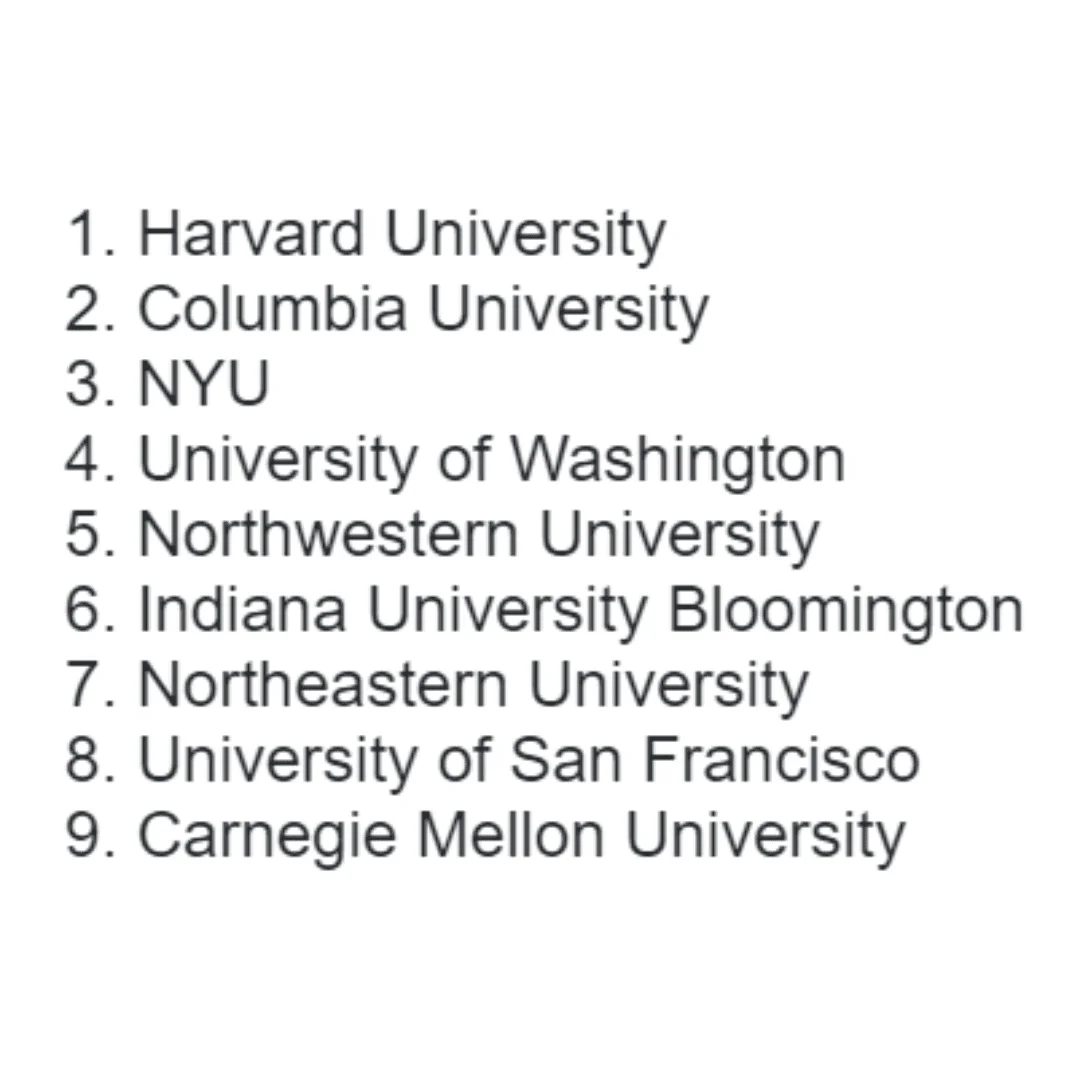
Good Universities for master’s in Data Science
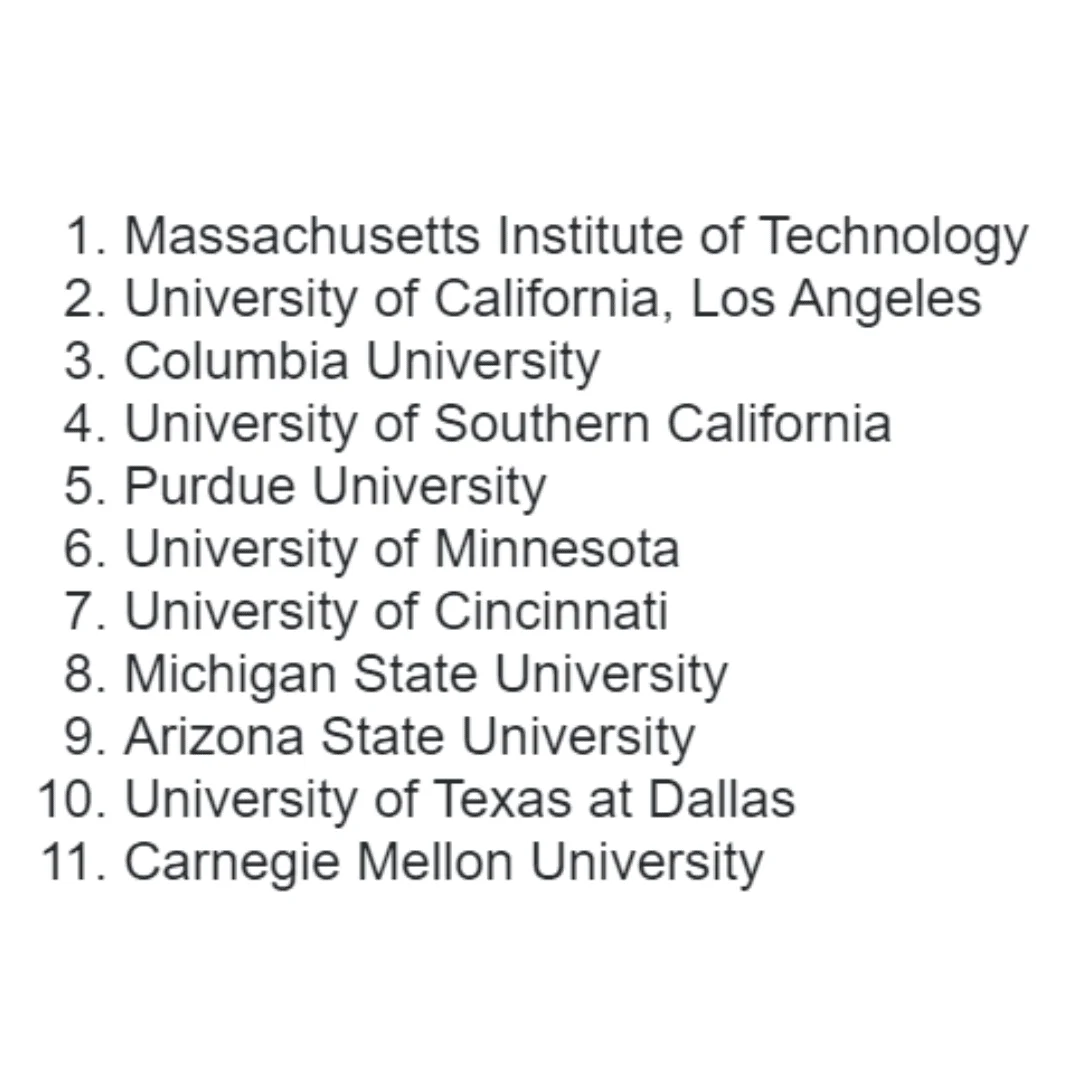
Good Universities for master’s in Business Analytics
Lastly, a word of caution – don’t go by the name alone. Some programs may call it business analytics and may be more technical in nature and vice versa. Study the curriculum carefully before you apply to make sure you get what you are looking for. You don’t want to end up in a soft and less technical program if your goal is to become a data scientist.

6 Reasons Why Your F1 US Student VISA Would Get Rejected

This year, many students will apply for a US student visa to go and study in the US. But only 85% of them will get one. 

Why do other 15% get rejected?

In this post, I want to explain the UNDERLYING cause for cause for visa rejections & what you can do to avoid it.

Real Examples of US Student Visa Denial

I have seen less than 5 visa rejects among our clients in last 8 years. One had admission from IIT Chicago but his US student visa got denied. His father had only 20 lac in savings.

And there was another person from Gujarat whose visa was denied too. Why? His brother was already working and settled in US and sister lived in Canada.

What’s common in both the cases?

They are rejected for one reason – the Visa Officer feels that these people are more likely to immigrate to US which is another way of saying – they are NEVER COMING BACK!

US hates this. They don’t want students to stay there after their graduation. They want you to finish your studies and come back to your home country. In fact, the joke went that if there’s anything that US fears after terrorism, it is immigrants. 

I have talked about how US visa policies make no sense in other posts here. The irony is that if international students really started to leave after their graduation, US wouldn’t have many amazing companies that were founded by immigrants including Instagram. But let’s leave that for now. 

Number of F1 student visas issued by US in 2018

So, US is one of the toughest countries to get a visa for Indians. They don’t want people moving there unnecessarily. During your visa interview, this is the biggest flaw that US Visa Officers (VO) look for. They are trained to detect people who are trying to sneak into US under false pretenses.

6 biggest reasons why Student Visa can get rejected

So, if you have admissions to US schools and you are applying for a F1 visa, do not say or show anything that makes you look like a potential immigrant.

Lets take a look at what are these things in case of student visa:

1. Suspicious looking university

If you are heading to a University that very few people have heard of (aka ranking >150-200), VO would question your ability to secure a good future after graduating from it. He would doubt if you can find a job after graduating, which means you might look for other ways to supplement your income and start working (even illegally). Such suspicions are enough for him to reject your visa.

2. Course does not match your profile

This, right away, makes the VO suspicious why you are attending it.

3. No clarity of goals

Again, it makes you look desperate and sneaky. See, a genuine student trying to study in US and build a good career should be clear about his/her goals and how this course would help him/her – which brings me to my next reason:

4. Cannot articulate your reasons for attending this university

This shows that you don’t care about education and that you are enrolling only because you want to sneak into US.

5. Little savings (low bank balance)

This means you are more likely to find ways to work in US and not come back to India!

6. Family already in USA

Yes, it shows you have no strong ties to India and you are likely to stay back in US to be closer to your family.

Note: There is one other reason for visa denial and that is Administrative Reasons, also known as 221G rejection.

This can happen if you come from another religion or work in an industry which is on the technology alert list (TAL) which includes biotech, defense, pharmaceuticals etc.

Don’t worry too much about this because you cannot do anything about it. Focus on the first 6 reasons and make sure you prepare your answers correctly.

Hope this helps. For a more expressive version of this, watch our YouTube video and don’t forget to subscribe.

Join 1 lac+ people who hear from us everyday:

Scholar Strategy TV for weekly videos – http://youtube.com/scholarstrategytv
5 Day email based course to help you crack TOP MS programs – http://eepurl.com/buUpP9
My newsletter (where I tell you what mistakes to avoid for a happier career and life) – https://scholarstrategy.com/career-coaching/
Join my 45000+ LinkedIn family – https://www.linkedin.com/in/nisthatripathi/
8000+ Instagram community – https://www.instagram.com/scholarstrategy/
2000+ Twitter inner circle – https://twitter.com/NisthaTripathi

Case Study: UT Austin & Georgia Tech MS in Operations Research

Getting into UT Austin MS in Operations Research (MS OR) with a GRE score of 316 is usually very hard. But Aastha Chawla did it.

How did Aastha crack Top MS in Operations Research programs?

  1. Coming from Production Engineering branch, Aastha decided to go for MS in Operations Research (OR) instead of MS in CS or MIS
  2. She prepped early and applied as soon as first week of November
  3. With enough time, we created a very very strong SOP and managed to get great LORs
  4. She took her chances and not only cracked UT Austin but also Georgia Tech!

Her detailed journey is covered in the following video on Scholar Strategy TV:

Subscribe to watch latest Scholar Strategy TV video by clicking here

My advice for people applying to specialized programs:

Earlier we had only MS in CS and MBA kind of programs. Now you see many specialized MS programs such as Data Science, Business Analytics (BA), OR and of course Information Science (IS).

Universities start these programs when a course starts attracting many applicants. For eg Data Science became so popular that many universities started their own MS in DS degrees.

When to go for a specialized degree?

  • If you are sure that you absolutely want to pursue a career in this field
  • If you have a competitive profile (because mostly experienced folks apply to such programs)

When not to go for specialization?

  • If you want to keep your options open (career fairs for MS CS would attract more employers than MS in AI for example)

Remember, picking the right major can make or break your chances. Despite a good profile, Aastha got rejected from a few schools.

Join 1 lac+ people who hear from us everyday:

Scholar Strategy TV for weekly videos – http://youtube.com/scholarstrategytv
5 Day email based course to help you crack TOP MS programs – http://eepurl.com/buUpP9
My newsletter (where I tell you what mistakes to avoid for a happier career and life) – https://scholarstrategy.com/career-coaching/
Join my 45000+ LinkedIn family – https://www.linkedin.com/in/nisthatripathi/
8000+ Instagram community – https://www.instagram.com/scholarstrategy/
2000+ Twitter inner circle – https://twitter.com/NisthaTripathi

How to get an extension on tuition deposit fee

Ankit had an admit from Rutgers MS in Data Science program but the school was asking for $1500 tuition deposit fee. Ankit did not want to pay it because he was still waiting for CMU. 

Many applicants face this dilemma. 

Don’t worry, you can get extensions on the deposit payment deadlines. This is how.

What is tuition deposit fee?

Applicants who have been accepted for admission will be required to submit a tuition deposit payment to hold their place in the new incoming class. The tuition deposit is non-refundable and non-transferable. Therefore, if an admitted applicant pays the deposit, but fails to enroll for the particular program and term of the admission offer, the deposit will not be returned. After the end of the add/drop registration period tuition deposits paid will be credited to the enrolled student’s account – Columbia Graduate School

Unfortunately, all newly admitted MS students are asked to submit a tuition deposit to accept the offer of admission and secure their place in the class. Earlier, only a few Programs asked for this fee but it is becoming increasingly common for Universities to charge a hefty fee on the name of tuition deposit these days.

Why do universities ask for tuition deposit fee?

First, we need to understand why universities ask t his. Historically, people apply to multiple universities and can accept admissions from multiple schools. Even the I20 is something that you can request from multiple schools. What happens is then the candidate chooses one final school and all other admits are wasted.

What this means for the university is it impacts their yield.

What is the yield?

Let us say university sends out 1000 admits and only 200 people end up accepting their offers. So the yield is 20%. Universities care for their yields because it impacts their rankings. So, they want people whoever they have admitted to accept the offer else their yield goes down. This is why they want to pressurize you and lock you in early.

Even in my days, some universities used to ask for deposits in some of their programs but amount has been increasing ever since. Especially after covid, when 90% of the students deferred their admits, universities were hit badly. So, I have noticed that their deposit fee has increased suddenly after covid.

As I told you before that 1500 USD fee is really high and some schools are also asking 2000 or 4000 dollars. This is why this issue has become especially important now. People just cannot pay a lot of these deposits. So, hopefully our next piece of advice is going to save you some real dollars!

True Story: How Kartik got an extension

Kartik is one of our clients in 2022. He had admits from a few schools and one particular school was asking for 750 dollars deposit fee. This was in end of February and Kartik did not want to commit to a school that fast. In this video, Kartik shares what he did to get an extension.

Subscribe to Scholar Strategy TV for weekly videos

Here is the email that Kartik used to get an extension:

Respected admissions committee,
I'd like to extend sincerest thanks for admitting me to your prestigious MS in Computer Science program. I cannot wait to put in all of my sincerest efforts in Boston starting this Fall.

A few days ago, I was diagnosed with covid for the 2nd time, and it's just that for the coming few days, myself and my family won't quite be physically or mentally in a place to finalise such an important career and life decision. It would just be such a big help if there could be any extension at all in the deadline for the tuition deposit. Regardless, this is like a dream come true, and I cannot wait to get started this Fall.

Best,
Kartik

What is the right way to get an extension on tuition deposit fee?

As you can see, universities want you to pay a deposit because they are insecure whether you would join or not. Problem is that unless you have another admit, you don’t want to miss out on something in your hand. What if you lose this admit too and don’t get a better one?

Tell them you are waiting for more admits [BAD]

Some advisors suggest that you tell them that you are waiting for more admits. That may have worked for someone but it seems like a riskier bet to me. This is exactly the reason why universities make you pay because they don’t want you to wait and go to another school! So, they are very likely to reject this request.

Some people even suggest telling them that you have a good offer in hand and you need more time to decide. Again, this approach can antagonize the university (because you are telling them that they are not good enough for you to make a decision) and they are not likely to accept your request. 

Show appreciation + personal reason [GOOD]

I like Kartik’s advice. Why not tell the university how much you appreciate them and want to join them?

Then you give a personal reason (which doesn’t sound fake) as to why you need more time to pay the deposit. This is your best chance to not alienate them and get them to make an exception for you. 

As we see in Kartik’s case, it worked out very nicely.

So, the crux is you can be nice and win too. Isn’t that awesome?


Join 1 lac+ people who hear from us everyday:

Scholar Strategy TV for weekly videos – http://youtube.com/scholarstrategytv
5 Day email based course to help you crack TOP MS programs – http://eepurl.com/buUpP9
My newsletter (where I tell you what mistakes to avoid for a happier career and life) – https://scholarstrategy.com/career-coaching/
Join my 45000+ LinkedIn family – https://www.linkedin.com/in/nisthatripathi/
8000+ Instagram community – https://www.instagram.com/scholarstrategy/
2000+ Twitter inner circle – https://twitter.com/NisthaTripathi

Resume Template for MS/MIS Applications

Announcement:

We have partnered with our friends at Resumonk to let you guys build awesome resume without the hassle of editing the Word documents endlessly. And, they have offered their PREMIUM membership to our successful applicants for FREE for 18 months. With their winning resume templates, your dream internships would be lot more closer for you when you are doing MS/MIS in USA. This is worth a value of $38 but you get it for FREE when you join our counseling (selected packages only).

Introducing our ready-to-edit winning resume template for fresher applicants at the bottom of this article! All your headaches solved in one template.

Purpose

Resumes are often taken for granted. While applicants are busy tinkering their SOPs to perfection, everyone thinks resume is a one night job. Well, may be not. After working with some students, I realized that what I thought was obvious about the resume was not so obvious to the students. And fair enough – since I myself had the benefits of years and diverse experiences before I learned the inside out of a resume writing process. So, I figured that it is time to dedicate a full post to resume building.

First, sit and reflect upon who your reader is and what your resume is trying to convey to her. As an applicant, you want your resume to be coherent with rest of your application. So, while your experiences, education and background are factual information, what to highlight is a matter of judgment. For e.g. if you are showing interest in research/applying for PhD etc, your highlight should be on your research projects and publications. Similarly, if you are applying for a MCS kind of program (geared towards landing corporate jobs upon graduation), your focus should be on professional skills, industry experience etc.
So, before you begin, gather your thoughts and decide the areas/skills in your profile that your resume should be highlighting. Continue reading

GRE vs GMAT: Which one is better for you?

Whenever you are applying to a business school or a management oriented program, you might have to evaluate the merits of taking GRE vs GMAT.

Before you make up your mind about the most suitable aptitude test to enhance your chances of getting into an MBA program, you should get familiar with the differences between GRE vs GMAT.

The most fundamental difference between GMAT and GRE is that GRE is used in the admission process of many different graduate school programs while GMAT is limited to business oriented programs. However, there are several other factors that you must make yourself familiar about.

In this detailed guide, you will get to know about all the major differences so that you are able to make the best choice.

GRE vs GMAT: Popularity

More than 1200 business schools accept the Graduate Record Examination (GRE) all over the world. GRE is typically considered the test that is suitable for creative individuals. Similarly, the Graduate Management Admission Test (GMAT) is accepted by all business schools because it has been considered one of the most reliable ways to assess the applicants by the business schools for a long time now.

GRE Structure

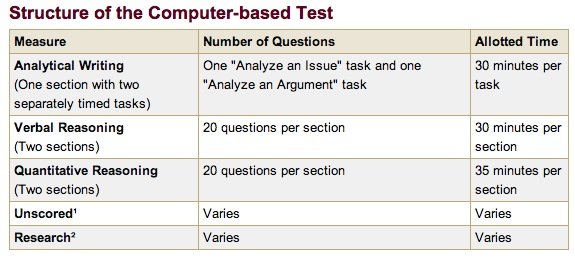
GRE consist of three major sections:

  1. Analytical Writing
  2. Quantitative Reasoning
  3. Verbal Reasoning

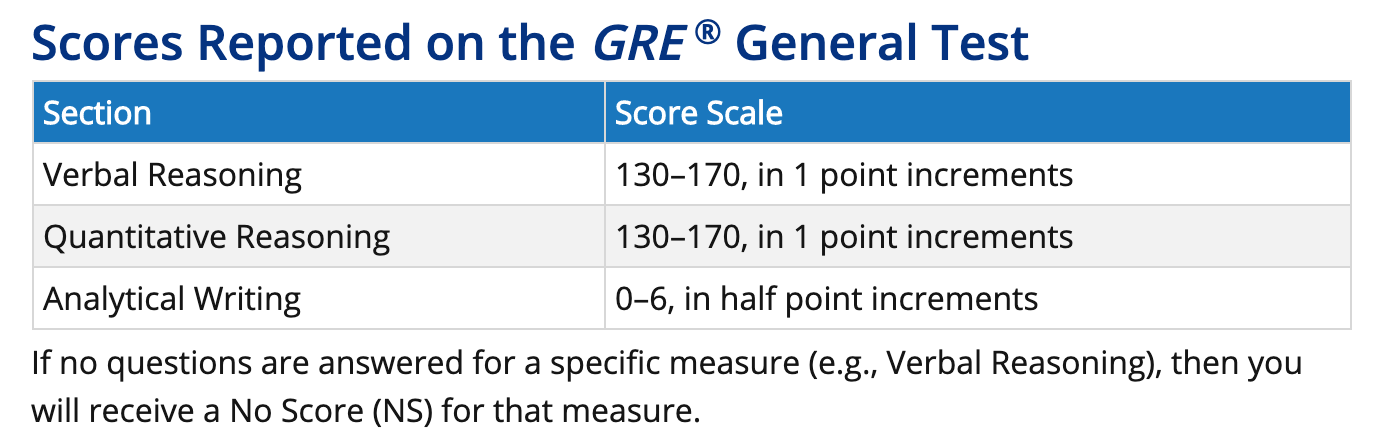
The score range for the analytical writing section of the GRE is 0 to 6, while both the verbal and quantitative reason sections have the range of 130 to 170. These three sections are scored separately and not combined into a single score.

Candidates take the GRE on a computer. It is a section-level adaptive test which means the applicants’ scores on the first section will affect the difficulty of the questions on the next sections.

Learn more about the format & score interpretations of the GRE on our detailed guide to the GRE exam

GMAT Structure

The GMAT aims to assess the applicants when they are applying to a business school like an MBA program. Unlike GRE, GMAT is used only by business schools. There are four main sections of the GMAT:

  1. Analytical Writing Assessment
  2. Integrated Reasoning contains
  3. Quantitative section
  4. Verbal section

The candidate will get a composite score in the range of 200 to 800. The scores from the analytical writing and integrated reasoning are not included in the composite score.

Also read: Everything you need to know about the GMAT

GRE vs GMAT Summary

There are several differences between GRE and GMAT in terms of the duration, pattern, sections, registration fee, and other such factors. These differences between GRE and GMAT are tabulated as follows:

DifferencesGREGMAT
What is the duration of the test?3 hours and 45 minutes3 hours and 30 minutes
What is the total number of essays?21
What is the total number of sections?64
What are the marking criteria?Verbal and quantitative reasoning sections have score ranges of 130 to 170, and the total score is between 260 to 340.Composite scores are given in the range of 200 to 800
What are the registration charges for these tests?$205$250
When should you take GRE or GMAT?When you want to get admission in a business school graduate program like MBAWhen you are not sure about the kind of graduate program, you want to get admitted to.
How long are the scores of GRE and GMAT valid?Five yearsFive years
How do the candidates take the test?Computer-based test. Paper-based tests are also available in selected regions.Computer-based test
GRE vs GMAT

GRE vs GMAT Quantitative Section

Quantitative Section of the GMAT

The quantitative section of the GMAT mainly focuses on problem-solving and data sufficiency questions. Candidates typically have to solve equations, graphs, evaluate different types of data, and apply data in different situations.

Quantitative Section of the GRE

On the other hand, the quantitative reason section of the GRE typically deals with the candidates’ skills in algebra, geometry, data analysis, and arithmetic. Following are the major differences between GRE and GMAT in terms of their quantitative sections.

Differences

The differences between the quantitative sections of the GRE and GMAT are as follows:

Differences in Quantitative SectionsGREGMAT
Number of questions2049
Duration60 minutes105 minutes
Score130-170Quantitative: 0-6 Integrated Reasoning: 1-8
GRE vs GMAT quant

Generally, the quantitative section of the GMAT is considered to be more challenging than the GRE. The reason behind this conclusion is the fact that GMAT focuses on data sufficiency questions that are typically difficult for many students.

GRE vs GMAT Verbal Section

Verbal Section of the GMAT

The verbal section of the GMAT consist of the following three types of questions:

  1. Reading comprehension
  2. Sentence correction
  3. Critical reading

Verbal Section of the GRE

The verbal section of the GRE consists of the following three types of questions:

  1. Reading comprehension
  2. Text Completion
  3. Sentence Equivalence

Differences

Differences in Verbal SectionsGREGMAT
Number of questions4041
Duration60 minutes75 minutes
Score130-1700-60
GRE vs GMAT verbal

There are no significant differences between the kind of questions asked in the verbal sections of the GRE and GMAT. Yet, the difficulty level of the verbal section of GRE is little more than the GMAT because, typically, challenging vocabulary and reading passages are included in the GRE.

Differences between GRE and GMAT: Analytical Writing

Analytical Writing Section of GMAT

This section includes one essay that the candidates have to complete within 30 minutes. The task is given in the form of an argument, and the candidates have to evaluate its strengths and weaknesses.

Analytical Writing Section of GRE

In this section, the candidates are required to write two essays. One task is related to analyzing an argument, while the other one is associated with analyzing a task.

Differences

Differences in Analytical WritingGREGMAT
Number of questions21
Duration60 minutes30 minutes
Score0-60-6
GRE vs GMAT writing

Even though there are two tasks in the analytical section of the GRE, the difficulty of this section on both GRE and GMAT can be considered the same.

GRE or GMAT: Which exam should you take?

The purpose of discussing these differences is to help you out in choosing the best test that you think you can ace and get admission to your dream university. You can easily narrow down your options by checking which business programs accept GMAT scores and which ones accept the GRE.

Generally, if you have a very specific goal of getting admission to a business school, you should consider taking the GMAT. Many business schools prefer the GMAT over GRE because it has questions directly associated with the skills you need to succeed in a business school graduate program.  

Whatever your final decision can be, you can rely on our extensive guides to get high marks on the GMAT or GRE.

Your definitive guide to Study Abroad in USA

Scholar Strategy is India’s leading Study in USA guidance community. For last 9 years, our candidates have gone on to study at MIT, Stanford, UIUC, Cornell, Berkeley, CMU, and other top universities. Not only that, we take pride in helping our candidates be prepared for landing internships at companies like Tesla, Apple, Facebook, Amazon and more.

Are you harboring dreams of world class education and studies abroad for career opportunities? USA has been the leading destination for ambitious students worldwide. Here, we cover all the information you need to realize your dreams.

Why Consider Study in USA

History of Innovation

The United States of America is called the nation of explorers. It is the birthplace of many inventions that changed the world.

From inventors like Henry Ford and Thomas Edison to industrialists like John D. Rockefeller were born in the US. 

Cultural Diversity and Opportunity to Grow

The nation is renowned globally for its multicultural environment, its opportunities, and what has become a common phrase – “American Dream.” 

Don’t know what the American Dream is?

Investopedia defines the American dream as “the belief that anyone, regardless of where they were born or what class they were born into, can attain their version of success in society. It is achieved through sacrifice, risk-taking, and hard work, rather than by chance.”

The US is revered for its infrastructure that promotes innovation, entrepreneurship, and technology. No wonder, it is the number one study abroad destination.

World’s Best Universities

It has some of the world’s oldest universities: Harvard, Stanford, MIT are all based in the US.

As per QS world rankings 2021, five universities in the Top 10 are all based out of the US.

American universities provide a great learning experience, opportunity to grow like no other country.

QS Global RankSchool
1Massachusetts Institute of Technology (MIT)
2Stanford University
3Harvard University
4California Institute of Technology (Caltech)
9University of Chicago

Recruiters of top-notch organizations pay high salaries to students of American universities. 

The schools receive huge donations and are well funded to invest in research and development areas.

Courses to Target

Study in USA allows you to choose from a plethora of courses. The country will probably have a course/degree on every subject you can imagine.

  • MIT, the California Institute of Technology, John Hopkins University, and Carnegie Mellon University are famous for STEM education.
  • Apart from STEM, courses on Psychology, Journalism, Medicine, Business & Management, Social Sciences are also top-rated. 

Indian students mostly enroll in American university programs to study Engineering and Management. The courses like MS and MBA attract Indians applicants due to the high standard of education and the possibility of getting a high-paying job in the world’s largest economy–United States of America.

Undergrad

Colleges in the US offer a four-year Bachelor’s degree. Students aspiring to study at the undergraduate level in American colleges have to give the SAT exam.

The higher the score, the better are your chances to get an admission letter from schools like Harvard, MIT, and Stanford.

MS (Science & Engineering)

Studying MS (Master of Science) in the US is a dream for students passionate about Science and Technology. 

It has the world’s best universities that offer STEM (Science, Technology, Engineering, and Mathematics) education.

The country is a leader in Research & Innovation sectors and is the home to many tech behemoths like Facebook, Amazon, and Intel. 

Where did you find this article?

The chances are you found it on Google Search (or Gmail), Facebook, or LinkedIn–all of these companies were founded in the US.

The Top-5 universities for MS in the US are:

  1. Harvard University
  2. Stanford University
  3. Massachusetts Institute of Technology (MIT)
  4. The University of California, Berkeley (UCB)
  5. Columbia University

See our page on all about MS in USA.

MBA

MBA courses in the US are among the best in the world. 

Studying at top universities in the US allows you to network with people from diverse cultural backgrounds and nationalities. A network built during your time at a B-School can be leveraged later when you are looking to form business partnerships.

As per QS global MBA rankings, four out of the Top-4 MBA programs are taught in American universities. 

QS Global MBA RankSchoolDurationAvg. Salary(USD)
1Stanford Graduate School of Business21 months152,503
2The Wharton School21 months150,000
3MIT Sloan School of Management24 months140,000
4Harvard Business School21 months148750
8Columbia Business School20 months150,000
Top MBA programs in US

Application Process for Study in USA

Most top American universities and colleges have the authority to decide their standard and admission criteria.

The most common aspect of applying to study in the US is standard competitive exams like GRE, GMAT, and SAT. GRE is usually accepted for admission in MS programs, GMAT for MBA, and SAT is the standard test students give for undergraduate courses. 

The below sequence of steps may help you speed up your application process:

  1. Decide five to ten universities you’re planning to get into for the subjects of your interest. 
  2. Search for ways to finance your education. This may include eligibility for a loan, scholarships, and grants. We’ve written a comprehensive article that will give you more clarity on ways to finance your education abroad. 
  3. Prepare for and give the English proficiency exams like TOEFL, IELTS, and degree-specific exams like GRE and GMAT.
  4. Prepare for the colleges based on your exam scores.
  5. Prepare and polish the documents common for admission in most colleges: SOP, Essay, Letter of Recommendations.
  6. Appear for the personal interview with the admission officers.
  7. If you receive an acceptance letter, confirm your intent to take admission to that university. 

The universities require you to pay a non-refundable fee to confirm admission.

If you’re struggling during any phase of admission, we at Scholar Strategy can help you. Click here to contact us.

Main Challenges

Student Visa

The US government allows non-American citizens to enter the country only with a valid visa.

Without a relevant Visa, you won’t be allowed to study in the US if you’re an international student aspiring to study in the country.  All your hopes of studying in the US will go in vain if your visa application isn’t approved.

The US government offers three student visa types, including F, J, and M.

  1. F Student Visa: For study at the university level or to study English at an institute that teaches English.
  2. J Exchange Visa: It is applicable for an exchange program at the university and high school level.
  3. M Student Visa: It is applicable for vocational study or training in the US.

Before you can apply for an F, J, or M student visa, you must have an acceptance letter from an American university or higher education institute.

Read our detailed post on all about the student and work visas in the US

Competitive Admissions

If you aspire to study in top American universities–ranked among the best in the world–the admission process would most probably include an exam. 

These exams are conducted to test your English proficiency or examine particular skill sets needed for a course you’re applying to study. 

ExamPurpose
TOEFLTo test the applicant’s English proficiency. 
IELTSTo test the applicant’s English proficiency. 
GMATFor admission in MBA/Management courses
GREFor MS/MBA courses

Please note that a good score in such exams doesn’t guarantee an admit and is just a tool to filter out applicants. 

If you’re planning to study at these top universities, your work experience and extracurriculars help you stand out among the applicants.

Getting admission into a top school is a dream for many, but not everyone can pay the price to afford it–not talking only about money. The admission process is highly competitive.
For example, The acceptance rate of admission to Stanford MBA is around 7 percent, and for MIT, it is 6.7 percent. 

Cost of Study in USA

The cost of education is one of the critical factors that influence a study-abroad aspirant’s ability to choose a country, courses, and universities for foreign education.

The US is the world’s most popular destination for international students and the most expensive. The tuition fee and living expenses vary based on the student’s university choice and the university’s location. 

The tuition fee for public universities and community colleges is lower as compared to those of private universities. The low cost doesn’t imply that public universities’ quality of education is lower than private universities. 

For example, The University of California–Berkeley is one of the best schools globally despite being funded by the government.

Average fees at US universities 2018-19

 Public two-year collegesPublic four-year colleges (in-state fees)Public four-year colleges (out-of-state fees)Private non-profit four-year colleges
Tuition & Other fees $3,660$10,230$26,290$35,830
Room & Board$8,660$11,140$11,140$12,680
Total (per year)$12,320$21,370$37,430$48,510
src: TopUniversities

The values given in the table above are an estimate, and the actual cost may differ based on the university and city you plan to study in. 

Click here to know more about the cost of college education in the US.
Also, Read the Cost of MS in the USA in INR – how you can afford it.

All about GRE Exam 2022 (Graduate Record Examination)

Scholar Strategy MS in USA

Let’s take a look at the GRE exam which is required for MS/MBA applications and how you can do better at it.

Applications for undergraduate and graduate programs like MBA and MS in USA is much different than what we are used to in India. Let’s take a look at what the process is like.

Following are the components of the application process-

  1. Taking a exam like GRE, GMAT or TOEFL
  2. Shortlisting schools for your aspirations
  3. Preparing required documents for the application
  4. Apply by the deadline

Note: Ideally, shortlisting schools should be done before giving GRE but students prefer to get the tests out of the way and be comfortable with the score before focusing all energies into shortlisting schools and actually applying to them. A candidate is able to typically apply to around 10 universities for MS and MIS programs.


1. Taking GRE, TOEFL exams

In this post, we elaborate on GRE tests

What is GRE?

GRE stands for Graduate Record Examination. GRE General Test is a standardized computer based test conducted by Educational Testing Service (ETS). You can find details here but we will summarize the important points for you-

Taking a GRE General Test costs $205 and sending your scores can cost $25 for each school as of 21 Feb 2020. You need to create or have a My GRE Account to register online for the computer based GRE General Test, check more details here.

What is the format of GRE exam?

GRE General Test consists of six sections. The first section is always the analytical writing section involving separately timed issue and argument tasks. The next five sections consist of two verbal reasoning sections, two quantitative reasoning sections, and either an experimental or research section. These five sections may occur in any order. The experimental section does not count towards the final score but is not distinguished from the scored sections. You can skip back and forth within sections. The entire test lasts about 3 hours 45 minutes.

GRE

When should you write GRE?

GRE scores remain valid for five years, so it makes sense to give it early and have enough time to focus on applications. Tip: Do not leave GRE to be taken in last 2 months of the application deadline. One, it increases stress and might affect your ability to score higher. Two, in case you are not happy with your score, you will have to take GRE again but you can only take GRE once a month. Therefore, we recommend that you take GRE at least THREE months before your application submission timelines. For e.g. for Fall applications, try to give GRE by July of preceding year.

What is a good GRE test score?

Latest GRE tests are being scored out of 340. Anything above 320 is considered a good score. Remember that just taking the GRE does not mean that your scores are available everywhere. When you actually apply to specific schools later, you will explicitly need to send your score report to that school. Bad news is that it costs $25 (INR 1400) to send your score to each school. Great news is that you can send upto 4 reports free on the day you take the GRE test. Tip: So, it makes sense to know at least 4 schools you are most likely to apply and send your scores to those when you take the test. (That is a saving of $100 right away!)

TOEFL – The TOEFL iBT test measures your ability to use and understand English at the university level and is required for Indian students to apply to US or European schools. The test costs $180 in India. You can register online. The scores are out of 120 and anything above 105 is considered good. If you sincerely prepare for GRE verbal section and have been going to a English primary school, you should not need to worry too much about TOEFL. Again, its more of a formality and its score, unless too low, will never impact your application results.

How much does GRE score matter?

We have seen students fretting for months on GRE. It is one thing to prepare well and it is another thing to stress about a test. Particularly, we Indians, tend to take tests too seriously. But remember that GRE is not your regular entrance exam!

“You do not pass or fail GRE or GMAT, you just show that your aptitude is above a certain level”

These tests are only a small part of the overall application process – so acing one doesn’t mean you’ll get into Harvard and bombing it doesn’t mean that you won’t get into a good school either. You simply want to score more than a baseline that is used as a filter by schools to weed out low aptitude students. Want to know a secret? – even if your score is low but overall profile is awesome, you can explain why you did poorly on the exam and if reason is sound enough (for eg. You had some personal family problem, illness etc), a school will most likely not reject you on basis of low score alone.

FAQS:

  1. What is GRE subject test? –  The GRE Subject Test is a special requirement mostly for Ph.D or for students who want to change their Undergraduate stream. It is usually optional if you are applying for MS in your field. Some say that taking it still helps improve your profile but I recommend spending the time you would on a subject test on the application contents instead.
  2. Can I give GRE again if my score is low? – Yes, so give the exam without being stressed. Taking it multiple times does not put you at a disadvantage.
  3. What is the best time to give GRE? – Please give it at least five months before you plan on submitting your applications.
  4. Where can I give GRE in India? – Ahmedabad, Allahabad, Bangalore, Calcutta, Chennai, Gurgaon, Hyderabad, Mumbai, New Delhi and Trivandrum.

Preparation Material:

The best available software to practice for GRE is POWERPREP® II software and the best part is that it is FREE. It consists of two full-length, simulated practice tests for the computer-based GRE revised General Test. The strategy we recommend is to take the first test when you are beginning to prepare for GRE to understand where you stand. Use your scores to understand where you need to put more efforts, for e.g. do you need more work on verbal (if so, which section) or quantitative. Next step is to prepare thoroughly, take other available tests from Barron’s, Kaplan, Princeton etc. When you have taken all other tests and have taken a test date, you take the PowerPrep second test again. Note that this is the closest simulation to actual tests, so the scores that you get on PowerPrep are the best estimation of how much you are likely to score in real test. Also, even after taking the two tests, keep giving it multiple times as you get some new questions each time. More information available here.

How to get a 330+ score in GRE exam?

Please read our detailed post on getting a score of 330 and above in GRE.


Key Takeaways:

Ok, if you had to just remember 5 things from this post, remember this-

  1. You need to take GRE General Test to apply for MS in USA and other countries.
  2. You should take it THREE months before you intend to submit the applications. For Fall applications, give GRE by July.
  3. User PowerPrep software wisely to prepare for GRE. We recommend taking it once at beginning of your preparation and once just before appearing for the real test.
  4. Do sufficient research to shortlist 4 schools that you intend to apply before appearing for GRE so that you can send 4 FREE score reports.
  5. Don’t obsess over GRE scores, as long as its not too low, it doesn’t matter. The only factor to consider here is the cost factor. It is expensive to take these tests, so give after ample preparation.
  6. You can score 330+ in GRE.

GRE is only one part of the applications. For other parts, check out our next posts on School Selection and Preparing Key Documents.

TOEFL vs IELTS – which one should you take?

Introduction

TOEFL vs IELTS is one of the most common query for any study abroad applicant. These are two of the most renowned exams used to judge the test takers’ English fluency. Most of the applicants are non-native English speakers aspiring to study abroad in English-speaking nations or universities where the language of instruction is English. 

Even though these exams test the applicant’s English proficiency, their structure and method of scoring differ. 

This article will address the common “TOEFL Vs. IELTS” dilemma that troubles people who dream of studying in a foreign university. 

What is TOEFL

Test of English as a Foreign Language (TOEFL) is an exam used to judge the candidate’s English fluency. It measures proficiency using 4 sections- Reading, Listening, Speaking, and Writing. 

Over 11,000 universities accept the TOEFL scores in over 150 countries. Most American universities accept TOEFL scores as proof of English proficiency. 

Decided on TOEFL? Click here to read ALL about TOEFL.

What is IELTS

The International English Language Testing System (IELTS) is used to measure the test-takers’ English proficiency level. Most of the IELTS exam applicants are students planning to study abroad and people planning to migrate to a foreign country for work. 

Types of IELTS 

IELTS exam is categorized into 2 types–IELTS Academic and IELTS General Training.

IELTS Academic 

IELTS Academic measures an applicant’s ability to converse in English- the way they need it in a university and academic environment. A good score on the test reflects your skill to study in English-speaking nations or enroll in a course taught in English in foreign countries.  

IELTS General Training

IELTS General Training is recommended for those who wish to study below degree level or people who want to migrate to Canada, Australia, New Zealand, and the UK. The exam measures the general English proficiency that is needed for living abroad. 

Most of the candidates who wish to study abroad give the IELTS Academic exam. For the rest of the text, the term “IELTS” would imply the IELTS Academic test.

IELTS Format

IELTS is conducted as either Paper-based or Computer-delivered. 

The test measures your ability to communicate well in English and has 4 sections- Reading, Listening, Speaking, and Writing. Apart from the Speaking section, all the other sections are completed on the same day. The Speaking section can be conducted up to a week before or after the other sectional tests. 

Unlike TOEFL, the IELTS candidate communicates with a human rather than speaking to an automated computer system.

IELTS Score

The score is categorized using a nine-band scale.

Band scoreSkill level
Band 9Expert user
Band 8Very good user
Band 7Good user
Band 6Competent user
Band 5Modest user
Band 4Limited user
Band 3Extremely limited user
Band 2Intermittent user
Band 1Non-user

TOEFL Vs IELTS

Here are some common factors that will give you a glimpse of both the exams and may help you decide on the TOEFL Vs IELTS dilemma.

EXAMTOEFLIELTS
DurationAbout 3 hours long.Around 2 hours and 45 minutes long.
SectionsReading, Listening, Speaking, and Writing.Reading, Listening, Speaking, and Writing.
PriceCost is usually between 160 and 200 USD (USD 185 in India)The cost differs across countries (INR 14000 in India).
Question typeMost of the questions in TOEFL are of the MCQ category.Besides MCQ, many questions require you to frame/type your answers.
Category of text used for the Reading sectionPrimarily academic text is used, which is slightly difficult to read because of challenging vocabulary and concepts.Has academic texts and articles from newspapers and magazines.
Scoring scaleScore on a scale from 0 to 120Score on a scale from 0 to 9
Number of score reports that can be shared for free45
The average score needed by American universities 74.4 (source: USNEWS.com)6.5
Exam frequency60 times in a year48 times in a year
English accents used North American, British, New Zealand, AustralianAustralian, Canadian, New Zealand, British, American  
Validity2 years2 years
TOEFL vs IELTS comparison

Which exam should you write?

You can use this 5-step process to solve the dilemma TOEFL Vs. IELTS-

  1. Decide the countries and schools you aspire to get admission to. 
  2. Research which exam is accepted by most of the universities and countries you aspire to go to. 
    Generally, most universities in the US accept the TOEFL score. In contrast, most  schools in countries like the UK, Canada, Australia, New Zealand, and the UK prefer the IELTS score as proof of English proficiency (some universities in these countries accept both TOEFL & IELTS). 
  3. Prepare for the exam that is widely accepted in the area you aspire to study at.
  4. If both TOEFL & IELTS are accepted at your desired university, we suggest you give a sample exam of both the tests if you aren’t very confident about your English proficiency. This will help you understand your strengths and weaknesses. 
  5. Suppose you get your target score, good for you. If you don’t, focus on the test that is more aligned with your strengths. For example: 
    • In TOEFL, the Speaking section is conducted on a computer, while on IELTS, the Speaking section requires you to have a conversation with a human. If you are frightened of interviews, focus more on IELTS while improving your confidence on the side. 
    • If your reading skills and vocabulary aren’t that good, going for IELTS will be a better choice since TOEFL’s Reading section primarily has academic text, which is slightly hard to read.

Conclusion

TOEFL & IELTS are among the most popular English proficiency exams students give as part of their journey of getting admission into a top university abroad. 

While the sections in both the exams are the same, their structure and method differ. 

We have tried to cover critical points that may help you decide which exam you should give.

While making any crucial decision in life, being self-aware of our strengths and weaknesses is of utmost importance.

The same goes for deciding the exam you plan to give. After deciding on your target universities, focus more on your strengths while simultaneously working to decrease the intensity of your weaknesses. 

Ask yourself these questions while making the final decision-

  1. What are my target colleges?
  2. Which exam is accepted in most of my target colleges?
  3. Which are my strengths and weaknesses in English? 

If you would like to know more about these exams, there is no better resource than the exam’s official website- TOEFL and IELTS.

Are you already done with TOEFL or IELTS? Now is the time to focus on your application.

Book a call with Scholar Strategy if you aspire to study in universities like Harvard, MIT, and Columbia.