H1B good news for Indian students in US: special quota

h1b indian students

The H1B and L1 Visa Reform Act has brought relief for International and Indian students studying in USA. As introduced in House of Representatives and Senate, the act will require US Citizenship and Immigration Services to prioritize people educated in USA for the first time in the annual allocation of H-1B visas. This news came out on 23rd May 2020.

What’s good about this H1B reform act for Indian students?

The new system would ensure that the best and brightest students being educated in the United States receive preference for an H-1B visa, including advanced degree holders, those being paid a high wage, and those with valuable skills.

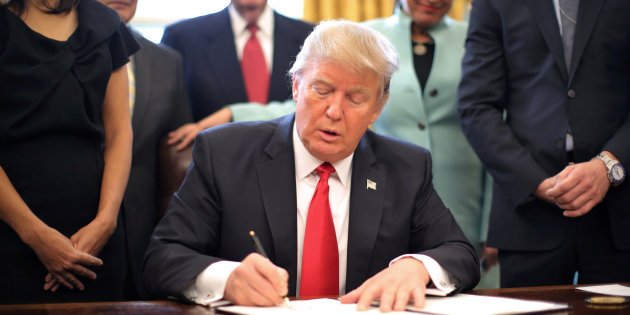
As of May 2020, H1-B lottery doesn’t differentiate between Indian applicants – whether they are students studying in USA or people employed in Indian companies. Trump often launched offensive on H1-B seekers. But as I pointed out before, his discontentment and attacks are truly meant to be not against people studying in USA but those who come from outsourcing companies and act as a cheap labor replacing American workers. Indian (International) students compete for highly paid jobs at companies like Apple and Facebook and are coveted in the tech industry.

Finally, few Senior Senators are looking into ways to differentiate between desirable H1-B seekers such as MS/PhD students and undesirable H1-B seekers from IT outsourcing companies.

In the Senate, it was introduced by Senators Chuck Grassley and Dick Durbin. In the House of Representatives, it was introduced by Congressmen Bill Pascrell, Paul Gosar, Ro Khanna, Frank Pallone and Lance Gooden.
The legislation reinstates Congress’s original intent in the H-1B and L-1 visa programmes by increasing enforcement, modifying wage requirements and securing protections for both American workers and visa holders, the lawmakers said.

IndianExpress reporting from PTI

What is interesting – these Senators come from both Republican and Democratic party. This strengthens the probability of it getting enacted.

What does it mean?

In long term, graduate students in US will get preferential treatment over Indian employees coming directly and trying to file for H-1B. This reduces the competition and bodes for better chances of procuring H-1Bs by the students.

More than anything, this is a strong message that USA doesn’t want to push away the very students who are studying in its hallowed universities, and whose education it is subsidizing through assistantships. It never made sense for US to invest in students and then tell them to leave the country before they could add to its GDP, contribute to its industries and status.

Many of the Silicon Valleys companies are run by Indians who went to study in USA. The govt is realizing that the whole anti-immigration narrative is hurting its desirability in the eyes of these talented students. While it wants to appease its homegrown workers, it also wants to retain these skilled students and let them create next unicorns on US soil.

Of course, this is still a proposal and you should keep an eye on the updates. However, this bodes well for applicants, graduate students and dreamers. If you dreamed of MS in USA, this bill is a gift.

How Chinese teachers are dealing with coronavirus and helping keep its student’s futures alive

400+ people have died because of the coronavirus in Mainland China. To curb the spread and contagion, the government had to shut down the schools. Whole semester are getting delayed and those students who were preparing for college entrance examinations are left in fray and frenzy.

But like always, China has a way out of their biggest viral problem and unsurprisingly, it involves technology. China’s Ministry of Education issued a statement last week to push schools to use internet platforms as an alternative way of teaching students amid the suspension of the new semester.

Schools are now teaching its teachers to live-stream their classes. Alibaba Group’s DingTalk is one such tool that allows them to keep teaching the children who are no longer permitted to attend the schools. Many older teachers are now having a tough time learning the new generation tools as they strive to keep teaching the traditional subjects to the younger generation.

As per South China Morning Post,

Suddenly, the spotlight is on China’s online education market, which grew 25.7% year on year in 2018 to 251.7 billion yuan (US$35.9 billion), according to iResearch Consulting Group. The previous forecast of annual growth of between 16% to 24% in the subsequent three to five years may now need to be revised upwards.

Companies are also stepping up to deal with the crisis.

TAL Education announced free live-streaming courses for all grades to “minimise the influence on study due to the outbreak” while VIPKID, which specialises in teaching English online, said on Weibo it would offer 1.5 million free online courses to children aged from four to 12.

As of Sunday, more than 220 education bureaus in 20 Chinese provinces had joined the free-of-charge DingTalk homeschool programme, covering over 20,000 primary and secondary schools and 12 million students, according to state media Xinhua.

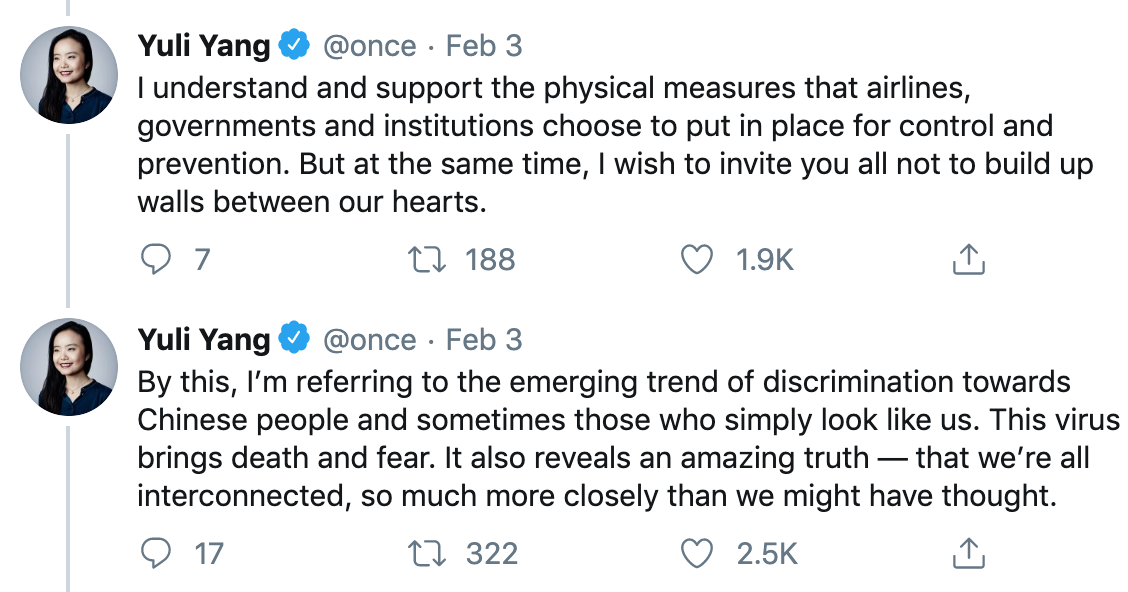
Meanwhile, many Chinese students who are studying abroad may be safe medically but are worrying for their families back home. Recently, a Chinese girl from Wuhan (which is where the coronavirus started) who is now living in HongKong took to Twitter to appeal to the world to be kinder to the people from Wuhan who have been facing wrath from the media worldwide.

Tensions may be fraught between the United States and China, but there are still 370,000 Chinese students enrolled at U.S. colleges and universities. My own alma mater, University of Illinois at Urbana Champaign houses nearly 6000 of them. They are filled with anxiety as every day brings them news of more deaths of their dear ones or new travel bans.

When such contagion arise at this scale, we suddenly realize how powerless we are. And I believe its only technology and entrepreneurship that can help survive these challenges. No, I am forgetting the important thing – the indefatigable human spirit.

China is not surrendering. Its students & teachers are fighting back one video at a time.

Click to read the referred article on SCMP here.

MS in Canada compared to MS in USA

MS in Canada is becoming an increasingly lucrative to international students looking to study abroad. Let’s see its pros and cons over MS in USA.

Why apply to MS in Canada?

1. H1B and green card uncertainty in USA due to Trump policies

Trump has hinted that he does not like immigrants (which is the intention of 90%+ internationals who go for MS in USA), H1B caps and OPT rules are constantly under scrutiny and green card processing takes forever.

In comparison, you easily get work permit upon graduation in Canada for 2-4 years in any field to work anywhere you want. The study permit itself allows for taking jobs off campus right from the beginning. Within this time frame, you can easily get your permanent residency. Therefore, studying from Canada means not only getting higher education but a hassle-free option of settling in Canada.

2. The high quality of living and curriculum

Canada’s political stability, tolerant government, super healthcare, natural beauty lends itself to the wonderful quality of living in a peaceful environment. Yes, winters might be an issue for some people.
I saw the ultimate reward of being in Canada in our alumnus’ Rafi’s response –

“I used to weigh 120+ kg in India and had multiple health issues. After coming to Canada and seeing the fitness of people around me, it made me work hard to become healthy myself. Today I weigh 70 kg and have learned swimming and skiing. I love it here.”

While Canada may have a fewer number of schools than the USA, most of them are comparable in quality of coursework and research to the top tier schools of USA.

3. Not so bad job opportunities

Plus, for all the health and wellness benefits it offers, the job scenario is also not bad (we are talking about engineering fields for this post). There are increasing opportunities in growing fields such as Data Science. Plus, most of the bigger tech companies are opening offices in Canada if not already.

In terms of the cost of attendance and living, it may be akin to the USA in total. However, financial aid opportunities seem to be abundant in good Canadian universities.

Also read: Courses with high ROI in Canada

So, where is the catch?

As is the case we discussed in MS in Germany blog post, downsides of studying in Canada are:

1. Lower job packages

While it is not unheard of to get $100K USD+ packages in the USA in software and technology along with handsome relocation bonuses, Canadian offers are lower with little bonuses.

2. Lower possibilities of working in the USA

It is hard to get placement in US offices from Canada. So, if you graduate from Canada, you are best positioned to work in Canada only. I still believe that the USA offers the best job market and growth opportunities in most of the engineering fields.

To summarize, those looking for long-term settlement, relocation to a foreign country and peaceful living, Canada offers you a wonderful opportunity. But if you are studying abroad to earn as much as possible and might want to come back to India, USA is still a better bet.

The comparison is more clear from this interview with Rafi Alam. He shares insights about studying and working in Canada.

Also read: MBA in Canada for Indian applicants

Hear it from someone who pursued CS from Waterloo

Hear it from Rafi Alam

Here is someone who studied at University of Toronto

Read Shreya Rajput’s account of studying in Canada – how do the work visa and PR work?

That’s it, hope it helps you make a more informed choice for your study abroad plans!


We have now covered MS in Germany, MS in Canada and MS in USA. Which other country are you considering and would like to know more about?

Interview – Should you consider doing an MS in Germany?

MS in Germany can be lucrative

Did you know that Hyperloop competition by Elon Musk was won by TU Munich students for a second time! That is not all, pursuing MS in Germany can nearly be free in technical streams. German schools further help all students in getting co-ops kind of internships for practical training. However, there is still a catch when you compare it to USA. Read on to find out…

In an interview with Sangram Gupta, we chat about his experience of pursuing an MS in CS from TU Munich, Germany. He is also interning with a Business Intelligence startup called Incuda.gmbh where he is earning 15 euros per hour. Best thing – he did not spend a single penny in his MS.

Interview covers

  • How helpful is the curriculum like?
  • How long does it take to do an MS?
  • How much does one spend on graduate school in Germany? (Its almost free!)
  • Who should apply to German schools (which kind of programs are best)?
  • What is the process to apply to programs in Germany?
  • What is the internship process and ease of doing internships in Germany?
  • What is the employment scenario in Europe?
  • Why you should or should not consider MS in Germany? (Conclusive comparison with USA)

Video

Let us find out more directly from him in this video-

Resources

Here is the list of top German schools that Sangram considered while applying.


We have now covered MS in Germany and MS in Canada. Which other country are you considering and would like to know more about?

What is happening with H1B – should I apply for MS?

Ever since Trump was elected, there have been articles that blamed his policies on H1B for Indians being forced to exit US. Let us focus on facts and discuss how it impacts your MS plans.

Relevant Anti H1B Bills proposed so far-

  1. Increase in minimum wage requirement to qualify for H1B
    1. A bill called Protect and Grow American Jobs Act was introduced to amend the original Act that created the H-1B program. It asks to raise the minimum salary requirement for H-1B workers to $100,000 a year, up from $60,000, and remove the Master’s degree exemption that allowed the replacing of American workers with foreign workers with master’s degrees. The House Judiciary Committee approved it in November 2017 but it is far from becoming a law at this point. Tech lobby is so strong, I’ll be surprised if this passes ever.
  2. Revoking work permits of H1B spouses
    1. A rule is proposed to revoke work permits of H1B spouses – popularly called H4 EAD. It is currently in “final clearance and review” process.

Bills approved and made into law so far-

None

Other impacts of Trump’s anti-immigration stance:

  1. Employers were wary of what rule might be proposed and hence, were more cautious in rolling out H1B applications for new employees. I have heard Amex managers etc thinking twice before hiring internationals.
  2. In October 2017, the USCIS made it so that H1B extension applications are subjected to the same level of scrutiny as on fresh visa applications. Earlier, if anyone made a mistake in the application, they could get an RFE (request for evidence). However, now USCIS can outright right reject with no obligation to send RFE.
    The ground reality is that some people are seeing a tougher time getting their H1B renewed especially if their real day to day work doesn’t justify the reasons for which the H1B was filed in the first place. If they are doing routine mundane tasks and not requiring higher skills, they are likely to be questioned and may even see revoking of H1Bs.

Who will Trump’s bias really impact? – outsourcing firms who are sending people on client side for no real reason. This was also reflected in the fact that the number of approved H1B petitions filed by Indian IT firms (Cognizant, Infosys) declined in 2017 whereas those by leading tech companies such as Apple, Amazon increased (as reported by NFAP).

Outsourcing IT firms have realized that they cannot bulk file for H1Bs now and there will be tighter scrutiny on applications. As a result, they are also more cautious and not filing too many H1B petitions now.

Quoting verbatim from the above NFAP report-

Emerging technologies, such as driverless vehicles, may also be increasing the demand for people with high levels of technical skill, including foreign-born researchers. Tesla (207 approved new H-1B petitions in FY 2017), Uber (158) and General Motors (179) all employ individuals in H-1B status.

It indicates a shift in preferring to grant H1Bs to direct employers rather requiring more sophisticated knowledge of technology than outsourcing IT firms.


Frankly, these are the only real things happening. I have seen articles claiming that people are leaving USA because of Trump’s policies and they are cherry picking evidence. The height of irresponsible journalism is when they cite reasons such as – H1B is too restrictive, you cannot work for anyone else, I did not get H1B 2 years after graduation. I wrote a big counter article on that which went viral and you must read it.

Let’s be objective. All this was happening before Trump as well. H1B was always restrictive (you could not start your own company on H1B), it was always harder for people graduating with questionable degrees from questionable schools, who did not learn any real skills.

At Scholar Strategy, I have heard from our students who got internships and fulltime employment at Tesla, Facebook, Amazon, Intel, Qualcomm, Google, Microsoft, Apple etc this very year. So, if you want to extrapolate Trump’s frenzy to a doomsday scenario for people who know their shit, all I have for you is ‘I don’t buy that.’

You may say many deserving people on H1B from outsourcing firms are now at risk. I say – yes, they are. But believe me, if you have good skills and are a good developer, Project Manager, Product Manager, software architect – you will never have dearth of opportunities – yes, you may have to work for it.

I advised a 34 year old woman, who was fed up of the IT firms politics and stagnation in career in India, get into MIT SDM program and she interned at Salesforce as a product manager this year. If she can do it, so can you.

But if you are trying to defend skill-less people sitting as managers in middle management layer in so many IT companies – you cannot. They were and are always at risk of being shoved out (even in India) – its nothing to do with H1B. After all, H1B is not a charity, it is a work visa with a specific purpose for its country.

I am not defending Trump by any means, but I am saying that there frankly has not been a damage to prospects of working in USA for good people. In fact, I would argue that going forward, it bodes well for people with advanced degrees from good institutes because they are the ones that will possess the requisite skills.

Updated thoughts after H1B report came out in Feb 2019-

20 Secrets to Successful Dating in Grad School

The time in Grad School (equally relevant to college) is not just critical for your career but also for personal relationships. Many a time, school life does not derail because of the decisions of mind but that of the heart.

A healthy approach to relationships is a must have. Here are 20 tips to keep you emotionally sane-

1. Enjoy dating with an open mindset

Meeting multiple people gives you a better idea of your own preferences before you start seeing someone more seriously. And no, you are not supposed to be dating many people at the same time (glad you clarified).

2. A successful relationship is about compatibility and that goes beyond how cute someone is

I know, I know. Hormones. After a while, you will stop noticing the cuteness but if the person has a habit that annoys you (not making their bed, bad at losing in board games), it will become hard to ignore.

3. Break up is not the end of the world

For whatever reason, if you have to break up (or your partner initiates it), it is okay. No, seriously. You would think that it is the end of the world and you will never find anyone so good again. But usually, your mind is just reacting to the insecurity of ending up alone. Breaking up sucks but being stuck with a wrong person is a torture beyond comprehension.

4. Don’t date assholes, narcissists and control freaks

Self explanatory. Quit if the person is abusive, tries to make you feel bad for his/her problems, feels manipulative, does not pay attention to your needs or talks down to you. There is no reason big enough to justify staying with such people.

5. Kindness is the most important trait to look for

Yes, it is shocking but in the end, if your partner cannot be kind to you when you behave differently from what they expect, you will run crazy trying to please them. It is not a battle you can ever win. Romance will cool down, you have to pay bills and do unpleasant chores when you live together. There will be days when the world seems wrong. You need a kind partner to get through those days.

6. Don’t chase anyone, move on

If someone is breaking up again and again with you and coming back, stop. If they don’t value you, they are not worth keeping.

The longest relationship in your life is the one you have with yourself. You are the most important person in your life. Have some self-esteem.

7. Career and relationships are equally important

No amount of wealth can fill in for loneliness and no amount of company can fill in for emptiness. You can have a balanced family and professional life. Go for it. Don’t compromise on your dreams and always be there for your partner. Find that delicate balance — it is hard but it is so worth it.

8. Don’t try to change anyone

Everyone holds some beliefs and values in life. Some of those are non-negotiable. Unless you understand what you can and cannot live without, how can you find the ‘one’ for yourself? If your plan depends on changing your partner so adjust to your values, think again. Can you change for them?

Examples are known where deep incompatibility in religious beliefs, political beliefs, financial values corroded the relationship over time. If you are a spiritual person and that is core to your existence, you won’t be able to thrive easily with someone who is agnostic, materialistic and contrarian to your values. People usually don’t change when it comes to such core values. Exceptions may occur but you don’t want to hold your breath on it.

9. Backpack test

My favorite advice came from Richard Muller on Quora, “Take a week long backpack trip together. Before you get married, you want to experience stress together, ideally over an extended time.” How do you hold together in stressful moments will tell you if you are right for eachother or not.

10. Never cheat

Integrity is doing the right thing even when no one is looking. Don’t cheat — not because someone will find it out but because you are much better than that. One never sleeps peacefully when one is worrying about being caught.

11. Read relationship books before you fuck it up

You will fuck it up, trust me. But to avoid making it a catastrophe, educate yourself. Relationships can be understood by reading about human psychology and communication. I know 20 something people think it ludicrous to be reading about relationships. But you will be thankful later when you end up not losing a great person because of your ego. Or, when you get rid of a toxic person. Despite how smart you feel you are, you are naive and books can help.

Here are the three books I can recommend to start off with-

1. “How to Win Friends and Influence People” by Dale Carnegie — Because you need to learn how to be a likable person to be in a relationship
2. “Men are from Mars, Women are from Venus” by John Gray — Because it helps to understand different mindset of men and women (avoid generalizing too much though)
3. “Nonviolent Communication” by Marshall Rosenberg — Hands down the best material I have found on how to avoid miscommunication that kills so many relationships

12. Long distance is hard, not impossible

Any relationship needs investing time. If you can do that, distances may matter less. But don’t overtly romanticize the notion of making long distance work. As you move to a different country/place to study or start a job, you are going to change — whether you like it or not. You should take time to decide if that old relationship of yours is still the right one for you. In a good relationship, both people grow simultaneously.

And if you can grow from distances apart and keep the commitment and integrity alive, you can have a relationship that will truly stand the test of time. And if not, it is better to let go.

13. Don’t commit before you feel ready

This is an extension of point 3. If things are not great, quit. A right relationship is not supposed to be okayish, or just-good-enough; it is supposed to be great. It should make you feel not starry-eyed but calm from inside. ‘Yes, this is the person for me!’

So, if you are not feeling this way, don’t feel an obligation to commit just because you have dated each other long enough.

14. Discuss important things instead of sexting

Do you want to live abroad or in your home country? Do you want kids? Do you want to keep working after the marriage? Would you wish to take care of parents together after marriage? These are the questions that matter and yet most couples never discuss it until after the wedding.

15. Interracial relationships face extra challenges, are you prepared?

Asian cultures are ultra-conservative and a western person may find many of the customs strange. While Anglo-Indian, Jewish-Muslim marriages are not unheard of (and I personally know successful couples), they require that much stronger foundation to withstand the extra complications.

16. The only good reason to marry someone is love and compatibility

Definitely not peer or family pressure.

17. Best friend may not make best spouse

Intimate relationships need more than friendship to thrive. Read point 16.

18. Keep a good circle of friends and don’t let your life revolve solely around your partner

Grad School is a perfect place to meet super intelligent and interesting people. There are awesome things to do academically and socially. The worst thing to do is to miss out on this chance because you and your partner isolated yourselves socially.

What seems very intimate in the beginning can seem like an extra burden of expectations on each other. If your whole life revolves around your partner, there is more probability of getting disappointed when the other person cannot give what you want. It is not fair on either of you.

19. Nothing good will get away, don’t be desperate

Don’t worry about losing. If it is right, it happens. The main thing is not to hurry. Nothing good gets away — John Steinbeck

Read this wonderful letter containing relationship advice by John Steinbeck to his son.

20. Do not carry on if you know it isn’t going to work

Respect your partner’s time and break up gracefully and let them move on. Never hurt anyone with your careless attitude. Whatever you throw out to the universe will come back to you. Karma never forgets.


I have seen brilliant people dropping courses and grades and barely managing to study because they were involved in dramatic relationships. While there is no algorithm to find the right person (wouldn’t OKCupid pay billions for that?), the right relationship will feel right. And the right person will elevate you instead of letting you drown in the dungeons of insecurity and longing.

A long life lies ahead. Take time to study well, make the career that you dreamt. Attract a person that enjoys same things as you do and live happily ever after 🙂


Why every Grad Student should have a website?

One thing that baffles me is that only a few people going to pursue Master’s put serious efforts into building their own website. You are overlooking a lot of advantages if you do not yet have your website!

Why should you blog?

A lot of companies and recruiters search for your name online before the interview. While a good LinkedIn profile is a must, additionally having a website can put you at edge especially when you are looking for a job at startups. I got my startup job in NYC mostly because of my blog. Yes, you read that right. Writing online showcases-

  1. You are knowledgeable – writing about a topic requires researching and fact finding. If you are writing informational posts, it shows you are an active reader and know about your field.
  2. You are confident – showing your work to the public requires having confidence in yourself. Whether righting informational posts or opinions, you project yourself as someone who is ready to take charge.
  3. You are intelligent – yep, if you write well, most people correlate it to a higher intelligence and IQ.

Employers value your knowledge, creativity, and intelligence. A good weblog is a great way to show that. 

And more importantly, once you start writing, you will be forced to learn more so that you can write better. It is a very rewarding exercise.

Blog or website?

Now, the question is some people find writing to be a very daunting exercise. It is okay. As I said, you can gradually build upon it. But even if you are not actively blogging, you can still create a static website with your updated resume (even a creative version to grab your employer’s eye!), list of projects with details, references and any interesting things you are up to. It can be your online diary and the good thing is half of it can come from your LinkedIn profile anyway. Secondly, your university is giving you free server space anyway, so why not create a quick page there?

But I do encourage you to start blogging about your field little by little. There are many ways to start it and I will post a new article on it soon. It always helps to have other websites link to you and this is where we can help you. If you write a good article related to grad school life or your field, we will be happy to guest post it on Scholar Strategy website. Already have something? email us at scholarstrategy@gmail.com 🙂

Show me an example!

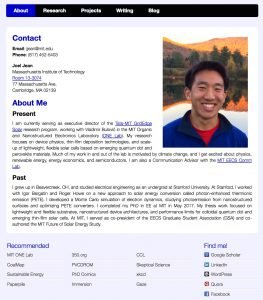
I like this simplistic website of Mr. Joel Jean who I hope won’t mind me using him as an example. He is focusing on the text and work rather than making it flashy. And if someone is really interested in peeking inside his mind, he has a separate link to the blog. Looks professional, to the point and seriously impressive!


Is it worth doing an MS in the US and get H1B visa?

After Trump and H1B news, is it worth doing MS in USA? Read our detailed analysis to help you decide whether it makes sense to pursue MS abroad or not

Why is Trump after H1Bs?

Trump has so much political pressure because of his promises during the elections that he is going over board. This has been worsened by Disney’s lawsuit where an American employee who was laid off sued that tech companies are not hiring foreigners because they cannot find that talent in US but they are hiring them because of low wages. Making it too tough will definitely antagonize Tech industry which itself is a non-trivial lobby. Therefore, I see it as a short term issue rather than long term.

Obviously, its a multi layered issue. Lets take a look-

What are the proposed changes to H1B visa norms?

As per HindustanTimes, following changes has been suggested in recent bills (some readers have pointed out that some of these are incorrect which shows how misguiding Indian media can be)-

  • Doubling minimum salaries of H-1B visa holders to $130,000 – BAD
  • Earmark 20% of H-1B visas for small and start-up employers
  • Remove ‘per country’ cap for employment visas to ensure equal distribution
  • Firms hiring H-1B visa holders need to make a “good faith” effort to recruit Americans first
  • Give preference to students educated in the US for H-1B visas rather than computerized lottery system – GOOD
  • Crack down on outsourcing companies that import workers for temporary training and then send them back home to do the same job – GOOD
  • Prohibit spouses of H-1B visa holders from working in the US
  • Prohibit companies with more than 50 employees, of which at least half are H-1B or L-1 holders, from hiring additional H-1B employees – BAD
  • Strict audit and vetting by Department of Labor to clamp down on fraud or misuse

Should international students be worried?

Many of these will negatively impact people getting H1B via TCS/Infosys kind of companies. An international F1 based grad student will only be impacted when-

  1. Min H1B wage is raised
  2. OPT extension is removed
  3. MS quota is removed

First point here is quite negative and if its raised to 130K as per the latest proposal on 31 Jan, it will be brutal. No doubt. In fact, if they clamp down more on TCS/Infosys scenarios, it might turn out beneficial to other H-1B applicants (including grad students) because of reduced competition!

There has been hue and cry over H1Bs in the past as well but anti H1B laws never passed. In fact, OPT 24 months extension was a big boost for international students. But it does not mean that the new law cannot pass. I think we need to wait for what happens with this bill. (as of 1 Feb, 2017)

Assuming it passes and minimum wage is raised to 100K+ will impact recruitment and many employers may cut down on campus recruitment of internationals. As one post here points out about Mech recruitment slowdown even from a school like UIUC – that is possible in other non-IT fields as well. Although to be fair, Mech recruiting has always been more sluggish than CS, EE, MIS/MEM recruitment because many jobs are in defense or state agencies which require American citizenship. It means that a student will have to hustle more for limited jobs. That is harsh reality.

So, there is no doubt that circumstances of finding jobs/internships will get TOUGHER if these laws are passed (only if min wage is increased too much, OPT ext revoked).

Now, is it worth doing MS in that case?

I would still be optimistic about MS but I will be cautious on financial matters. USA, still, remains a better job market than most other countries. For tech fields, it is worth a hustle. For non-tech fields, yes, be more wary. A better strategy can be to:

  • Apply to schools with chances of funding/lower financial burden.
  • Apply to schools in urban areas, metros such as NYC, Silicon Valley, Boston, Chicago – if companies get wary of recruitment, they stop traveling to interior locations.
    At the end of the day, there will always be jobs for people with strong skills (in in-demand fields such as IT, Analytics etc) but those who are relying on getting an easier pass just by graduating from US may have to bite a bullet.

In summary, I am not saying that things are all hunky dory and there is nothing to worry but unless this law gets passed, it doesn’t matter. Just like his ban on 7 nations is still in a state of confusion (with federal court ruling against his ban but executive order still prevailing) – things are murky. Let’s wait and watch. So, please be patient.

What I have heard about campus placements so far?

  1. UMCP MIS has seen decline in companies sponsoring H1Bs.
  2. A student seeing a decline in campus placements and H1B sponsorships at NCSU.
  3. Another student was more neutral about her MSBA program at ASU. She will inform once the fulltime recruitment begins this semester.
  4. A student who recently graduated and is on OPT has not reported any negative news in his company yet.
  5. A Harvard CS student is less fearful – ‘I’ve had emails this week from 3 different companies asking me if I’m interested in full-time positions starting after spring. It will definitely have some negative impact, but if you’re good and try hard enough, I’m pretty sure you’ll be able to find a job.’
  6. One ECE student from TAMU – ‘During career fair last week most of the companies were particularly asking about sponsorship requirement which I haven’t heard that much during the career fairs conducted last semester.’

I am not taking sides yet but bracing up for a tough ride if Trump goes rogue 🙂

I mentor students and have been directly helping MS aspirants at Scholar Strategy but I have tried to keep my views as unbiased as possible. The fact is when I went to attend UIUC and graduated, there was no STEM OPT extension. Lottery happened and I lucked out. I could get lucky only because I had decided to take a chance. So, take a calculated risk, an informed decision. Go for MS – not just for jobs but to build your skills and learn. Once you focus on learning valuable skills, job will find you (if not US, a better place) 🙂

This post was originally posted on Quora.

Should you be worried about Trump’s attack on H-1B?

Why is Trump after H-1Bs?

Trump has political pressure to get back jobs for Americans – can act upon that. This has been worsened by Disney’s lawsuit where an American employee who was laid off sued that tech companies are not hiring foreigners on H-1B because they cannot find that talent in US but they are hiring them because of low wages.

H-1Bs are the most coveted work visas: In 2016, the US Citizenship and Immigration Services announced that they received 2,36,000 H-1B petitions within five days of opening the process, more than thrice the number of mandated cap of 65,000 in the general category.

What are the proposed changes to H-1B visa norms?

As per HindustanTimes, following changes has been suggested in recent bills-

  1. Doubling minimum salaries of H-1B visa holders to $130,000
  2. Earmark 20% of H-1B visas for small and start-up employers
  3. Remove ‘per country’ cap for employment visas to ensure equal distribution
  4. Firms hiring H-1B visa holders need to make a “good faith” effort to recruit Americans first
  5. Give preference to students educated in the US for H-1B visas rather than computerized lottery system
  6. Crack down on outsourcing companies that import workers for temporary training and then send them back home to do the same job
  7. Prohibit spouses of H-1B visa holders from working in the US
  8. Prohibit companies with more than 50 employees, of which at least half are H-1B or L-1 holders, from hiring additional H-1B employees
  9. Strict audit and vetting by Department of Labor to clamp down on fraud or misuse

Should international students be worried?

There has been hue and cry over H-1Bs in the past as well but anti H-1B laws never passed. In fact, OPT 24 months extension was a big boost for international students. But it does not mean that the new law cannot pass. H-1B for international students on F1 is a different case from people getting H-1B via TCS/Infy etc (as is evident from some of the proposed reforms above). That said, what can hurt international students-

1. raising of minimum H-1B wages significantly. This directly impacts recruiting.

2. removing OPT extension.

Making it too tough will definitely antagonize Tech industry which itself is a non-trivial lobby. However, it may take some time before we see the opposition able to make a significant impact or pressurize Trump in the opposite direction. I am more worried short term than long term.

In summary, I am not saying that things are all hunky dory and there is nothing to worry but unless this law gets passed, it doesn’t matter. Just like his ban on 7 nations is still in a state of confusion (with federal court ruling against his ban but executive order still prevailing) – things are murky. Let’s wait and watch. So, please be patient.

What I have heard about campus placements so far?

1. UMCP MIS has seen decline in companies sponsoring H-1Bs

2. A student seeing a decline in campus placements and H-1B sponsorships at NCSU.

3. Another student was more neutral about her MSBA program at ASU. She will inform once the fulltime recruitment begins this semester.

4. A student who recently graduated and is on OPT has not reported any negative news in his company yet.

5. A Harvard CS student is less fearful – ‘I’ve had emails this week from 3 different companies asking me if I’m interested in full-time positions starting after spring. It will definitely have some negative impact, but if you’re good and try hard enough, I’m pretty sure you’ll be able to find a job.’

6. One ECE student from TAMU – ‘During career fair last week most of the companies were particularly asking about sponsorship requirement which I haven’t heard that much during the career fairs conducted last semester.’

I will keep you updated on what I get to know – I am not taking sides yet but bracing up for a tough ride if Trump goes rogue 🙂

This post was originally posted on our Fb group for MS internships and jobs.